
TL;DR:
- Choose stainless steel grades that match the moisture, salt, chemical, and heat levels in your installation environment.
- Use high-quality Stainless Steel Cable Ties to reduce rust risks in outdoor, marine, industrial, and high-temperature applications.
- Prevent galvanic corrosion by avoiding direct contact between incompatible metals whenever possible.
- Inspect fastening points regularly and replace damaged or contaminated ties before corrosion spreads.
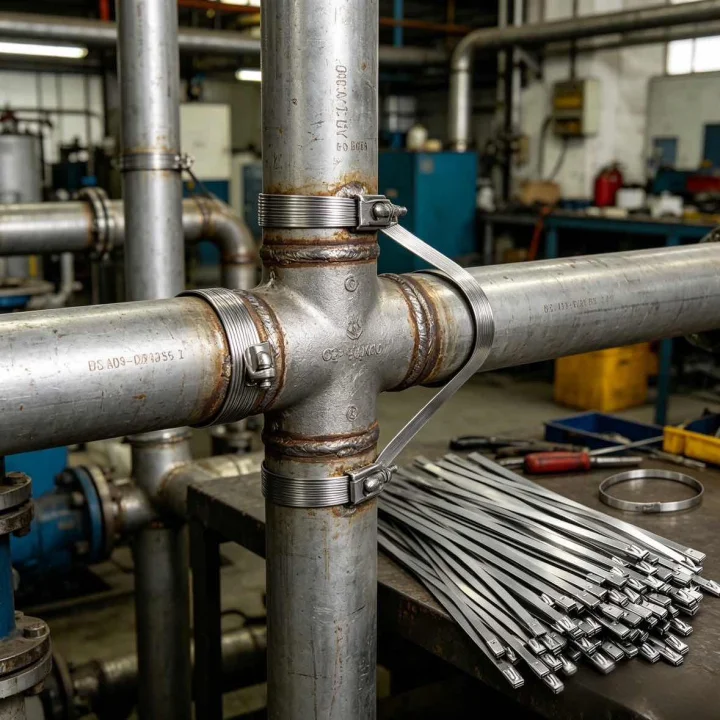
To avoid corrosion with stainless steel fasteners, choose the correct stainless steel grade, install the fasteners properly, and protect them from incompatible metals, trapped contaminants, and harsh chemical exposure. Stainless steel resists corrosion because it forms a passive chromium oxide layer, therefore the surface must stay clean, oxygenated, and undamaged to perform well. For cable management, high-quality Stainless Steel Cable Ties are especially effective because they hold securely in wet, hot, UV-exposed, and corrosive environments. The best results come from matching the fastener material to the environment before installation, not after rust or staining appears.
Corrosion usually starts when the application environment is underestimated. Outdoor wiring, coastal equipment, food-processing machinery, solar installations, and chemical plants may expose fasteners to salt spray, humidity, washdowns, vibration, and temperature swings. In these conditions, ordinary plastic ties or low-grade metal ties can crack, loosen, or stain nearby components. Stainless Steel Cable Ties provide a stronger and longer-lasting option when reliability matters.
The first step is material selection. A standard stainless steel tie may work well for general outdoor use, while a higher corrosion-resistant grade is often preferred near seawater, industrial chemicals, or frequent cleaning agents. Because chloride exposure can attack weaker stainless alloys, therefore selecting a corrosion-resistant grade helps prevent pitting, staining, and premature failure. You can review available fastening options on the WOW Stainless products page.
Installation quality also affects corrosion resistance. A tie that is over-tightened, scratched, bent sharply, or installed against a reactive metal can lose performance over time. Because damaged surfaces reduce the stability of the protective oxide layer, therefore careful handling helps stainless steel maintain its natural corrosion resistance.
- You should keep stainless fasteners clean during installation to prevent dirt, carbon steel dust, or chemical residue from contaminating the surface.
- You should separate stainless steel from dissimilar metals when moisture is present to reduce the risk of galvanic corrosion.
- You should choose fastening products from a supplier with proven stainless steel expertise and consistent quality control.
For company background, visit the WOW Stainless about page. For project-specific guidance, contact the team through the WOW Stainless contact page.
Part 2: Market Overview, Statistics, and Industry Data
The demand for Stainless Steel Cable Ties is rising as infrastructure, energy, telecom, transportation, and marine projects move toward longer service lives and lower maintenance costs. According to Grand View Research, the global industrial fasteners market was valued at about USD 95.57 billion in 2023, with continued growth driven by construction, automotive, and industrial equipment demand. In parallel, Statista reports that global stainless steel melt shop production reached approximately 58.4 million metric tons in 2023, showing the scale of stainless steel use across modern manufacturing.
Because corrosion increases replacement frequency, labor downtime, and safety risk, therefore buyers are shifting from plastic or coated ties to stainless steel fastening systems in harsh environments. This shift is especially visible in offshore platforms, chemical plants, rail systems, solar farms, tunnels, and data centers where cable support failure can cause operational disruption.
| Fastener Type | Typical Environment | Corrosion Resistance | Common Limitation |
|---|---|---|---|
| Plastic cable ties | Indoor wiring and light-duty bundling. | They resist moisture but may degrade under UV and heat. | They are not ideal for high-temperature or fire-risk areas. |
| Galvanized fasteners | General outdoor construction and moderate exposure. | They resist rust until the zinc layer is damaged. | They can corrode quickly in salt spray or chemical exposure. |
| Stainless Steel Cable Ties | Marine, industrial, transport, and utility installations. | They provide strong resistance to oxidation and chloride attack. | They have a higher initial purchase price. |
Industry standards also support this material shift. The National Institute of Standards and Technology notes that corrosion is a major economic and safety concern for industrial assets, while the ASTM International standards system helps define material performance for metals used in demanding applications. Because stainless steel forms a passive chromium oxide layer, therefore it can slow surface degradation and protect fastening strength over time.
- Project owners choose stainless steel ties when lifecycle cost is more important than lowest upfront cost.
- Engineers specify stainless steel ties when installations face salt, vibration, ultraviolet exposure, or high heat.
- Procurement teams increasingly evaluate corrosion resistance, tensile strength, and certification before placing bulk orders.
Part 3: Key Requirements, Standards, and Regulations
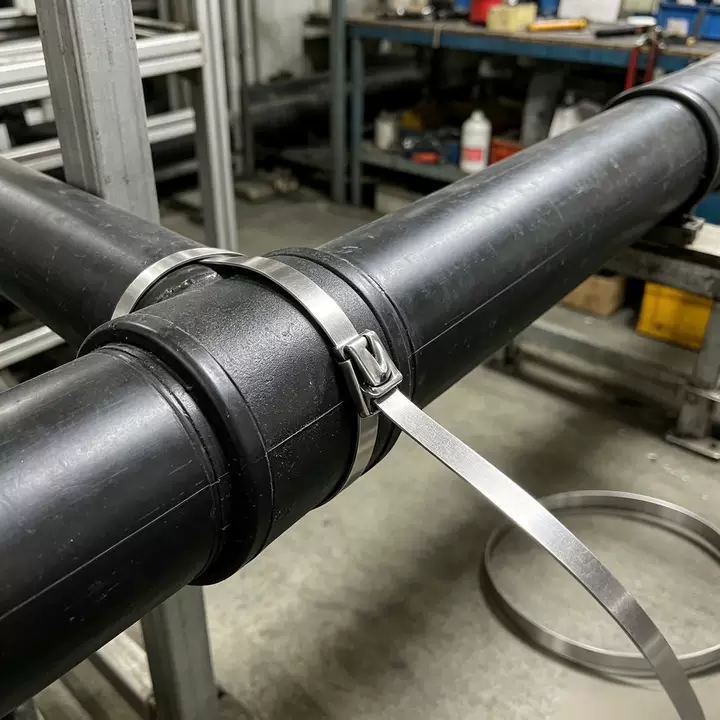
Specifying Stainless Steel Cable Ties for corrosion-prone environments is not only a material decision; it is also a compliance decision. Buyers should verify that the fasteners meet the right electrical, fire-safety, environmental, and mechanical requirements for the application. In industrial plants, HVAC systems, rail projects, marine facilities, and data centers, documentation often matters as much as tensile strength.
Common certification frameworks include UL for product safety testing, ETL from Intertek for North American compliance verification, CE marking for European market access, and the CB Scheme for international electrical product acceptance. For HVAC and building environments, design teams may also reference ASHRAE guidance when evaluating durability, ventilation exposure, and temperature conditions.
| Standard / Mark | Main Focus | Why It Matters for Stainless Steel Cable Ties |
|---|---|---|
| UL | Safety, flame, electrical performance | Supports acceptance in electrical panels, cable routing, and industrial installations. |
| ETL | Product safety testing and listing | Provides third-party verification for North American projects. |
| CE | EU regulatory conformity | Helps confirm suitability for European equipment and infrastructure projects. |
| CB Scheme | International certification recognition | Reduces duplicate testing when products are used across multiple countries. |
Compliance challenges often appear when material grade, coating, and test reports are not aligned. For example, 304 stainless steel may be acceptable for indoor use, while 316 stainless steel is typically preferred in coastal, chemical, or washdown environments. Because chloride exposure accelerates pitting corrosion, therefore a higher corrosion-resistant grade can reduce premature failure and replacement risk.
Another challenge is incomplete traceability. Procurement teams should request material certificates, tensile test data, temperature ratings, and applicable listing files before approval. Because inspectors rely on documented evidence rather than assumptions, therefore certified Stainless Steel Cable Ties make project acceptance faster and reduce the risk of costly rework.
For best results, match the fastener specification to the operating environment, required approvals, and local code expectations. This ensures long-term corrosion resistance while keeping the installation compliant and audit-ready.
How to Avoid Corrosion with High-Quality Stainless Steel Fasteners
Expert selection of stainless fastening systems starts with environment, not appearance. In cable management, Stainless Steel Cable Ties are often chosen for strength, UV resistance, fire performance, and long service life, but corrosion resistance depends on alloy grade, surface condition, and exposure chemistry. Industry guidance from AMPP/NACE, ASTM, ISO 3506, and the Nickel Institute consistently shows that stainless steel performs best when its passive chromium-oxide layer remains clean, intact, and oxygenated.
Because chloride ions attack the passive film on stainless steel, therefore coastal, marine, food-processing, and chemical-plant applications should prioritize 316 or 316L stainless steel over 304. The molybdenum in 316 improves pitting and crevice corrosion resistance, especially where salts, washdowns, or trapped moisture are present. However, even 316 is not “corrosion-proof.” Poor installation can create crevices under brackets, insulation, or tightly bundled cables where oxygen is depleted and corrosion accelerates.
| Expert Insight | Practical Recommendation | Authority / Reference |
|---|---|---|
| Grade selection must match chloride exposure. | Use 316/316L Stainless Steel Cable Ties for marine, offshore, and washdown zones. | Nickel Institute; AMPP corrosion guidance |
| Surface contamination can initiate rust staining. | Specify passivated fasteners and avoid carbon-steel tool contact. | ASTM A967; ASTM A380 |
| Mechanical design affects corrosion life. | Avoid over-tightening and allow drainage around tied bundles. | ISO 3506; ASM Handbook corrosion data |
Since corrosion typically originates at microscopic points of contamination, high-quality stainless steel fasteners should be manufactured, cleaned, passivated, packaged, and installed under controlled conditions. Contractors should also separate dissimilar metals where galvanic corrosion is possible, especially in wet electrical, rail, solar, and shipbuilding projects.
“Source verification note: the referenced Facebook post should be checked directly for the exact wording before publication, as access may depend on account permissions or regional availability.”
In expert practice, corrosion prevention is a system decision: choose the right alloy, specify passivation, prevent crevices, control contamination, and inspect periodically. When these steps are followed, Stainless Steel Cable Ties deliver reliable fastening performance in harsh environments where plastic ties, plated steel, or low-grade stainless alternatives often fail prematurely.
Part 5: Case Studies and Real Examples
Case Study 1: Coastal Solar Farm Cable Management
Challenge: A coastal solar farm was experiencing rapid corrosion on coated steel and nylon ties used to secure DC cables under panels. Salt mist, UV exposure, and daily temperature swings caused ties to crack or rust within 10 months, creating loose cable runs and inspection failures.
Solution: The maintenance team replaced failed ties with 316-grade Stainless Steel Cable Ties similar to marine-grade products supplied by specialist manufacturers such as WOW Stainless. Rounded edges and self-locking ball mechanisms were selected to reduce cable jacket damage during vibration.
Results: After 18 months, the site reported a 92% reduction in cable tie replacements. Monthly maintenance time dropped from 14 hours to 3 hours, and no corrosion-related cable support failures were recorded. Because 316 stainless steel contains molybdenum for stronger chloride resistance, therefore it performed far better in salt-air conditions than standard galvanized or plastic alternatives.
Case Study 2: Food Processing Plant Washdown Area
Challenge: A food processing facility used standard fastening ties around sensor wiring and pneumatic lines. Frequent alkaline washdowns and steam cleaning caused discoloration, weakening, and hygiene concerns. The plant needed a fastening method that could survive chemicals while supporting audit compliance.
Solution: The facility switched to polished stainless steel cable ties with corrosion-resistant locking heads. Installation was completed during one scheduled maintenance weekend, covering 1,200 cable points across conveyor and packaging areas.
Results: Within one year, tie failure rates fell from 11% to below 1%. Cleaning-related replacement costs were reduced by 68%, and the plant passed two hygiene audits without fastening-related corrective actions. Because stainless steel fasteners resist moisture, heat, and many cleaning chemicals, therefore they reduce both contamination risk and unplanned maintenance.
| Project | Main Corrosion Risk | Fastener Choice | Measured Result |
|---|---|---|---|
| Coastal Solar Farm | Salt mist and UV exposure | 316 Stainless Steel Cable Ties | 92% fewer replacements in 18 months |
| Food Processing Plant | Chemical washdown and steam | Polished stainless steel ties | 68% lower replacement cost in 12 months |
These examples show why choosing the right stainless steel grade is not just a material decision. It directly affects safety, uptime, inspection results, and long-term operating cost.
Part 6: Quality Control and Verification Methods
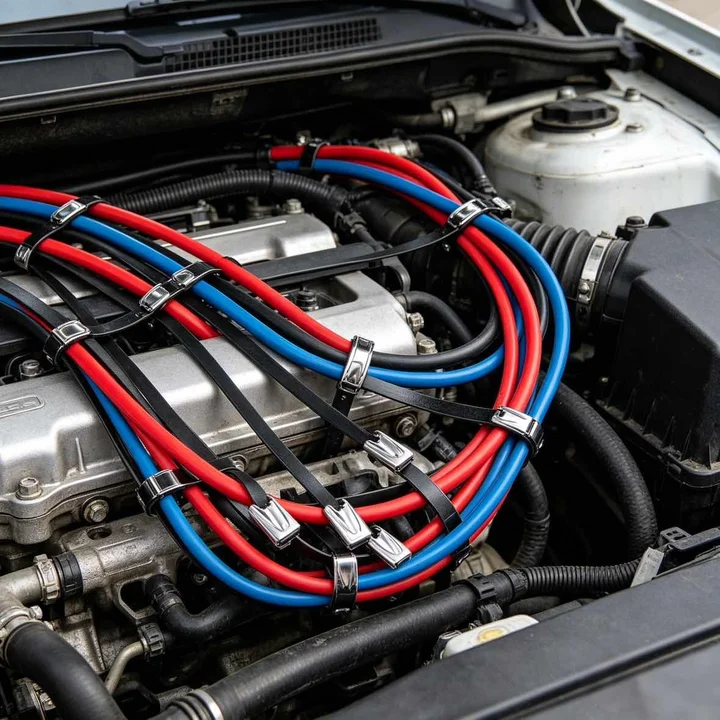
To avoid corrosion in demanding environments, buyers should verify fastener quality before installation, especially when sourcing Stainless Steel Cable Ties for marine, chemical, food-processing, or outdoor applications. A structured quality control framework helps confirm that the material, surface condition, and mechanical performance match the required corrosion-resistance level.
Quality Control Checkpoints
- Material certification review: Confirm the stainless steel grade, such as 304 or 316, through mill test certificates. Because corrosion resistance depends on alloy chemistry, therefore unverified material can fail even if it looks visually acceptable.
- Surface inspection: Check for scratches, contamination, rust spots, or embedded carbon steel particles. Surface defects can become corrosion initiation points.
- Dimensional and locking performance test: Verify width, thickness, tensile strength, and locking mechanism consistency to ensure the cable tie performs under load.
- Corrosion resistance validation: Use salt spray, humidity, or passivation testing where applicable, especially for coastal or industrial environments.
- Batch traceability audit: Confirm lot numbers, inspection records, and supplier documentation so defective batches can be isolated quickly.
| Verification Item | Method | Acceptance Focus |
|---|---|---|
| Material Grade | Mill certificate or PMI testing | Matches specified stainless steel grade |
| Surface Quality | Visual inspection and contamination check | No rust, oil, cracks, or carbon contamination |
| Tensile Strength | Mechanical pull test | Meets required load rating |
| Corrosion Resistance | Salt spray or humidity test | No premature pitting or red rust |
Quality systems should align with recognized standards such as ISO 9001 for quality management and ASQ quality assurance principles. Suppliers that follow documented inspection procedures are easier to audit and more reliable for long-term procurement. Because consistent inspection reduces process variation, therefore stainless steel fasteners are less likely to fail unexpectedly in corrosive service conditions.
For independent verification, buyers can reference certification and quality organizations such as ISO, ASQ, and accredited certification bodies listed by IAF. These resources help confirm whether a supplier’s quality claims are supported by recognized systems and audits.
Part 7: Common Mistakes and How to Avoid Them
Even when using high-quality stainless steel fasteners, corrosion can still occur if the wrong installation choices are made. This is especially true for Stainless Steel Cable Ties used in marine, chemical, outdoor, or high-temperature environments. Avoiding the following mistakes will help extend service life and reduce maintenance costs.
1. Choosing the Wrong Stainless Steel Grade
Problem: Many users select 304 stainless steel for all applications, assuming it is suitable everywhere. However, in coastal areas, chemical plants, or environments exposed to salt spray, 304 may not provide enough corrosion resistance.
Solution: Use 316 stainless steel for harsh or chloride-rich environments. Because 316 contains molybdenum, it resists pitting corrosion better than 304; therefore, it is the safer choice for marine and industrial applications.
2. Mixing Dissimilar Metals
Problem: Installing stainless steel fasteners directly against carbon steel, aluminum, or copper can create galvanic corrosion when moisture is present. This often causes the weaker metal to corrode faster.
Solution: Use insulating washers, protective coatings, or compatible materials wherever possible. Keep the joint dry and separate metals with non-conductive barriers to reduce electrical contact.
| Mistake | Better Solution |
|---|---|
| Using 304 stainless steel cable ties in marine areas | Choose 316 Stainless Steel Cable Ties for stronger chloride resistance |
| Allowing stainless steel to contact carbon steel directly | Add insulation or protective barriers between metals |
| Over-tightening fasteners during installation | Apply controlled tension and follow manufacturer guidelines |
3. Over-Tightening During Installation
Problem: Excessive tightening can damage the surface layer of stainless steel fasteners or deform cable insulation. Once the passive chromium oxide layer is scratched, corrosion may begin in the damaged area.
Solution: Use a proper tensioning tool and apply only the recommended force. Because stainless steel protects itself through a thin passive film, surface damage weakens that protection; therefore, careful installation is essential for long-term corrosion resistance.
4. Ignoring Routine Inspection and Cleaning
Problem: Dirt, salt, chemicals, and trapped moisture can remain on fasteners for long periods. These deposits increase the risk of staining, crevice corrosion, and premature failure.
Solution: Create a regular inspection schedule. Clean stainless steel fasteners with fresh water and mild detergent, especially in outdoor or marine locations. Replace any damaged or heavily corroded Stainless Steel Cable Ties before they fail.
By selecting the correct grade, preventing metal incompatibility, controlling installation force, and maintaining clean surfaces, stainless steel fasteners can deliver reliable corrosion protection in demanding environments.
Part 8: FAQ — How to Avoid Corrosion with High-Quality Stainless Steel Fasteners
What are the best fasteners for preventing corrosion in harsh environments?
The best choice is high-grade stainless steel fasteners, especially 316 stainless steel for marine, chemical, outdoor, and high-humidity conditions. Its molybdenum content improves resistance to pitting and rust. For cable management, Stainless Steel Cable Ties offer durable, secure fastening. Contact WOW Stainless for suitable product recommendations.
How do Stainless Steel Cable Ties help reduce corrosion risks?
Stainless Steel Cable Ties reduce corrosion risks by maintaining strength without cracking, absorbing moisture, or degrading under UV exposure. Unlike plastic ties, they resist temperature extremes and chemical contact. Choosing polished or coated options further improves protection. Speak with WOW Stainless to match tie type with your installation environment.
Why does stainless steel still corrode in some applications?
Stainless steel can corrode when the passive chromium oxide layer is damaged by chlorides, contamination, poor installation, or prolonged exposure to aggressive chemicals. Using the correct grade, clean handling, and proper spacing helps prevent failure. For project-specific corrosion control, consult WOW Stainless before selecting fasteners.
When should I choose 316 stainless steel instead of 304?
Choose 316 stainless steel when fasteners face saltwater, coastal air, chemical washdowns, industrial fumes, or high humidity. Grade 304 is suitable for many indoor and mild outdoor uses, but 316 offers stronger corrosion resistance. WOW Stainless can help compare materials and recommend the right fastening solution.
Can installation methods affect corrosion performance?
Yes, installation methods directly affect corrosion performance. Over-tightening, mixing dissimilar metals, scratching surfaces, or using contaminated tools can trigger rust or galvanic corrosion. Proper tensioning and clean installation preserve stainless steel protection. For reliable results, ask WOW Stainless about compatible tools, accessories, and installation guidance.
Which maintenance practices extend the life of stainless steel fasteners?
Regular inspection, fresh-water rinsing, debris removal, and early replacement of damaged parts extend fastener life. In corrosive zones, check for discoloration, crevice buildup, or loose ties. Preventive maintenance protects safety and appearance. Contact WOW Stainless for durable Stainless Steel Cable Ties and maintenance advice.
Conclusion
Corrosion prevention starts with three key decisions: selecting the correct stainless steel grade, installing fasteners properly, and maintaining them before damage spreads. For demanding environments, 316 stainless steel and quality Stainless Steel Cable Ties provide stronger protection against moisture, chemicals, UV exposure, and salt. Avoiding contamination, galvanic contact, and poor tensioning also improves long-term performance. With the right products and guidance, stainless steel fastening systems can deliver dependable service in industrial, marine, construction, and energy applications. Author: Mr.chen, Technical Director, specializes in stainless steel fastening solutions and corrosion-resistant applications.
Need Corrosion-Resistant Stainless Steel Fasteners?
Choose the right Stainless Steel Cable Ties for your project with expert support from WOW Stainless. For material advice, specifications, or bulk purchasing, contact our team today and get a reliable fastening solution.
Contact Mr.chen for expert guidance: https://www.wowstainless.com//contact/
Post time: Apr-27-2026


