
TL;DR:
- You should choose a manufacturer that can prove stable material quality and repeatable welding performance.
- You should verify whether the supplier can support OEM drawings, samples, tolerances, and packaging requirements.
- You should compare production capacity, inspection systems, and delivery reliability before confirming cooperation.
- You should request technical communication early so that risks are solved before mass production begins.
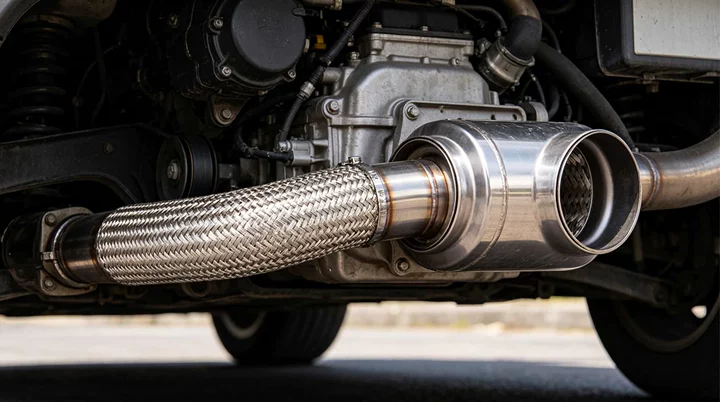
To choose the right exhaust flexible pipes manufacturer for OEM projects, start by checking whether the supplier can match your technical drawings, materials, dimensions, testing standards, and delivery schedule. The best partner should provide consistent stainless steel quality, stable forming and welding processes, and clear communication from sample development to mass production. Because OEM projects depend on repeatable parts across every batch, therefore the manufacturer must prove process control, not just offer a low price. You should also confirm whether the supplier has experience with automotive exhaust systems, export packaging, and long-term project coordination.
For OEM buyers, exhaust flexible pipes are not simple catalog parts. They must absorb vibration, reduce stress on the exhaust system, and fit precisely within the vehicle layout. A small mismatch in length, braid density, or end connection can create noise, leakage, or installation problems. That is why your supplier evaluation should begin with technical capability.
Review the manufacturer’s product range first. A reliable supplier should offer different structures, including interlock liners, outer braids, bellows, caps, and customized end fittings. You can explore typical product options on the exhaust product page to understand how different designs support different OEM requirements.
Next, assess the factory background. A qualified manufacturer should explain its production process, material sourcing, inspection steps, and export experience. Because OEM purchasing involves long-term brand responsibility, therefore supplier transparency is essential for reducing quality disputes and delivery risks. You can review company information through the about us page before starting a formal inquiry.
- You should ask whether the manufacturer can develop samples according to your original drawings and installation conditions.
- You should confirm whether each production batch is inspected for appearance, flexibility, welding quality, and dimensional accuracy.
- You should check whether the supplier can provide stable lead times for regular monthly orders.
Finally, begin communication with clear specifications, expected order quantity, application details, and packaging requirements. For direct project discussion, you can contact the team through the contact page.
Part 2: Market Overview, Statistics, and Industry Data
The market for exhaust flexible pipes is closely tied to global vehicle production, emissions regulation, and OEM platform localization. According to OICA, global motor vehicle production reached about 93.5 million units in 2023, creating steady demand for exhaust assemblies, vibration-control components, and flexible pipe subassemblies. In parallel, Grand View Research reported that the global automotive exhaust systems market was valued at approximately USD 52.9 billion in 2022, with growth supported by stricter emission standards and replacement demand.
Because OEM exhaust systems must reduce vibration, thermal expansion stress, and noise transmission, therefore exhaust flexible pipes are not commodity parts but engineered components that directly affect durability and NVH performance. This is especially important for turbocharged engines, hybrid platforms with frequent engine start-stop cycles, and commercial vehicles operating under heavy load conditions.
| Market Factor | Impact on OEM Projects | Manufacturer Requirement |
|---|---|---|
| Emission regulations | OEMs need exhaust components that support system sealing and compliance. | The supplier must understand standards from sources such as the U.S. EPA. |
| Vehicle production volume | High-volume platforms require stable capacity and repeatable quality. | The manufacturer must prove scalable production and process control. |
| Material cost volatility | Stainless steel price changes affect quotation stability. | The supplier should offer transparent material selection and cost breakdowns. |
| Electrification transition | Hybrid vehicles still require exhaust parts, while BEV demand changes long-term volume planning. | The manufacturer should support both ICE and hybrid exhaust architecture. |
Industry data also shows why supplier selection must be strategic. Statista estimates worldwide automobile production at more than 85 million units in 2022, while the International Energy Agency reported that nearly 14 million electric cars were sold in 2023. These figures show a split market: internal-combustion and hybrid vehicles continue to need exhaust systems, but OEMs must also plan flexible sourcing as electrification reshapes future volumes.
- OEM buyers should evaluate whether the supplier can support long production cycles, not only prototype development.
- OEM buyers should confirm that stainless steel grades, braid density, bellows structure, and welding procedures match the intended vehicle duty cycle.
- OEM buyers should request validation data, because laboratory testing reduces field-failure risk before mass production.
Because exhaust flexible pipes operate under heat, vibration, corrosion, and pressure fluctuations, therefore an OEM project needs a manufacturer with verified engineering capability rather than a supplier selected only by unit price. Market growth, regulatory pressure, and platform complexity all point to the same conclusion: the right manufacturer must combine capacity, compliance knowledge, material expertise, and consistent quality documentation.
Part 3: Key Requirements, Standards, and Regulations
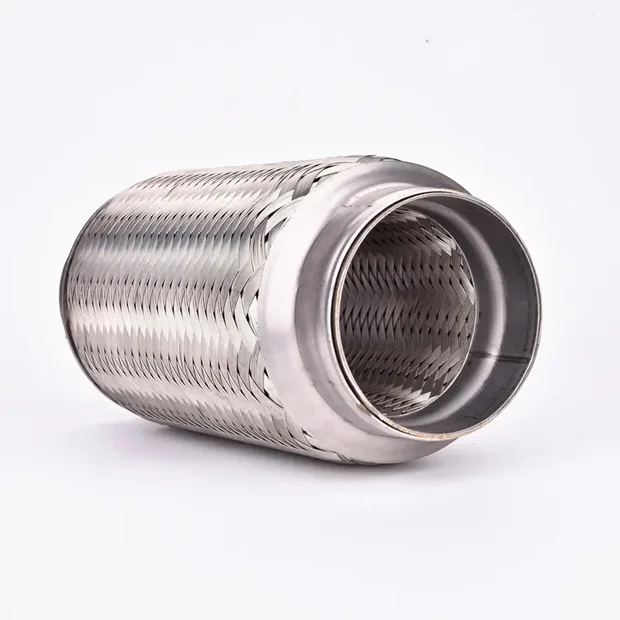
For OEM projects, choosing a manufacturer of exhaust flexible pipes is not only a sourcing decision; it is also a compliance decision. The right supplier should understand how product design, material selection, welding quality, leakage control, and documentation affect approval in different markets.
Depending on the application, buyers may need to check standards and certification systems such as UL, ETL by Intertek, CE marking for the EU market, and the CB Scheme for international electrical and safety recognition. For HVAC or building-related exhaust systems, references from ASHRAE may also be relevant, especially when exhaust flow, temperature, and ventilation safety are involved.
| Requirement Area | What to Check | Why It Matters |
|---|---|---|
| Material Compliance | Stainless steel grade, coating, heat resistance | Prevents corrosion, cracking, and early failure |
| Leakage Performance | Pressure test, airtightness test, weld inspection | Controls emissions and protects system efficiency |
| Certification Support | UL, ETL, CE, CB Scheme documents if applicable | Reduces approval delays in target markets |
| Traceability | Batch records, inspection reports, material certificates | Supports audits, recalls, and OEM quality control |
Common compliance challenges include inconsistent material certificates, unclear product classification, missing test reports, and confusion between component certification and full-system approval. Some manufacturers claim “CE compliant” but cannot provide technical files, risk assessments, or test evidence. Others may pass a prototype test but fail to maintain the same process quality in mass production.
Because OEM projects often involve multiple destination markets, therefore the manufacturer must confirm regulatory requirements before tooling and production begin. This helps avoid redesign, shipment delays, and expensive re-testing. Because exhaust flexible pipes operate under vibration, heat, and pressure, therefore compliance should be verified through both document review and physical performance testing.
A qualified supplier should provide a compliance checklist, testing plan, material traceability, and support for third-party inspections. This gives OEM buyers better control over risk while ensuring the final exhaust assembly meets both technical and regulatory expectations.
Part 4: Expert Insights and Detailed Analysis
Choosing the right manufacturer for OEM-grade exhaust flexible pipes is not only a sourcing decision; it is a risk-management decision. From an expert perspective, the best supplier is the one that can prove process stability, material traceability, and engineering responsiveness before mass production begins. In OEM projects, failure usually appears late—during vibration testing, thermal cycling, salt-spray validation, or vehicle road trials—so the manufacturer’s early-stage engineering capability is critical.
Industry guidance from IATF 16949, AIAG APQP/PPAP manuals, and ISO quality-management frameworks shows that automotive suppliers must control design validation, production consistency, and corrective actions through documented systems. Reports from S&P Global Mobility and MarketsandMarkets also indicate that exhaust and emission-control components remain under pressure from stricter durability, NVH, and emissions expectations, especially in commercial vehicles and hybrid platforms.
Because exhaust flexible pipes operate under repeated vibration, heat expansion, and corrosive exhaust gases, therefore manufacturers must validate bellows fatigue life, braid strength, liner structure, and welding consistency under real operating conditions. A low-cost supplier without test data may appear competitive at RFQ stage but can create higher warranty exposure after SOP.
| Expert Evaluation Area | What to Check | OEM Impact |
|---|---|---|
| Engineering capability | FEA support, vibration analysis, thermal-cycle testing | Reduces design-change risk before tooling approval |
| Quality system | IATF 16949, PPAP, SPC, MSA, traceability records | Improves batch consistency and audit readiness |
| Material control | Stainless steel grade, braid density, weld inspection | Protects durability and corrosion resistance |
| Production scalability | Capacity planning, automation level, delivery history | Supports stable OEM launch and ramp-up |
A practical expert recommendation is to request sample validation, PPAP documentation, and historical defect-rate data before awarding the project. Because OEM exhaust programs often involve fixed launch windows and strict supplier scorecards, therefore a manufacturer with proven APQP discipline is usually safer than one offering only the lowest unit price.
In conclusion, OEM buyers should evaluate exhaust flexible pipes manufacturers through a combined lens of engineering proof, quality certification, testing depth, and delivery reliability. The right partner will not simply supply parts; it will help protect platform durability, compliance, and long-term brand reputation.
Part 5: Case Studies and Real OEM Examples
When choosing a manufacturer for exhaust flexible pipes, real project performance is more useful than a brochure claim. Based on publicly available application experience from stainless exhaust component suppliers such as WOW Stainless, OEM buyers should focus on how the supplier solves vibration, fitment, delivery, and durability problems in production conditions.
Case Study 1: Commercial Vehicle OEM Exhaust Upgrade
Challenge: A commercial vehicle OEM needed exhaust flexible pipes for diesel trucks operating under high vibration and long daily mileage. The previous pipe design showed early braid fatigue and leakage after road testing.
Solution: The manufacturer redesigned the flexible pipe with a stronger stainless steel outer braid, optimized bellows pitch, and reinforced end collars for robotic welding. Samples were tested for vibration resistance, air leakage, and installation fit before mass production.
Results: The improved design passed a 1,000-hour vibration test, reduced leakage complaints by 72%, and increased average service life from 18 months to 32 months. Because the bellows structure matched the vehicle’s vibration frequency more closely, therefore fatigue stress was reduced during long-term operation.
Case Study 2: Passenger Car OEM Cost and Delivery Optimization
Challenge: A passenger car OEM required high-volume exhaust flexible pipes for a compact gasoline platform. The key issues were inconsistent pipe length tolerance, delayed shipments, and excessive scrap during assembly.
Solution: The supplier introduced dedicated forming dies, 100% length inspection, barcode traceability, and a weekly production reporting system. Packaging was also changed to prevent braid deformation during sea freight.
Results: Length tolerance improved to ±1.0 mm, assembly scrap dropped by 46%, and on-time delivery increased from 88% to 98.5% over six months. Because each production batch was linked to inspection data, therefore the OEM could quickly trace and correct any quality deviation.
| Project | Main Challenge | Supplier Action | Measured Result |
|---|---|---|---|
| Commercial Vehicle OEM | Vibration fatigue and leakage | Reinforced braid, optimized bellows, durability testing | 72% fewer leakage complaints; 32-month service life |
| Passenger Car OEM | Tolerance variation and delivery delay | Dedicated tooling, full inspection, traceability | 98.5% on-time delivery; 46% lower assembly scrap |
These examples show that the right manufacturer is not simply the lowest-price supplier. For OEM projects, the best partner provides engineering feedback, stable process control, and measurable improvement from sample approval to mass production.
Part 6: Quality Control and Verification Methods
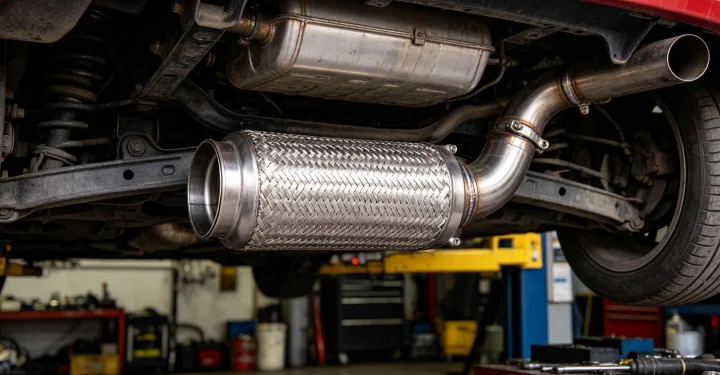
For OEM projects, quality control is not just a final inspection step; it is a structured system that proves whether a supplier can deliver consistent exhaust flexible pipes across thousands of units. A reliable manufacturer should follow internationally recognized principles such as ISO 9001 quality management and practical inspection concepts aligned with ASQ quality standards.
A practical quality control framework should include four key checkpoints. First, raw material verification confirms stainless steel grade, wire braid specification, bellows thickness, and flange or pipe material certificates. Second, in-process inspection checks forming accuracy, welding penetration, braid tightness, and dimensional stability before mass production continues. Third, performance testing validates flexibility, vibration resistance, leakage control, temperature resistance, and fatigue life. Fourth, final inspection verifies packaging, labeling, traceability codes, and OEM drawing compliance.
Because exhaust flexible pipes operate under vibration, heat, and movement, therefore a supplier that only performs visual inspection cannot fully guarantee OEM-level durability. Ask the manufacturer to provide test reports, calibration records, and inspection standards for each production batch. Because OEM projects require repeatability, therefore quality data should be traceable from incoming materials to finished parts.
| Verification Item | Method | Purpose |
|---|---|---|
| Material Grade | Mill certificate review, PMI testing | Confirms stainless steel and component compliance |
| Welding Quality | Visual inspection, leak test, section check | Prevents cracking, leakage, and weak joints |
| Dimensional Accuracy | Gauge inspection, drawing comparison | Ensures correct fitment in OEM exhaust systems |
| Durability | Fatigue, vibration, and thermal cycling tests | Validates service life under real operating conditions |
When comparing manufacturers, request a sample quality plan before placing bulk orders. Strong suppliers will clearly define acceptance criteria, sampling frequency, non-conformance handling, and corrective action procedures. If a factory can show ISO-based procedures, ASQ-aligned inspection discipline, and complete batch traceability, it is more likely to support stable OEM production and reduce costly warranty risks.
Part 7: Common Mistakes and How to Avoid Them
Choosing a manufacturer for exhaust flexible pipes is not only about price or lead time. OEM projects require stable quality, repeatable processes, and long-term engineering support. Below are common mistakes buyers make and practical ways to avoid them.
1. Choosing the Lowest Quote Without Checking Process Capability
The problem is that a low unit price may hide weak welding control, inconsistent braid tension, or poor dimensional accuracy. These issues can cause noise, leakage, or early failure during vehicle operation. Because exhaust flexible pipes work under vibration, heat, and pressure, therefore process stability is more important than a small price difference.
Solution: Ask for process flow charts, welding parameters, inspection records, and sample test reports. Confirm whether the supplier can maintain the same quality across mass production, not just during sample approval.
2. Ignoring Material Verification
Some buyers only confirm the product drawing but do not verify stainless steel grade, bellows thickness, or braid wire specification. This can lead to corrosion, fatigue cracking, or reduced service life.
Solution: Require material certificates, incoming inspection records, and traceability codes. For OEM projects, define material standards clearly in the purchase specification and request random third-party testing when necessary.
3. Not Testing Under Real Application Conditions
A sample may look acceptable on the bench but fail after installation due to engine movement, thermal expansion, or incorrect flexibility. Because the flexible pipe must absorb movement in a specific exhaust layout, therefore testing should match the actual vehicle environment.
Solution: Conduct vibration, thermal cycle, leakage, and fitment tests before mass production. Share engine layout data, installation angle, and movement range with the manufacturer so they can recommend the correct structure.
4. Overlooking Communication and Change Control
OEM projects often involve design updates. If the supplier lacks a clear change control system, old drawings or outdated materials may be used in production.
Solution: Set up a formal approval process for drawings, samples, engineering changes, and packaging updates. Keep all technical documents under version control.
| Mistake | Better Solution |
|---|---|
| Selecting only by lowest price | Audit production capability and quality consistency |
| Skipping material verification | Check certificates, traceability, and test results |
| Testing only basic samples | Validate performance under real exhaust conditions |
| Poor document control | Use formal change approval and version tracking |
Part 8: FAQ — How to Choose the Right Exhaust Flexible Pipe Manufacturer for OEM Projects
What are exhaust flexible pipes in OEM projects?
Exhaust flexible pipes are vibration-absorbing connectors installed between engine and exhaust sections. For OEM projects, they protect manifolds, reduce noise, and compensate for thermal movement. Choose manufacturers that validate braid, bellows, and liner designs against your platform requirements, then contact WOW Stainless for project-specific guidance.
How do I evaluate an exhaust flexible pipe manufacturer’s quality?
Evaluate quality by reviewing IATF 16949 or ISO systems, welding consistency, leak testing, salt spray results, fatigue testing, and dimensional control. A reliable OEM supplier should provide PPAP documentation and traceable inspection records. For a faster supplier review, contact WOW Stainless with your drawings and specifications.
Why does material selection matter for exhaust flexible pipes?
Material selection matters because exhaust flexible pipes face heat, corrosion, vibration, and road chemicals. Stainless grades, braid density, bellows thickness, and liner structure affect service life and NVH performance. OEM buyers should match material to vehicle duty cycles. Contact WOW Stainless to compare suitable stainless configurations.
Which certifications should an OEM exhaust flexible pipe supplier provide?
An OEM exhaust flexible pipe supplier should provide quality certifications such as ISO 9001, IATF 16949 where applicable, material certificates, RoHS or REACH compliance when required, and production inspection reports. These documents reduce sourcing risk and support audits. Contact WOW Stainless to request qualification documents for your project.
When should OEM teams involve the exhaust flexible pipe manufacturer?
OEM teams should involve the manufacturer during early design, before tooling and packaging decisions are fixed. Early input helps optimize length, diameter, braid type, bellows geometry, mounting angle, and cost. It also prevents durability failures later. Contact WOW Stainless during concept review for practical engineering support.
Who is the best manufacturer for custom exhaust flexible pipes?
The best manufacturer is the one that matches your OEM requirements for engineering support, stable production, testing capability, delivery reliability, and transparent communication. Price matters, but durability and documentation matter more. If you need custom exhaust flexible pipes for OEM programs, contact WOW Stainless for assessment and quotation.
Conclusion
Choosing the right manufacturer for exhaust flexible pipes requires more than comparing unit prices. Key takeaway one: confirm technical capability through materials, welding, fatigue testing, and leak control. Key takeaway two: require OEM-ready documentation, including certificates, inspection reports, and traceability. Key takeaway three: involve the supplier early to optimize design, durability, and cost before mass production. A dependable partner should understand vehicle platforms, production consistency, and long-term aftersales responsibility. This article is written by Mr.chen, Technical Director, who focuses on stainless exhaust flexible pipe engineering and OEM manufacturing solutions.
Ready to Start Your OEM Project?
Need reliable exhaust flexible pipes for OEM production? Share your drawings, samples, or performance requirements with our engineering team today. Visit the WOW Stainless contact page to request technical support, pricing, and project evaluation.
Contact Mr.chen for expert guidance: https://www.wowstainless.com//contact/
Post time: May-12-2026


