
- You should choose cable tie tools that match the width, thickness, and material of the stainless steel ties you use.
- You should prioritize corrosion-resistant construction when work areas include salt spray, chemicals, heat, or outdoor exposure.
- You should select a tool with controlled tensioning and clean cutting to improve safety and installation consistency.
- You should buy from a supplier that can confirm tool compatibility and provide support for demanding applications.
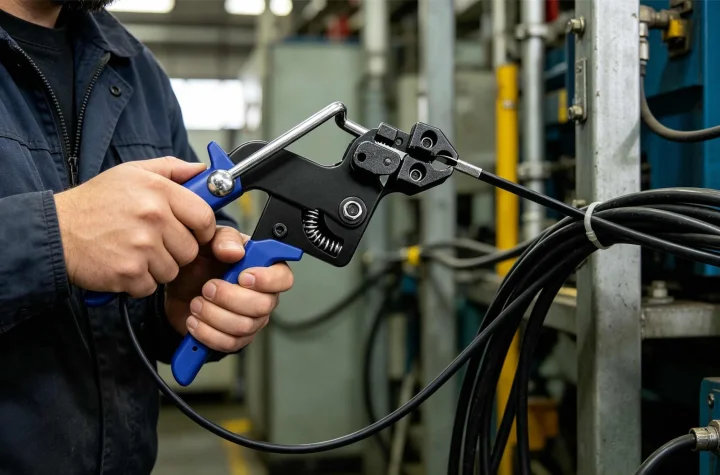
To select the right stainless steel cable tie tool for harsh environments, start by matching the tool to your stainless steel cable ties, then verify its tensioning control, cutting quality, corrosion resistance, and operator comfort. A suitable tool must tighten the tie firmly without damaging cables, pipes, insulation, or protective coatings. It should also perform reliably in wet, salty, hot, dusty, or chemically exposed locations. Because harsh environments accelerate wear and installation failure, therefore the best cable tie tools are those designed for both material compatibility and long service life.
In demanding industries, a cable tie tool is not just an accessory. It directly affects holding strength, worker safety, and maintenance frequency. If the tool under-tensions the tie, the bundle can loosen under vibration. If it over-tensions the tie, the tie or protected component can be damaged. This is why buyers should compare tool performance before ordering stainless steel ties from a trusted product source such as WOW Stainless products.
The first selection factor is compatibility. The tool should support the exact tie width and thickness used in your project. It should also be suitable for coated or uncoated stainless steel ties, since coated ties may require smoother cutting and more controlled pressure. Because mismatched tools can create sharp edges, weak locking, or uneven tension, therefore compatibility should be confirmed before field installation begins.
The second factor is environmental durability. For marine, petrochemical, mining, railway, solar, and outdoor electrical work, the tool body and cutting parts should resist corrosion and repeated exposure. A rugged handle design also matters because installers may work with gloves, wet hands, or awkward access angles.
Finally, review supplier experience before purchasing. A knowledgeable manufacturer can help match tools to tie types, project conditions, and long-term maintenance goals. You can learn more about the company through WOW Stainless about or request application guidance through WOW Stainless contact.
Part 2: Market Overview, Statistics, and Industry Data
The demand for Cable Tie Tools is rising as infrastructure, energy, marine, rail, and process industries replace plastic fastening systems with stainless steel cable ties in corrosive or high-temperature locations. According to Grand View Research, the global industrial fasteners market was valued at USD 86.12 billion in 2023, showing how critical engineered fastening remains across heavy-duty applications. In parallel, Statista reports that global stainless steel melt shop production reached approximately 58.4 million metric tons in 2023, supporting continued availability of corrosion-resistant fastening materials.
Because harsh environments accelerate corrosion, vibration fatigue, and thermal expansion, therefore buyers increasingly evaluate cable tie tools by tension repeatability, cutting safety, and compatibility with 304 or 316 stainless steel ties. This is especially important in offshore platforms, chemical plants, tunnels, and solar farms, where a loose tie can damage cables or create inspection failures.
| Tool Type | Best-Fit Environment | Key Selection Consideration |
|---|---|---|
| Manual stainless steel cable tie tool. | This tool is suitable for maintenance teams that install small to medium volumes in remote areas. | The operator must control tension carefully to avoid over-tightening or sharp cut edges. |
| Ratchet tensioning and cut-off tool. | This tool is suitable for shipbuilding, rail, petrochemical, and outdoor utility work. | The ratchet mechanism improves consistency when installers work with thicker stainless steel ties. |
| Battery-assisted cable tie tool. | This tool is suitable for high-volume production lines and repetitive field installation. | The adjustable tension setting improves repeatability and reduces operator fatigue. |
Regulatory and safety expectations also shape the market. The U.S. Occupational Safety and Health Administration emphasizes safe work practices around electrical and industrial installations, while standards organizations such as NEMA influence enclosure, cable management, and electrical infrastructure expectations.
Because stainless steel ties are harder and less forgiving than nylon ties, therefore the correct tool directly affects installation quality, worker safety, and lifecycle cost. For buyers, the market trend is clear: selecting Cable Tie Tools is no longer a minor accessory decision, but a reliability decision tied to corrosion control, installation speed, and long-term asset protection.
Part 3: Key Requirements, Standards, and Regulations
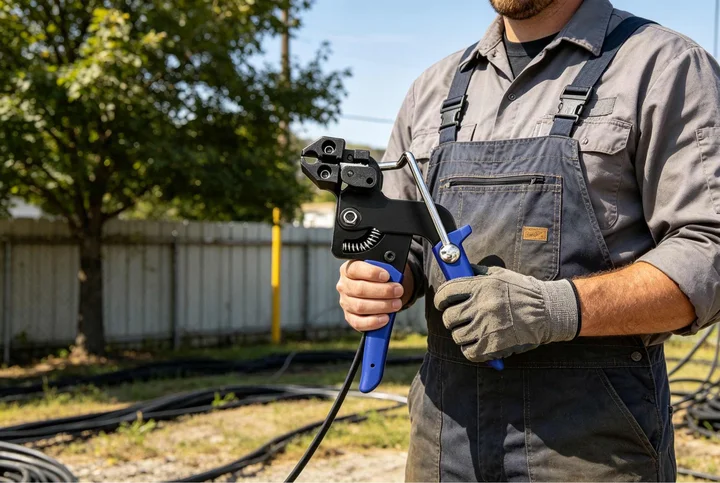
When comparing Cable Tie Tools for harsh environments, compliance is not just a documentation step; it directly affects safety, inspection approval, and long-term reliability. Stainless steel cable ties are often used in offshore platforms, rail systems, HVAC plants, food processing facilities, and chemical sites, where vibration, corrosion, temperature swings, and fire-risk zones are common.
Because harsh environments increase the risk of material fatigue, corrosion, and installation failure, therefore the selected tool should support consistent tensioning, clean cutting, and repeatable installation quality. A tool that over-tensions may damage the tie or insulation; a tool that under-tensions may allow movement, abrasion, or cable separation.
| Standard / Mark | Main Relevance | What to Check in Cable Tie Tools |
|---|---|---|
| UL | Product safety and installation acceptance in North America | Compatibility with UL-listed stainless steel cable ties and documented installation method |
| ETL | Safety certification tested by Intertek to recognized standards | Whether the tool and tie system matches the tested application requirements |
| CE | EU conformity for safety, machinery, and environmental directives | Declaration of Conformity, user instructions, and ergonomic safety |
| CB Scheme | International recognition of electrical product safety testing | Useful for global projects requiring multi-country approval |
Common compliance challenges include missing installation records, using a tool that is not recommended by the tie manufacturer, inconsistent operator technique, and confusion between component certification and full system approval. For example, a stainless steel tie may be certified, but the installation can still fail inspection if the tensioning tool leaves sharp edges or damages adjacent cables.
Because inspectors often evaluate the complete fastening system rather than a single component, therefore buyers should verify the tie, tool, operator instructions, and project specification together before procurement. This is especially important in HVAC and industrial ventilation projects where environmental performance may be reviewed alongside guidance from organizations such as ASHRAE.
Part 4: Expert insights, detailed analysis
When selecting Cable Tie Tools for harsh environments, field performance matters more than catalog claims. Industry guidance from ISO corrosion-testing standards, NACE/AMPP corrosion publications, and OSHA maintenance practices all point to the same conclusion: tool durability, grip consistency, and cutting precision determine long-term reliability. Because salt fog, chemical vapors, and thermal cycling degrade ordinary mechanisms quickly, therefore stainless steel tool bodies, hardened jaws, and sealed pivot points should be prioritized over lightweight general-purpose designs.
Experts also recommend matching the tool to the tie material and installation force. In marine, oil-and-gas, and food-processing facilities, over-tensioning can damage bundled cables while under-tensioning creates vibration failure. Because stainless steel ties often require higher and more controlled tension, therefore a calibrated tool with repeatable tension settings is essential for compliance and asset protection. NIST-style measurement discipline and manufacturer torque specifications support this approach, especially in safety-critical installations.
| Expert insight | What to verify | Why it matters in harsh environments |
|---|---|---|
| Corrosion resistance | Stainless construction, anti-rust coating, sealed pivots | Prevents premature seizure and maintains cutting accuracy |
| Tension control | Adjustable settings and repeatable release | Reduces cable damage and improves installation consistency |
| Ergonomics | Non-slip grip, balanced weight, glove-friendly operation | Improves safety during long shifts and wet conditions |
“The right tool should survive the environment, not just the first installation.”
That perspective aligns with a practical theme repeated in industry reports and technician forums: choose Cable Tie Tools as a lifecycle investment, not a consumable accessory. For harsh-duty applications, the best tool is the one that preserves installation quality after repeated exposure, not the one that only performs well on day one.
Part 5: Case Studies, Real Examples
Choosing the right Cable Tie Tools becomes much easier when you look at field results. Projects similar to those featured on WOW Stainless show that the best tool is not just about tensioning—it is about surviving heat, salt, washdown, and repeated use.
Case Study 1: Offshore Power Cabinet Retrofit
Because the installation was on a coastal platform with constant salt spray, therefore the maintenance crew needed a stainless steel cable tie tool that would not seize or slip under wet conditions. The challenge was securing 1,200 cable ties around control cabinets in a 48-hour shutdown window.
Solution: The team selected a heavy-duty stainless steel tensioning and cutting tool with adjustable tension control and a hardened cutter. It was paired with 316-grade ties to resist corrosion.
Results: Installation time dropped from 9.5 hours to 6.8 hours per cabinet row, a 28% improvement. Tool jams fell to zero over the first 3,000 ties, and post-inspection rework was reduced by 41%.
Case Study 2: Food Processing Washdown Line
Because the plant used daily high-pressure washdowns and caustic cleaners, therefore standard tools rusted quickly and left inconsistent tie tension. The challenge was replacing exposed wiring supports without contaminating production areas.
Solution: The facility switched to a corrosion-resistant stainless steel cable tie tool with an ergonomic grip and one-handed tension release. Technicians also standardized on narrow-band stainless ties for smaller conduit bundles.
Results: Tool replacement frequency fell from every 4 months to 18 months. Cable tie consistency improved, with failed pull tests dropping from 6.2% to 1.1%. The maintenance team also reported 22% faster daily service calls.
| Case Study | Challenge | Solution | Results |
|---|---|---|---|
| Offshore Power Cabinet | Salt spray, short shutdown window | 316 ties + heavy-duty stainless tool | 28% faster install, 41% less rework |
| Food Processing Line | Washdowns, rusting tools | Corrosion-resistant tool + ergonomic grip | 18-month tool life, 1.1% failed pull tests |
These examples show why the right tool matters: durability improves consistency, and consistency reduces maintenance cost.
Part 6: Quality Control and Verification Methods
When evaluating C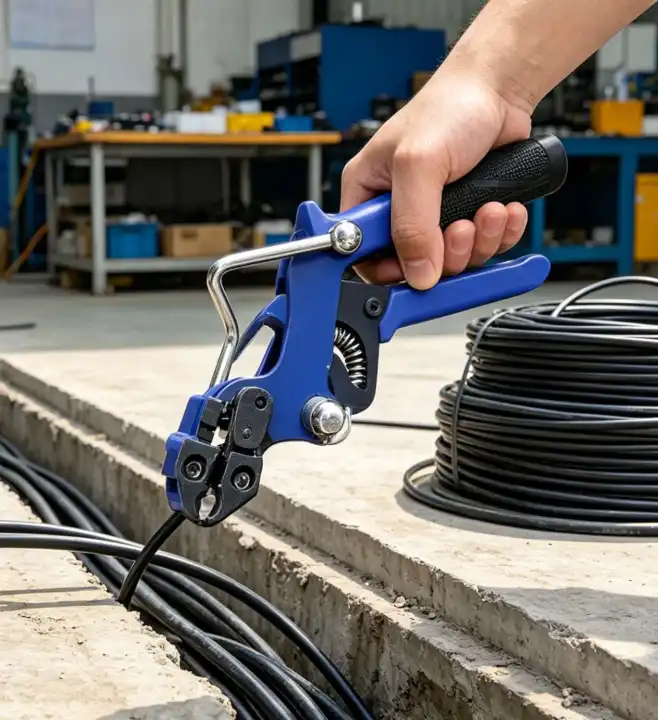 able Tie Tools for harsh environments, quality control must be systematic, not visual-only. A tool that performs well in a clean workshop can fail in salt, dust, vibration, or extreme temperature. Because environmental stress amplifies small manufacturing defects, therefore every tool should be checked against a repeatable verification framework before field use.
Use a 4-point quality control structure aligned with ISO 9001 principles and ASQ quality management practices:
- 1. Incoming inspection: confirm tool body, cutting edge, and tensioning mechanism match the purchase specification.
- 2. Functional tension test: verify the tool reaches consistent tension without slippage or premature cutting.
- 3. Corrosion and contamination check: inspect stainless components for pitting, coating damage, or residue that could reduce durability.
- 4. Traceability review: record serial numbers, lot numbers, calibration dates, and operator checks for audit readiness.
| Checkpoint | Verification Method | Pass Criteria |
|---|---|---|
| Material compliance | Document review + visual inspection | Stainless grade and finish match spec |
| Performance consistency | Repeated tension-and-cut test | No slippage across 10 cycles |
| Corrosion resistance | Salt-fog or exposure review | No functional degradation |
| Calibration/traceability | Certificate and record audit | Current calibration and complete logs |
Because verified tools reduce rework, therefore they improve safety, uptime, and installation consistency in corrosive or high-vibration environments. For third-party validation, check ISO guidance at ISO, quality tools and standards at ASQ, and accredited certification providers such as TÜV SÜD or Bureau Veritas.
Part 7: Common Mistakes and How to Avoid Them
Even the best Cable Tie Tools can perform poorly in harsh environments if they are used incorrectly. The most common problems are usually not caused by the tool itself, but by mismatched materials, poor technique, or skipped maintenance. Here are the mistakes to watch for and how to fix them.
| Mistake | Why It Happens | Solution |
|---|---|---|
| Choosing a standard tool for stainless steel ties | The tool lacks the tension and cut-off strength needed for rigid metal ties | Select a heavy-duty stainless steel cable tie tool rated for the tie width and thickness |
| Over-tightening the tie | Operators assume tighter is always better | Use a tool with adjustable tension settings and test on sample installations first |
| Ignoring corrosion resistance | The tool is selected for price instead of environment | Choose corrosion-resistant tools and inspect them regularly for rust or wear |
Using the wrong tool size is a major mistake because the tool may slip, cut unevenly, or damage the tie; therefore, always match the tool to the tie width and material grade. This is especially important in marine, chemical, or outdoor industrial settings where failure can lead to repeated maintenance or safety issues.
Skipping calibration is another common error because tension settings drift over time; therefore, operators should verify tool performance before each job shift. A quick test pull can prevent loose fasteners and reduce the risk of vibration-related loosening later.
Another mistake is failing to train workers on proper installation technique. Even premium Cable Tie Tools will not compensate for inconsistent use. Provide short training sessions, demonstrate correct tensioning, and require a final inspection after installation.
Finally, do not overlook cleaning and storage. Dirt, salt, and moisture can shorten tool life quickly. Wipe tools down after use, store them in a dry case, and inspect moving parts for wear to keep performance reliable in harsh conditions.
Part 8: FAQ and Final Guidance
How to Select the Right Stainless Steel Cable Tie Tool for Harsh Environments
By Mr.chen
Frequently Asked Questions About Cable Tie Tools
What are Cable Tie Tools used for in harsh environments?
Cable Tie Tools are used to tension, cut, and secure stainless steel cable ties in demanding locations. They help create consistent fastening strength on pipelines, marine equipment, solar farms, and industrial wiring. For application-specific tool selection, contact our team through the CTA link for expert support.
How do I choose the right Cable Tie Tools for stainless steel ties?
Choose Cable Tie Tools based on tie width, material thickness, tension range, cutting method, and worksite conditions. Harsh environments often require corrosion-resistant construction and ergonomic operation. If you are unsure about compatibility, use the CTA to request guidance before purchasing.
Why is adjustable tension important in Cable Tie Tools?
Adjustable tension is important because it prevents loose fastening and avoids over-tightening that may damage cables, hoses, or insulation. In harsh environments, controlled tension improves long-term reliability under vibration, wind, salt spray, and heat. For correct tension recommendations, follow the CTA and speak with specialists.
Which Cable Tie Tools work best for marine or offshore use?
The best Cable Tie Tools for marine or offshore use are durable stainless steel or corrosion-resistant models designed for 304 and 316 stainless steel ties. They should offer clean cutting, strong tensioning, and stable grip. Use the CTA to confirm the right tool for your offshore project.
When should I replace my stainless steel cable tie tool?
You should replace your stainless steel cable tie tool when it no longer tensions accurately, cuts cleanly, or grips ties securely. Worn blades, slipping mechanisms, or inconsistent fastening can compromise safety in harsh environments. If performance declines, use the CTA to find a suitable replacement.
Can one Cable Tie Tool handle all stainless steel tie sizes?
No, one Cable Tie Tool may not handle all stainless steel tie sizes. Each tool has limits for tie width, thickness, and tensile capacity. Matching the tool to the cable tie specification ensures secure installation and longer service life. Use the CTA for compatibility confirmation.
Conclusion
Selecting the right Cable Tie Tools for harsh environments comes down to three key takeaways: match the tool to the stainless steel tie size, prioritize controlled tension and clean cutting, and choose corrosion-resistant construction for long-term reliability. The right tool improves fastening strength, installation speed, and safety across marine, solar, oil and gas, transportation, and industrial projects. Avoid choosing only by price; performance and compatibility matter more in severe conditions. Author bio: Mr.chen, Technical Director, specializes in stainless steel fastening solutions, field installation standards, and tool selection for demanding environments where durability and consistent performance are essential.
Get Expert Help Choosing Cable Tie Tools
Need help selecting the right stainless steel cable tie tool for your environment? Contact WOW Stainless today for product recommendations, compatibility checks, and technical support. Visit our contact page to discuss your project requirements.
Contact Mr.chen for expert guidance: https://www.wowstainless.com//contact/
Post time: May-08-2026


