
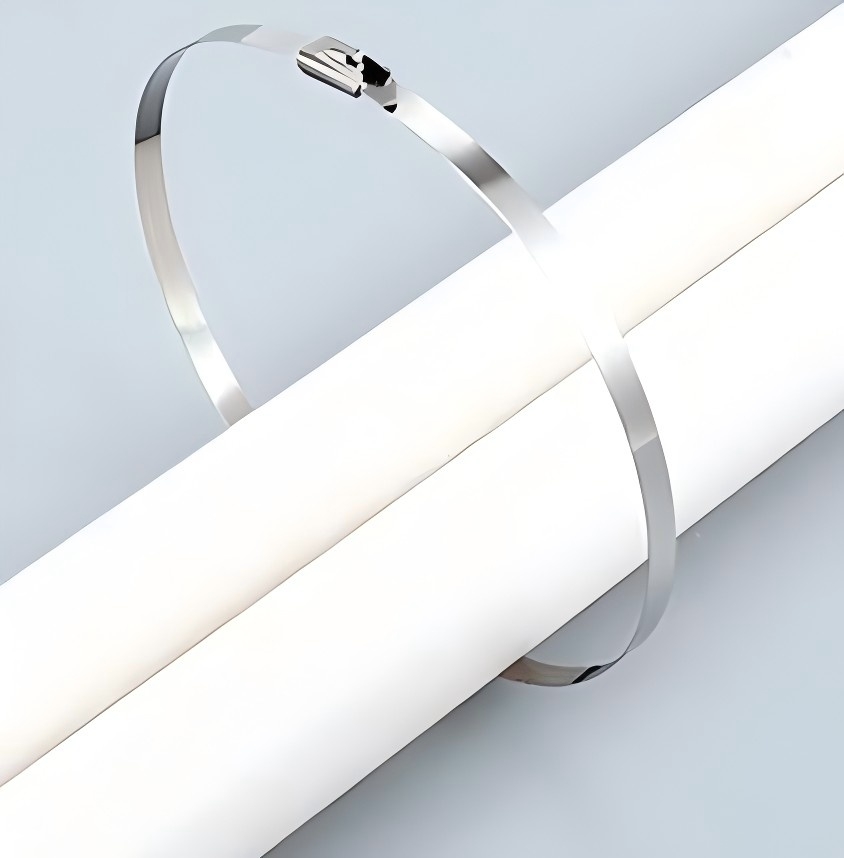
You need robust solutions for demanding conditions. 316L stainless steel offers superior corrosion resistance. This makes it the optimal choice for your self-locking stainless steel cable ties. For challenging environments, 316L Stainless Steel Cable Ties provide unmatched durability and performance.
Key Takeaways
- 316L stainless steel cable ties offer better protection against rust than 304 or 321 ties. This is because 316L has a special ingredient called molybdenum.
- Choose 316L cable ties for tough places like saltwater, chemical plants, or very hot areas. They last longer and keep things secure.
- Using 316L cable ties saves money over time. They do not need to be replaced often, which makes your systems more reliable and safe.
The Unmatched Corrosion Resistance of 316L for Self-Locking Stainless Steel Cable Ties
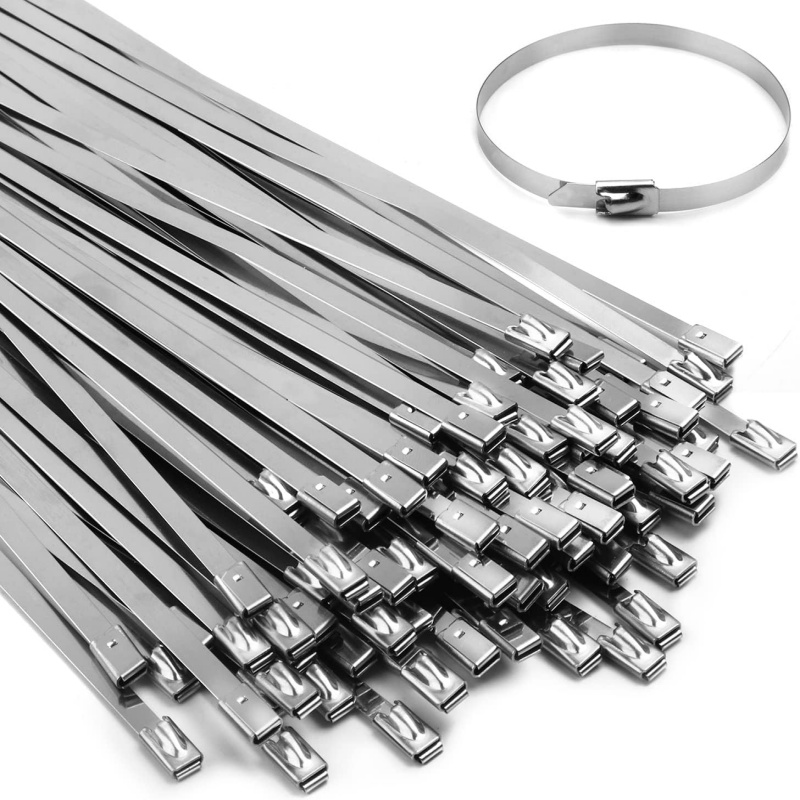
You demand robust materials for challenging environments. 316L stainless steel offers unmatched corrosion resistance. This makes it ideal for your self-locking stainless steel cable ties.
Molybdenum’s Role in Enhanced Durability
Molybdenum is a key element in 316L. This alloy contains approximately 2% molybdenum. This addition significantly enhances its resistance to pitting corrosion. Molybdenum boosts pitting corrosion resistance and improves the passive film. It minimizes oxidizing effects and reduces passive film breakdown. Molybdenum increases pitting and repassivation potentials. It also reduces the critical dissolution rate in acidified chloride solutions. The Pitting Resistance Equivalent Number (PREN) calculation shows molybdenum’s greater impact on pitting resistance compared to chromium.
Superior Performance in Chloride-Rich Environments
You need materials that perform well in harsh conditions. 316L excels in chloride-rich environments. For example, in 6M hydrochloric acid, bare 316L stainless steel showed a corrosion rate approximately ten times lower than bare 304 stainless steel. This significant difference highlights molybdenum’s role. It enhances corrosion resistance and improves the passivation process.
Preventing Pitting and Crevice Corrosion
316L’s unique composition actively prevents pitting and crevice corrosion. These types of corrosion can compromise structural integrity. The molybdenum content forms a more stable passive layer. This layer resists localized attacks. You ensure long-term reliability and safety for your applications.
316L vs. 304: Why 316L Excels for Self-Locking Cable Ties
You need materials that consistently perform in challenging environments. 316L stainless steel offers significant advantages over 304, especially when facing corrosive conditions. Its enhanced properties make it the superior choice for demanding applications.
Enduring Harsh Corrosive Conditions
You require materials that withstand severe conditions. 316L stainless steel consistently outperforms 304 in corrosive environments. Its unique composition provides superior protection.
| Feature/Environment | 316L Stainless Steel | 304 Stainless Steel |
|---|---|---|
| General Corrosion Resistance | Excellent in normal atmospheres and marine environments; superior in harsh environments (marine, chemical, medical) | Excellent in normal atmospheres; limited resistance to chloride-concentrated waters |
| Pitting Corrosion | Works extremely well against pitting corrosion; resistant to pitting for a chloride concentration of 1000 ppm | Can induce pitting in chloride-concentrated waters |
| Crevice Corrosion | Ensures maximum resistance against crevice corrosion | Can induce crevice corrosion in chloride-concentrated waters |
| Molybdenum Content | Contains molybdenum, enhancing corrosion resistance | Lacks molybdenum |
| Suitable Environments | Salty or acidic environments, strong chemicals, saltwater, body fluids | Mild conditions, mild acids (limited resistance) |
You see 316L’s clear advantage. It offers excellent general corrosion resistance, especially in harsh settings. You gain superior protection against pitting and crevice corrosion. This is crucial for long-term integrity.
Consider acidic environments. AISI 316L P/M shows greater resistance to corrosion than AISI 304L P/M in both sulfuric and phosphoric acid solutions. While powder metallurgical samples (including 304L and 316L P/M) can experience severe attack in strong sulfuric acid (25 and 50 wt%), 316L still demonstrates better performance.
In hydrochloric acid (6M HCl), coated 316L SS shows a remarkable improvement factor of over 60-fold. This contrasts sharply with coated 304 SS, which exhibits severe corrosion. The molybdenum content in 316L forms a higher quality passive film. Similarly, in sulfuric acid (5% and 25% H2SO4), coated 316L SS significantly reduces the corrosion rate by two orders of magnitude, while 304 SS experiences heavy corrosion. The addition of 2-3% molybdenum in 316L dramatically improves corrosion and oxidation resistance. This is especially true in environments with saline or chloride-containing chemicals. You ensure your self-locking stainless steel cable ties remain secure.
Longevity in Marine and Coastal Applications
Marine and coastal environments present significant challenges. You face constant exposure to saltwater and high humidity. These conditions accelerate corrosion in less resistant materials. 316L stainless steel is specifically engineered for these demanding settings. Its enhanced resistance to chlorides prevents pitting and crevice corrosion. This ensures your components maintain their structural integrity. You achieve extended service life for your applications. This superior performance translates into reduced maintenance and replacement costs. You can rely on 316L for lasting durability where other materials fail.
Reliability in Chemical Processing
Chemical processing plants expose materials to a wide array of corrosive substances. You need components that can withstand these aggressive chemicals. 316L is the preferred choice for these critical applications. Its molybdenum content enhances corrosion resistance, particularly against chloride pitting. This makes it ideal for environments with high contact with corrosive substances.
Consider a scenario involving brine or weak acid storage. 304 stainless steel often fails from pitting within one year. Replacing it with 316L extends the lifespan by 3–5 times. This demonstrates 316L’s superior resilience. For chemical processing equipment, such as in the production of organic acids, and for storage tanks and reactors, you choose 316L. It offers vastly superior corrosion resistance to chlorides and acids compared to 304. This ensures the reliability of your self-locking stainless steel cable ties in these harsh industrial settings.
316L vs. 321: Broader Applicability for Self-Locking Stainless Steel Cable Ties
You often face choices between different stainless steel grades. 316L and 321 both offer unique advantages. However, 316L generally provides broader applicability for your self-locking stainless steel cable ties due to its superior general corrosion resistance and optimal weldability.
General Corrosion Resistance Over High-Temperature Stability
You need materials that resist corrosion effectively in various conditions. Type 321 stainless steel exhibits general corrosion resistance similar to Type 304. Its resistance to pitting and crevice corrosion in chloride environments also compares to Type 304 or 304L. This similarity is primarily due to their similar chromium content. For more severe conditions, such as those involving higher chloride levels, lower pH, or elevated temperatures, you should consider alloys containing molybdenum. Type 316, with its molybdenum content, offers superior resistance to pitting and crevice corrosion in challenging ambient conditions compared to 321. While 321 excels in high-temperature applications where sensitization is a concern, 316L provides a more robust defense against general corrosion and localized attacks in a wider range of environments.
Optimal Weldability and Post-Weld Integrity
You require materials that maintain their integrity after welding. 316L stainless steel offers excellent weldability. It generally performs as effectively as 321 stainless steel in many pressure, temperature, and corrosion conditions. 321 stainless steel is primarily recommended when the pipe operates within the sensitization temperature range (450-850 °C) and subsequently faces aqueous or polythionic corrosion environments. This is because 321SS demonstrates superior resistance to grain boundary corrosion due to its titanium addition. However, 321SS’s corrosion resistance progressively deteriorates with increasing temperatures. For example, in a static corrosion test at 500°C in purified NaCl-MgCl2 eutectic salts, 321SS showed good resistance. Yet, it reached 136.70 μm/y at 600°C and 301.02 μm/y at 700°C. This deterioration comes from accelerated chromium dissolution and Fe-Ni phase formation, leading to obvious intergranular corrosion above 600°C. 316L, on the other hand, maintains its corrosion resistance across a broader temperature spectrum, especially after welding, without the risk of sensitization-related issues in typical operating conditions.
Versatility Across Diverse Industrial Settings
You seek versatile materials for your operations. 316L’s superior general corrosion resistance and excellent post-weld integrity make it highly adaptable. You can confidently use it in marine, chemical, food processing, and pharmaceutical industries. Its resistance to a wide array of corrosive agents ensures reliability across diverse applications. This broad applicability reduces the need for multiple material types. You simplify your inventory and procurement processes. 316L provides a consistent, high-performance solution for many industrial needs.
Critical Applications Demanding 316L Self-Locking Cable Ties
You need reliable solutions for the toughest environments. 316L stainless steel self-locking cable ties provide essential performance in critical applications. They ensure durability and safety where other materials fail.
Marine and Offshore Installations
Marine and offshore settings present extreme challenges. You face constant exposure to saltwater and harsh weather. 316L stainless steel, with its 2-3% molybdenum content, offers exceptional resistance to chloride ions. This makes it ideal for marine environments where salt spray is a constant threat. This material can withstand over 1000 hours in the ASTM B117 salt spray test without rusting. This ensures component integrity in offshore wind farms. The toothed locking mechanism of these ties provides high tensile strength (≥1500N). This is crucial for securing cables under extreme mechanical stress and vibration. In offshore oil and gas operations, 316 stainless steel cable ties secure cables, pipelines, and other components on drilling platforms. They resist the corrosive effects of seawater, high humidity, and strong winds. This prevents damage and ensures continuous operation of critical systems.
| Feature | Benefit in Marine/Offshore Environments |
|---|---|
| Secure Locking Mechanisms | Prevents slippage, ensuring cables remain in place even in high-vibration settings common offshore. |
| Consistent Tension | Provides uniform pressure across cable bundles, minimizing loosening over time due to environmental stress. |
| 316-grade stainless steel | Ensures maximum corrosion resistance against saltwater and other corrosive elements. |
Food and Pharmaceutical Processing Environments
You operate in environments demanding strict hygiene and corrosion resistance. 316L stainless steel is a preferred choice in food and pharmaceutical processing. It offers superior corrosion resistance, especially in demanding conditions like high acidity or aggressive cleaning. This aligns with general hygienic design principles. While no explicit regulations mandate 316L over other food-grade stainless steels, you choose it for long-term reliability.
Chemical and Petrochemical Plants
Chemical and petrochemical plants expose materials to aggressive substances. You need components that withstand these conditions. 316L stainless steel cable ties offer superior corrosion resistance to chlorides and acids. They are crucial for clamping hoses and fluid lines, ensuring leak-free seals. These ties resist chemical attack and thermal cycling, common in petrochemical environments. A protective passive film on their surface helps them withstand acids, alkalis, oils, and solvents. For environments with high chloride or sulfur content, 316-grade ties provide extra protection.
Outdoor and Industrial Exposure
You require robust solutions for outdoor and industrial settings. These environments often involve varying temperatures, UV exposure, and potential chemical splashes. 316L stainless steel provides excellent durability against these elements. Its inherent corrosion resistance ensures your installations remain secure and functional for extended periods. You gain peace of mind knowing your components withstand harsh conditions.
The Long-Term Value of 316L Self-Locking Stainless Steel Cable Ties
You make smart choices for your operations. Investing in 316L self-locking stainless steel cable ties delivers significant long-term value. You gain superior performance and cost efficiency.
Minimizing Maintenance and Replacement Costs
You want to reduce operational expenses. 316L stainless steel cable ties significantly cut down on maintenance and replacement needs. These durable ties offer 30-60% savings over a 10-year period. You achieve these savings by avoiding frequent replacements of less resistant materials. Reduced maintenance and less downtime directly contribute to your overall cost-effectiveness.
Ensuring Enhanced System Reliability and Safety
You prioritize system reliability and safety. 316L stainless steel cable ties offer unmatched durability. They provide superior resistance to corrosion and high performance. This makes them ideal for heavy-duty, high-temperature, or corrosive environments. Other materials show less resistance in extreme conditions. They suit indoor use and mild temperature fluctuations. 316L stainless steel cable ties are highly resistant to many chemicals. These include acids, alkalis, oils, and solvents. This makes them exceptionally suitable for petrochemicals, pharmaceuticals, and marine applications. Exposure to corrosive substances is common there. Their ability to resist degradation ensures reliability. You reduce the risk of failure in chemically demanding environments.
Maximizing Lifecycle Performance and Investment
You seek maximum return on your investments. Choosing 316L for your self-locking stainless steel cable ties ensures optimal lifecycle performance. You extend the lifespan of your installations. You also protect your critical systems. This strategic investment guarantees lasting durability and peace of mind.
You see 316L stainless steel delivers unparalleled performance. It excels for your self-locking stainless steel cable ties in challenging conditions. Prioritizing 316L ensures superior longevity and reliability in demanding applications. Investing in 316L guarantees optimal long-term value for your operations.
FAQ
Why choose 316L over 304 for saltwater environments?
You choose 316L for saltwater. Its molybdenum content resists chloride corrosion. This prevents pitting and ensures long-term integrity in marine settings.
Are 316L self-locking cable ties suitable for chemical processing?
Yes, you can use 316L ties in chemical processing. They resist aggressive chemicals and acids. This ensures reliability and safety in harsh industrial environments.
How does 316L compare to 321 for general industrial use?
You find 316L offers broader applicability. It provides superior general corrosion resistance. Its optimal weldability also ensures post-weld integrity across diverse settings.
Post time: Dec-12-2025


