
The short answer
- 3/4H is harder than 1/2H. Our published hardness grades for precision strip run 1/8H, 1/4H, 1/2H, 3/4H and H, with FH, EH and SH available across the wider cold-rolled range.
- Harder is not better, it is a trade. A harder temper takes more force to form and holds its properties better, so the right choice comes from what your part has to do, not from the number in the catalogue.
- The published envelope: 0.03 mm to 0.3 mm thick, 10 mm to 600 mm wide, 1D and 2D and other surface finishes, slit edge or mill edge, to JIS, ASTM, AISI, EN and GB standards, minimum order quantity 3 MT.
- Ask for the number, not the designation. We publish that the low or elevated yield stress or strength can be specified, so the hardness and strength values should come back against your grade and thickness.
- Five checks decide it: your forming operation, whether you need spring properties, how flat and square the part must be, which grade and standard the drawing names, and what thickness and width tolerance you can hold.
The short answer: 3/4H is harder than 1/2H, and the choice is a forming decision rather than a shopping decision. A softer temper gives you more material to work with and less spring back; a harder temper gives you more strength in the finished part and less forgiveness in the press. Both are legitimate, and the mistake I see most often is a buyer who picks the harder number because the part is “precision” and then finds the forming operation cannot hold it.
What the temper designations actually mean on our strip
The hardness grades we publish for hard precision strip are 1/8H, 1/4H, 1/2H, 3/4H and H, and our wider cold-rolled range also carries FH, EH and SH above that. They are an ordered ladder, which means 3/4H sits above 1/2H and below H, and the difference between them shows up in two places at once: how the material behaves while it is being formed, and what it does afterwards.
One point worth being explicit about, because it is where specifications get quoted loosely. A temper designation is not a hardness number. It names a band, and the value inside that band depends on the grade and on the thickness, which is why our product note says that the low or elevated yield stress or strength can be specified. Because the same designation behaves differently across a thickness range, ask for the hardness value and the mechanical properties against your own grade and thickness, and treat any figure that arrives without that context as incomplete.
Our cold-rolled range also covers the wider picture you will be buying against: 200 series, 300 series and 400 series grades, duplex steel, heat resistant steel, and the precision cold-rolled hard grades listed above, alongside decorative finishes such as embossed plate, etched plate, 8K plate, titanium plate and sand plate. The precision stainless strip page is where the hard grades sit, and it is the page to send a buyer who is specifically choosing a temper.
The specification envelope you are buying into
Before the temper conversation, there is a simpler question: does the part fit our published envelope at all? Here is the hard precision strip specification as we publish it, unchanged.
| Item | Published value |
|---|---|
| Thickness | 0.03 mm to 0.3 mm |
| Width | 10 mm to 600 mm |
| Surface finished | 1D, 2D and others |
| Hardness | 1/8H, 1/4H, 1/2H, 3/4H and H |
| Edge | Slit edge or mill edge |
| Standard | JIS, ASTM, AISI, EN and GB |
| Origin | POSCO, TISCO, BAOXIN, Qingshan and others |
| Minimum order quantity | 3 MT |
| Tolerance, thickness | Plus or minus 0.005 mm in China |
| Tolerance, width | Plus or minus 0.1 mm |
Read that table as a set of constraints rather than a catalogue entry. A part that needs a 400 mm wide, 0.08 mm thick strip with a plus or minus 0.005 mm thickness tolerance is a specific request, and it is cheaper to establish that it is inside the envelope before the temper is discussed.
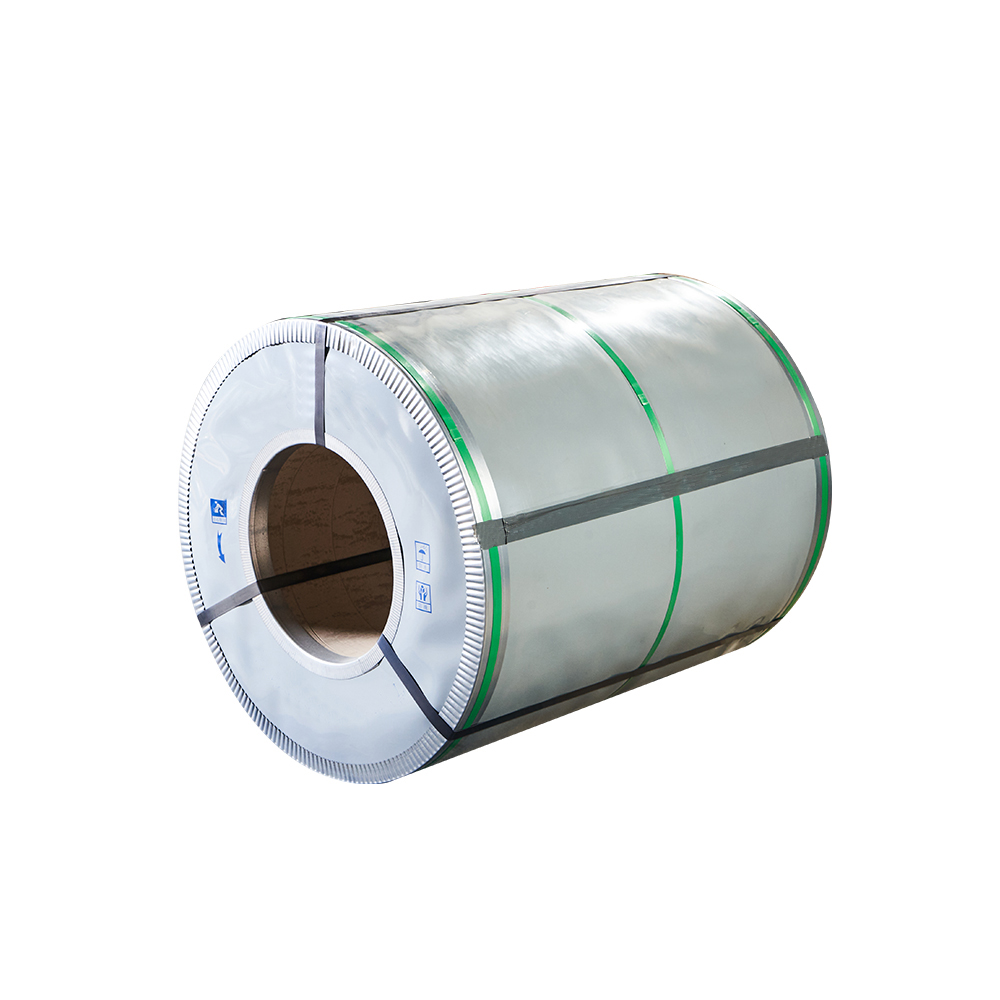
1/2H or 3/4H: the five checks that decide it
These are the questions I ask before I recommend a temper, and they are the questions worth asking any supplier.
| Check | Why it decides the temper |
|---|---|
| What does your forming operation do to the strip? | Slitting, stamping, bending and blanking all work the material. The harder the temper, the less the strip forgives, and the more the forming step has to be engineered around. |
| Do you need spring properties, and will you heat treat? | Spring temper is a heat treatment outcome, not a delivery state, so the two decisions are made at different points in the process. The spring side of the industry is specified tightly in its own right, for wire in ASTM A313. |
| How flat and square must the part be? | Our product note is explicit that higher requirements in terms of horizontal straightness and edge quality apply to this material, so flatness and temper are one decision, not two. |
| Which grade and standard is the drawing written against? | Our published table maps 201, 202, 301, 304, 316, 316L, 409 and 430 across ASTM/AISI, GB, JIS, EN and KS, so a drawing in one standard can be matched to the mill certificate in another. |
| What tolerance can you hold on thickness and width? | Thickness tolerance and slit width tolerance behave differently, and the slitting service carries its own plus or minus 0.2 mm slit width tolerance, so a narrow part can be limited by the slitter rather than by the coil. |
Because the five checks are sequential, the order matters: the forming operation and the spring requirement usually decide the temper, the flatness requirement sets the tolerance conversation, and the grade and standard determine which mill certificate you are signing off against.
What changes downstream when you move up the ladder
Moving from 1/2H to 3/4H changes three things in your own process, and none of them is the price.
First, the forming force and the tooling wear. Second, the spring back after forming, which is the material trying to return to its previous shape and which increases as the temper rises, so a part designed around 1/2H may need a different compensation at 3/4H. Third, the edge and flatness requirement, because a harder strip is less forgiving of a poor slit edge and a marginal levelling pass.
On the other side of the ledger, the harder temper gives you more strength in the finished part, and if you are going to heat treat for spring properties, the delivered temper is the starting point for that treatment rather than the end state. Our published applications for this material are a useful sanity check on where the harder end of the ladder gets used: medical devices such as scalpels, fasteners such as tower springs, circlips and gaskets, home appliance blades such as razor and juicer blades, and circuit boards for phones and computers.
One more published option worth knowing: remelt form is available for particularly high cleanliness requirements, which matters when the part goes into medical or electronic applications where surface inclusion matters more than it does in general fabrication.
How to specify it so the quotation is comparable
A quotation is only comparable if every bidder is quoting the same thing, and in stainless strip that takes five lines of instruction.
First, the grade and the standard. Use the published equivalence table to state ASTM/AISI, GB, JIS, EN or KS as your drawing requires, and say which mill certificate you expect. We also work with 304L, 316Ti, 317, 321, 436, 439, 441, 443, 444 and 2205, plus duplex, heat resistant and decorative finishes.
Second, the temper designation and the property you need from it. State 1/2H or 3/4H and add the yield strength or tensile expectation, or ask us to recommend against the forming operation.
Third, thickness, width and tolerance. Quote them separately, and say whether you need corrective levelling, since our slitting service covers material from 0.03 mm to 3.0 mm with slit widths from 10 mm to 1500 mm at a slit width tolerance of plus or minus 0.2 mm, plus coil cutting to length.
Fourth, surface, edge and finish. 1D or 2D or other surface finishes, and slit edge or mill edge, with any colour or passivation requirement written down.
Fifth, the documentation. Ask for the mill certificate against the heat number, the mechanical property values for your grade and thickness, and the quality system certificate with its scope and expiry, where ISO 9001:2015 is the version most buyers ask to see. For a European delivery the material declaration is the piece that travels into your buyer’s file, and for European buyers the framework is Regulation (EC) No 1907/2006 (REACH) on the registration, evaluation, authorisation and restriction of chemicals. Where the part ends up in a machine, the declarations sit inside the conformity file the machine builder assembles under the EU machinery rules, and Regulation (EU) 2023/1230 on machinery is now the regulation that replaced Directive 2006/42/EC.
Our quality team checks every shipment before it leaves, and pricing is handled on enquiry: leave your details for the product price list and we come back within 24 hours.
FAQs about stainless steel strip temper
Is 3/4H harder than 1/2H stainless steel strip?
Yes. The hardness grades we publish for precision strip run 1/8H, 1/4H, 1/2H, 3/4H and H, so 3/4H sits above 1/2H in the same ladder, and our wider cold-rolled range also carries FH, EH and SH grades above that. The exact value for a given grade depends on the grade and the thickness, so ask for the number against your own specification rather than working from the designation alone.
How do I choose between 1/2H and 3/4H for a stamped part?
Start with the forming operation and the property the finished part needs, not with the designation. Write down what happens to the strip after delivery, whether you need spring properties and whether you will heat treat, and how flat and square the part must be, then ask for the yield strength you need and the tolerance you can hold.
What thickness and width can be supplied in hard strip?
Our hard precision strip is published from 0.03 mm to 0.3 mm thick and 10 mm to 600 mm wide, with thickness tolerance of plus or minus 0.005 mm and width tolerance of plus or minus 0.1 mm, in 1D and 2D and other surface finishes, with slit edge or mill edge.
Which grades are available, and how do I map them to my standard?
Our published grade table maps 201, 202, 301, 304, 316, 316L, 409 and 430 across ASTM/AISI, GB, JIS, EN and KS designations, so a drawing written in one standard can be matched against the mill certificate in another. We also work with 304L, 316Ti, 317, 321, 436, 439, 441, 443, 444 and 2205, and duplex, heat resistant and decorative finishes.
Can you slit and level the strip to my width?
Yes. Our in-house coil slitting runs from 0.03 mm to 3.0 mm material thickness with slit widths from 10 mm to 1500 mm and a slit width tolerance of plus or minus 0.2 mm, with corrective levelling available, plus coil cutting to length.
What is the minimum order quantity?
The published minimum order quantity for hard precision strip is 3 MT, and pricing is handled on enquiry, with a reply within 24 hours once you leave your details for the product price list. Customised sizes and shapes are available, and every shipment is checked by our quality team before it leaves.
Send us the part and we will recommend the temper
Send the drawing, the grade, the thickness and width, what you do to the strip after delivery and the property the finished part has to hold, and we will come back with a temper recommendation and a specification you can put in front of your own customer. Our published guidance is that the selection of stainless steel has to consider appearance, air corrosion and the cleaning methods to be adopted, and then cost, aesthetic standard and corrosion resistance, and the same sequence is the right one for a temper decision.
You can raise it on our contact page, or start with the precision stainless strip range to see the hardness grades we publish and the specification envelope around them.
Post time: Nov-25-2026


