
-
TL;DR
- 1. By 2026, EV charging station construction is expected to accelerate, and fastening demand rises with every added charger, conduit run, and cable bundle across sites spanning 10 m² to 2,000 m².
- 2. Self-locking Stainless Steel Cable Ties are gaining share because they tolerate outdoor temperature swings from roughly -40 °C to +85 °C or more depending on the system design, so maintenance intervals can be extended.
- 3. In coastal and roadside installations, corrosion pressure can be severe within 12 months to 36 months, making stainless fastening a practical long-life choice.
- 4. A single fast-charging site can require 100 units to 1,000 units of ties across power, control, signage, fencing, canopy, and retrofit tasks.
- 5. Total ownership value improves when fewer replacements, fewer truck rolls, and fewer downtime events save labor hours measured in 2 h to 8 h per maintenance visit.
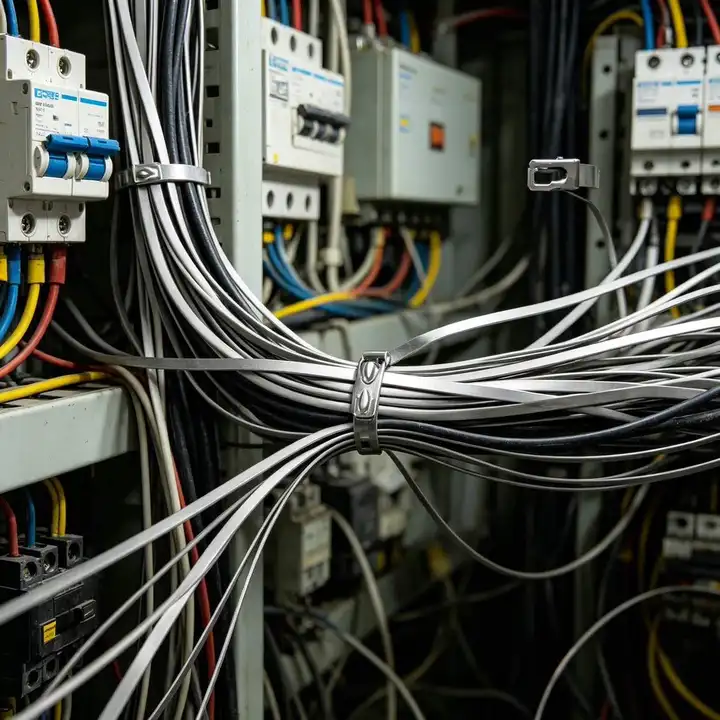
Why 2026 Is a Turning Point for EV Charging Hardware Demand
The EV charging market is entering a new phase in 2026. Earlier deployment waves often focused on proving demand, placing a limited number of chargers in flagship locations, and moving quickly with available hardware. The next wave is different. It is broader, more cost-sensitive, and more exposed to weather and real-world maintenance pressures. As more chargers move into highways, apartment complexes, logistics depots, hospitals, campuses, municipal lots, and retail parking fields, every supporting component matters more.
Fastening hardware is no longer a hidden afterthought. It matters because charging systems involve power cables, data lines, grounding runs, signage, bollard accessories, camera mounts, fencing add-ons, solar canopy wiring, and backup energy storage integration. Each of those elements creates bundling and attachment needs. Because charging stations now combine electrical density with public exposure, so the tolerance for fastening failure is much lower than it was in small pilot projects.
A market turning point typically happens when infrastructure owners move from “install fast” to “install for long service life.” That shift is visible in EV charging. Public charging locations often run every day of the year. Fleet depots may cycle vehicles in and out for 16 h/day to 24 h/day. Service calls are expensive. If a failed tie allows a cable to sag, abrade, or look unsafe, the repair cost can outweigh the original tie price many times over.
Because replacement labor is expensive, so a low-cost fastener that fails early can become the highest-cost option in the system.
That is one major reason buyers are reevaluating fastening materials in 2026. Another is environmental reality. Many charging points sit near roads treated with winter salts, near coastlines with chloride-laden air, or in areas with wide daily thermal swings. Corrosion resistance, mechanical stability, and installation speed all start to matter at the same time. Self-locking stainless steel ties fit that combination well.
What Are Self-Locking Stainless Steel Ties?
Self-locking stainless steel ties are metal cable ties designed with an integrated locking mechanism. Once the tail is inserted through the head and tensioned, the locking feature grips and resists loosening. In EV charging applications, this matters for both efficiency and reliability. Installers can secure bundles quickly, and asset owners gain confidence that the tie will remain tight under vibration, thermal expansion, and weather exposure.
The term Stainless Steel Cable Ties usually refers to ties made from grades such as 304 stainless steel or 316 stainless steel. Grade selection depends on the environment. General outdoor installations may use one grade, while coastal sites, chemical exposure zones, or salt-heavy road corridors may favor a more corrosion-resistant option. Because chloride exposure accelerates corrosion risk in many metals, so grade selection becomes a major purchasing decision for charging networks near coasts or winter road systems.
Core functional characteristics
- High tensile retention for stable bundling
- Corrosion resistance in wet and salty conditions
- Temperature durability across outdoor climates
- Non-melting metal body compared with many plastic ties
- Compact locking head for dense installation zones
- Long service life in fixed infrastructure
Common EV charging uses
- Cable bundling inside pedestals and cabinets
- Conduit support on racks and structural members
- Signage attachment on poles and fencing
- Solar canopy wire routing in parking lots
- Battery storage integration cable organization
- Retrofit maintenance work on existing sites
For a focused product reference, readers can explore https://www.wowstainless.com/stainless-steel-cable-ties/ as part of material and application comparison research.
Market Drivers Behind the Surge in Demand
1. Rapid expansion of charging infrastructure
Charging infrastructure growth is the largest demand driver. New public chargers, destination chargers, fleet charging depots, workplace installations, and mixed-use charging hubs all require physical cable management. A single site can have AC chargers, DC fast chargers, transformers, switchgear, communication systems, cameras, access control, and lighting. More hardware means more fastening points.
In practical terms, if a site expands from 4 chargers to 20 chargers, fastening needs do not rise linearly only with charger count. They also grow with trench routing, conduit branching, network equipment, and accessory infrastructure. Because larger sites need more cable separation and more safety organization, so the number of tie applications often rises faster than the visible charger count.
2. Outdoor exposure is harsher than originally assumed
Early charging networks sometimes underestimated how difficult outdoor conditions would be over multiple years. Sunlight, humidity, freeze-thaw cycles, wind-driven dust, road spray, and occasional impacts create cumulative stress. Metal fastening solutions stand out when these variables combine. Where a polymer tie might embrittle or weaken over time, a stainless option may preserve performance longer.
3. Public safety and visual order matter more
Public charging stations are customer-facing infrastructure. Loose wiring, sagging attachments, or degraded cable management can undermine perceived reliability. Site owners want installations to look secure and professional. Self-locking stainless ties support neat routing and stable retention, especially in visible areas around chargers, bollards, fence lines, and signage poles.
4. Maintenance budgets are under pressure
Operations teams increasingly prefer parts that lower repeat service events. Even a small item matters when multiplied across hundreds or thousands of charging points. If an inspection crew spends 3 h to replace failed ties at a remote charging hub, labor and travel costs can exceed the original material by a wide margin. Because service visits consume technician hours, fuel, scheduling slots, and possible charger downtime, so durable ties support lower lifecycle cost.
5. High-power charging adds complexity
As more sites install higher-power DC systems, wiring density can increase. Even when charging cables themselves are highly engineered, the surrounding support wiring and attached components still require dependable organization. Higher power infrastructure tends to demand higher discipline in routing and fastening.
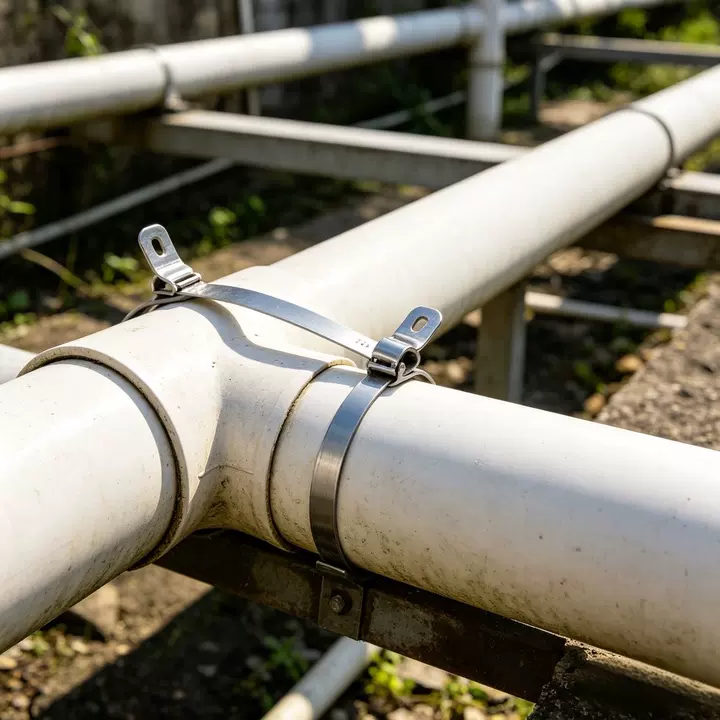
Why Stainless Steel Cable Ties Fit EV Charging Station Requirements
EV charging stations combine electrical infrastructure, civil works, steel structures, communication equipment, and public use. That mix favors versatile fastening products. Stainless Steel Cable Ties suit this environment for several reasons:
Corrosion resistance in real outdoor conditions
Rain, humidity, washdown events, de-icing salts, and airborne contaminants all challenge exposed hardware. Stainless steel’s corrosion resistance helps maintain strength and appearance over time. Because corrosion can reduce cross-section and weaken holding performance, so corrosion-resistant ties can preserve integrity longer in exposed charging installations.
Mechanical strength and vibration tolerance
Charging equipment may be mounted on structures affected by traffic vibration, door opening cycles, fan operation, and occasional physical contact. Metal ties can provide stronger retention in these environments. Stable tension retention supports safer cable positioning and more consistent site appearance.
Temperature performance
Outdoor charging stations face summer heat, winter cold, and localized heat near power equipment. Fastening systems must survive all of it. Metal ties are often preferred where thermal variation is broad. In many climates, infrastructure can see seasonal differences greater than 60 °C, which tests less durable materials.
Fire-adjacent and heat-adjacent considerations
While cable ties are only one small part of a charging station, planners still prefer materials that do not soften in the same way many polymers do under elevated temperatures. Metal construction offers a practical margin in heat-adjacent areas, particularly around equipment enclosures and exposed structural routes.
Installation speed
Self-locking mechanisms reduce repetitive installation effort. On large projects, saving even 5 s to 15 s per tie can add up when crews install 500 units to 2,000 units. Because crews often work under commissioning schedules, so faster fastening can improve project throughput.
Where Demand Shows Up Inside an EV Charging Site
Demand does not come from one obvious location. It spreads across the entire site. This is why forecasts for 2026 should count tie consumption as a system-wide metric rather than a charger-only metric.
| Site Area | Typical Use of Stainless Steel Cable Ties | Why Demand Is Rising in 2026 |
|---|---|---|
| Charger pedestals | Internal cable organization, label mounting, accessory retention | More chargers per site mean more repeated hardware points |
| Conduit routes | Bundling and structural attachment | Longer runs and more branches increase fastening count |
| Signage poles | Sign and notice mounting | Public wayfinding standards are expanding |
| Security fencing | Camera, sensor, and cable support | Sites need more monitoring and access control |
| Solar canopies | PV cable routing and support tie points | Energy-integrated charging hubs are increasing |
| Battery storage areas | Control cable management and segregation | Storage-plus-charging layouts add more wiring density |
| Retrofit zones | Replacement of aged fasteners | Earlier installations are entering maintenance cycles |
One underappreciated source of demand is the retrofit market. Many charging sites built in earlier phases are now being upgraded with better signage, network hardware, lighting, solar integration, or more charging stalls. Retrofits consume fastening hardware quickly, especially when original material choices proved less durable than expected.
2026 Forecast Logic: Why Unit Consumption Per Site Is Likely to Rise
Forecasting tie demand involves more than counting charging ports. Several changes point to higher unit consumption per location in 2026.
Larger average site footprints
Charging stations are evolving from simple curbside points to charging campuses. These larger sites include traffic guidance, queue management, bollards, safety signs, lighting, and support systems. Larger footprints create more distributed attachment tasks.
More integrated systems
A charging site may now include solar generation, battery storage, energy management controls, and remote monitoring. Each added subsystem multiplies cable routing needs. Because integrated energy systems require separate control and power paths, so installers need more tie points to keep layouts clear and maintainable.
Stricter maintenance expectations
Operators increasingly standardize spare parts and reduce avoidable service events. Durable ties become attractive when maintenance teams want consistency across regions. Standardization favors products that work across many site types.
Replacement cycles of earlier materials
Some first-generation installations are now old enough to reveal the weaknesses of short-life fastening choices. Field replacement creates a second wave of demand. Because aged ties can crack, loosen, discolor, or fail in exposed areas, so operators are more likely to upgrade to stainless during scheduled maintenance.
Economic Case: Why Buyers Look Beyond Unit Price
It is tempting to compare cable ties only by initial cost per unit, but that misses the operating reality of EV charging infrastructure. The right buying lens is total installed value over time. A tie that costs more at purchase can still be cheaper over a service period of 5 years to 10 years if it avoids replacement labor and equipment disruption.
Key cost components
- Material price per unit
- Installation labor time per unit
- Failure rate over months and years
- Truck-roll cost for inspection or repair
- Downtime cost if the issue affects charger operation
- Reputation cost from visibly degraded sites
Consider a simple comparison. A site uses 400 units of cable ties. If a lower-durability option fails at 20% over 24 months, that is 80 units needing attention. The material cost of replacement may still be small, but labor may require 2 technicians for 3 h, plus travel. Because labor dominates small-part maintenance economics, so long-life stainless ties often win the value comparison.
This is especially true for highway and fleet sites where access windows are constrained. Closing bays, setting safety controls, and dispatching personnel adds hidden cost. Downtime avoidance is often a stronger business case than raw component savings.
Material Selection: 304 vs 316 and Environmental Fit
Buyers evaluating Stainless Steel Cable Ties for EV charging stations often narrow choices by environmental severity. The most common conversation centers on 304 stainless steel and 316 stainless steel.
304 stainless steel
This is often selected for general industrial and outdoor environments where conditions are demanding but not extreme. It provides a practical balance of strength, corrosion resistance, and cost for many inland charging locations.
316 stainless steel
This grade is often preferred when chloride exposure is higher, such as coastal infrastructure, marine-adjacent parking areas, or regions with heavy road salt use. Because chloride-rich environments increase corrosion stress, so many specifiers move toward 316-grade ties where long-term exposure is expected.
| Environment | Typical Exposure Level | Common Material Preference | Reason |
|---|---|---|---|
| Inland urban parking lot | Moderate rain, UV, dust | 304 | Good all-around durability |
| Highway rest stop in snow region | Road salt, freeze-thaw cycles | 304 or 316 | Depends on de-icing intensity and maintenance target |
| Coastal charging plaza | Salt-laden air, humidity | 316 | Better chloride resistance |
| Industrial logistics yard | Pollution, vibration, weather | 304 or 316 | Selected by chemical exposure severity |
The correct fit depends on site survey data, climate, exposure pathways, and service-life targets. Buyers who want a starting point can review product information here: https://www.wowstainless.com/stainless-steel-cable-ties/.
How Self-Locking Designs Improve Installation Efficiency
Installation speed matters in new construction and retrofit work. Charging projects often involve multiple contractors working on tight sequences: civil, electrical, networking, signage, and final commissioning. Any hardware that simplifies repetitive work can reduce schedule friction.
Self-locking ties help by minimizing handling steps. Installers can feed, tension, and secure with a predictable locking action. That consistency matters when crews are working on ladders, inside cabinets, or around crowded structural members. Because installers repeat the same action hundreds of times, so even small ergonomic improvements can save meaningful labor hours over a full project.
Another benefit is uniformity. A consistent lock helps create a cleaner, more professional installation. In customer-facing charging sites, the visual quality of cabling and attachments contributes to perceived site reliability. Orderly infrastructure builds trust, especially in premium retail or fleet environments.
Regional Patterns Shaping 2026 Demand
Demand growth will not be identical everywhere. Regional conditions influence both volume and specification.
North America
Expansion of public fast charging, fleet electrification, and weather-exposed roadside infrastructure supports growing demand. Snow-belt regions especially care about salt resistance, while desert regions care about heat and ultraviolet stress. Wide climate variation favors robust fastening standards.
Europe
Dense urban charging, corridor networks, and strong public infrastructure integration support durable hardware adoption. Coastal exposure and long service-life expectations strengthen the case for stainless fastening in many markets.
Middle East
High ambient temperatures, dust, and strong sunlight make heat-tolerant and durable materials attractive. Extreme thermal exposure changes hardware priorities even where corrosion from salt is less dominant inland.
Asia-Pacific
This region includes megacities, humid coastal climates, tropical rainfall patterns, and rapidly scaling charging fleets. Demand for efficient installation and low-maintenance hardware is likely to rise with high deployment volume. Because large-scale rollout demands speed and repeatability, so self-locking stainless ties align with mass installation logic.
Procurement Trends: What Buyers Are Likely to Prioritize in 2026
Buyers in 2026 are increasingly practical. Rather than focusing only on catalog descriptions, they are likely to ask application-specific questions:
- What environment will the tie face over 3 years, 5 years, or 10 years?
- Will the site see road salt, marine air, washdown, oils, or industrial pollution?
- How many units are used per charger, per conduit meter, or per site?
- Can crews install the product quickly and consistently?
- Does the product help standardize maintenance across regions?
Procurement teams also care about supply continuity. Large network operators prefer hardware that can be specified across many projects with consistent quality. Standardized tie selection reduces operational complexity in warehousing, field service, and project documentation.
Another trend is the move toward specification by environment rather than by habit. Instead of saying “use the same tie everywhere,” operators increasingly segment sites into inland, coastal, high-vibration, high-heat, and retrofit categories. This favors suppliers that can support clear application matching.
Common Misconceptions About Stainless Steel Ties in Charging Infrastructure
Misconception 1: They are only for extreme industrial sites
Not true. While stainless ties are excellent in harsh environments, they are also valuable in ordinary public charging sites where long service life, professional appearance, and lower maintenance matter. Routine outdoor exposure is enough reason to consider stainless.
Misconception 2: Unit cost tells the full story
It does not. A small premium can be justified if it reduces replacements, especially across multi-site networks. Lifecycle economics matter more than shelf price.
Misconception 3: All outdoor ties perform similarly
They do not. Material grade, lock design, thickness, surface finish, and environmental fit all influence field performance. Specification details change outcomes.
Misconception 4: Fastening is a minor line item, so it has minor impact
Small parts can still create outsized maintenance consequences. A failed tie can permit abrasion, loosen routing discipline, or create a poor visual impression. Minor components often protect major assets.
Practical Buying Checklist for EV Charging Projects
If you are selecting Stainless Steel Cable Ties for a charging station project in 2026, use a simple checklist:
- Define the environment: inland, coastal, salted roads, industrial, humid, or high-heat.
- Estimate quantity: per charger, per conduit route, per sign, and per retrofit allowance.
- Select material grade: usually 304 or 316 based on exposure level.
- Confirm installation workflow: self-locking designs support field efficiency.
- Review service-life goals: target replacement intervals in years, not months.
- Assess maintenance cost: include labor time in h, not only material count in units.
- Standardize where possible: network-wide consistency simplifies operations.
Many project teams start with a product review page such as https://www.wowstainless.com/stainless-steel-cable-ties/ and then narrow the choice by installation environment and service expectations.
Future Outlook: What the 2026 Market Probably Looks Like
By 2026, demand for self-locking stainless ties in EV charging stations is likely to be shaped by three overlapping waves: new construction, site expansion, and replacement of earlier fastening choices. The strongest growth may come where these three waves overlap, such as public fast charging corridors, commercial fleet depots, and upgraded retail charging hubs.
The key market logic is straightforward. More chargers mean more hardware. More public exposure means stronger reliability requirements. More years of field data mean more informed material choices. Because charging infrastructure is maturing, so buyers are moving toward fastening solutions that support durability, efficiency, and appearance at the same time.
This does not mean every application will automatically use stainless steel ties. However, it does mean the market share of stainless, especially self-locking designs, is likely to rise in demanding installations. Sites with salt exposure, thermal extremes, visible public-facing layouts, and high maintenance costs have especially strong reasons to choose them.
In that sense, the surge is not a temporary fashion. It is a predictable response to infrastructure reality. When uptime, safety, and maintenance efficiency matter, durable fastening becomes strategic.
FAQ
1. Why are self-locking stainless steel ties gaining demand in EV charging stations by 2026?
Self-locking stainless steel ties are gaining demand because EV charging sites are expanding into harsher outdoor settings while also becoming more complex. A modern site may include chargers, conduits, communication systems, signs, security devices, solar canopies, and storage equipment, all of which require dependable fastening. Because these stations must operate year-round in rain, dust, salt, humidity, and heat, so operators are shifting toward fastening products that support longer service life and fewer maintenance visits. The self-locking design also helps speed installation across projects that may use 100 units to 1,000 units per site.
2. What makes stainless steel cable ties better than many polymer alternatives outdoors?
Stainless steel cable ties are often favored outdoors because they generally resist corrosion, ultraviolet exposure, thermal cycling, and mechanical wear better than many common polymer ties. In EV charging settings, those conditions are not occasional; they are normal operating reality. Because outdoor charging stations may experience temperatures from below 0 °C in winter to above 40 °C in summer depending on region, so material stability across a wide range becomes important. Stainless ties also help maintain cable discipline where visual order and long-term retention matter.
3. Which parts of a charging station use stainless steel cable ties most often?
The most common areas include charger pedestals, conduit runs, sign poles, fencing, camera mounts, solar canopies, and control-wiring routes near support equipment. They are also widely used during retrofit work when earlier fastening materials need replacement. In larger charging campuses, ties may support both visible and hidden infrastructure. Because the EV charging site is really a network of connected subsystems, so tie demand appears throughout the entire footprint rather than only inside the charger cabinet.
4. How does corrosion influence fastening choices at charging sites?
Corrosion is a major factor because charging sites are often exposed to moisture, road salt, coastal air, industrial pollutants, and condensation. A corroded fastener can lose strength, look degraded, or require premature replacement. In public infrastructure, that means higher maintenance cost and potential reliability concerns. Because corrosion can turn a small hardware item into a recurring service problem, so buyers increasingly specify stainless grades that better match the site environment, especially for installations intended to last 5 years to 15 years.
5. Will public fast charging growth affect cable tie demand in 2026?
Yes, strongly. Public fast charging sites typically involve more equipment density, more safety features, and more supporting infrastructure than small destination charging points. That increases the number of cable bundles, support points, accessory mounts, and retrofit opportunities. A site with 12 chargers can require far more than 12 fastening decisions because each charger sits inside a larger electrical and structural system. Because fast-charging projects tend to be larger and more exposed, so durable tie demand grows alongside each expansion phase.
6. Are self-locking designs important for installation speed?
Yes. Self-locking designs are important because they reduce installation steps and improve consistency across repetitive tasks. On projects where crews apply hundreds of ties in cabinets, along conduit, under canopies, or on fencing, saving even 5 s to 15 s per tie can translate into meaningful labor savings. They also help produce a more uniform result. Because project schedules are often compressed near commissioning deadlines, so any fastening system that improves repeatability can support faster handover.
7. What grades are commonly considered for stainless steel ties?
The most commonly considered grades are 304 stainless steel and 316 stainless steel. Grade 304 is often suitable for many inland and general outdoor environments, while grade 316 is often chosen for more corrosive settings such as coastal zones or heavy salt exposure areas. The right choice depends on the site’s exposure profile and service-life target. Because environmental severity varies from one charging project to another, so the best grade is the one that fits the actual operating conditions rather than the cheapest default.
8. How should buyers evaluate total value rather than only upfront unit price?
Buyers should compare total value by including material cost, installation time, replacement frequency, technician labor, travel cost, and any charger downtime associated with repair work. If a tie costs less initially but fails sooner, the later service event may cost far more than the original savings. This is especially true for remote sites or busy public hubs where repairs interrupt operations. Because labor and downtime are often the biggest hidden costs, so the best purchase is usually the one that minimizes failures over the full operating period, not just the one with the lowest price per unit.
Final Thoughts
The rise in demand for self-locking stainless steel ties in EV charging stations is not an isolated product story. It is a reflection of how charging infrastructure is evolving by 2026: more public, more durable, more integrated, and more exposed to real operating stress. Stainless Steel Cable Ties are benefiting from that shift because they answer a practical need for reliability in places where failure creates unnecessary cost.
For charging operators, EPC firms, maintenance teams, and infrastructure planners, the takeaway is clear: fastening choices deserve the same long-term thinking as other site components. If the goal is to build charging stations that still look organized and perform well after years of outdoor exposure, then stainless fastening deserves serious attention. Product research often begins here: https://www.wowstainless.com/stainless-steel-cable-ties/.
Post time: Apr-20-2026


