
Introduction
Choosing a stainless steel cable tie exporter involves more than comparing unit prices or catalog specs. For projects in harsh or regulated environments, supply chain reliability determines whether materials arrive on time, meet quality requirements, and support uninterrupted installation. This article explains how to assess an exporter’s performance beyond the quote, including sourcing stability, production consistency, documentation accuracy, logistics capability, and responsiveness when disruptions occur. By the end, you will have a practical framework for identifying suppliers that can protect schedules, reduce procurement risk, and deliver dependable stainless steel cable ties at scale.
Why Supply Chain Reliability Matters for Stainless Steel Cable Ties
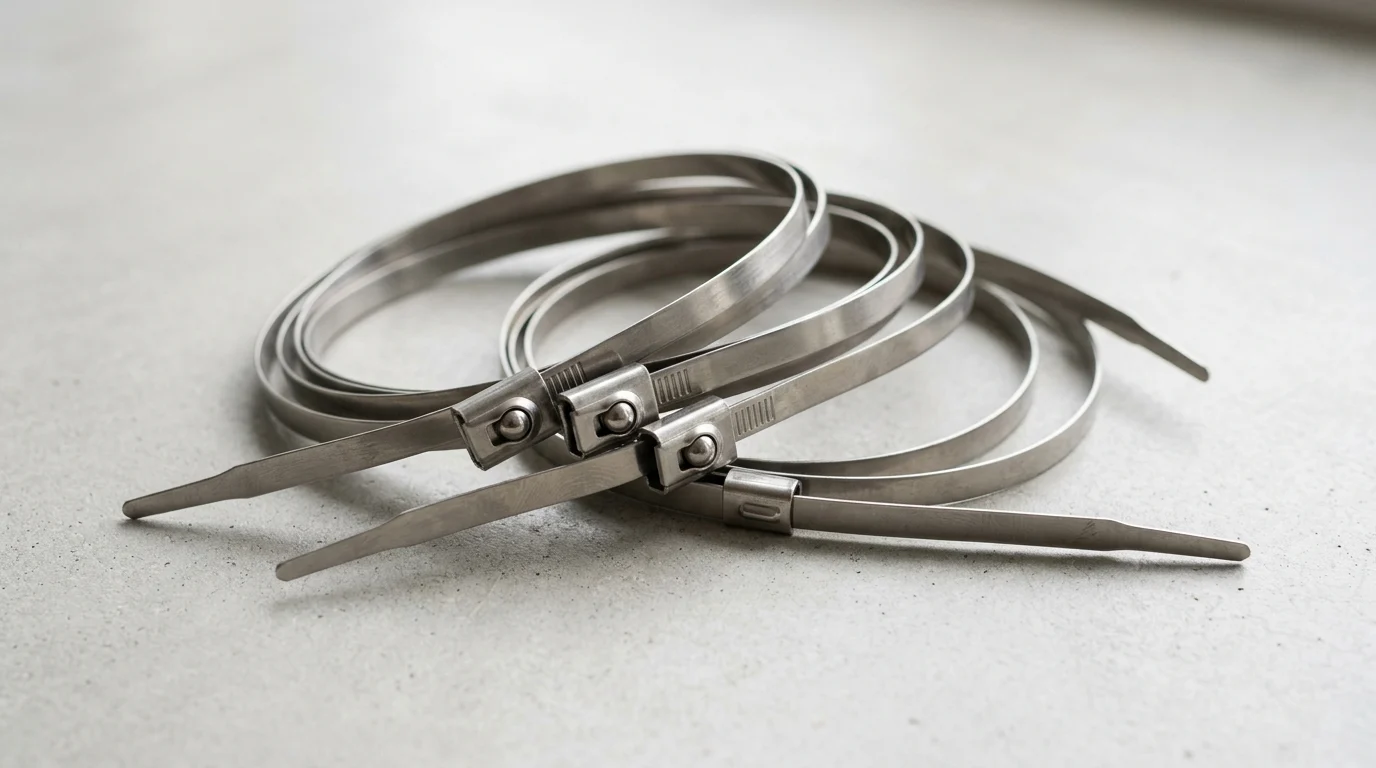
I’ve spent years navigating the chaotic world of industrial hardware procurement, and if there’s one thing I’ve learned, it’s that supply chain reliability is just as critical as the product itself. When sourcing components for extreme environments—like offshore rigs, solar farms, or chemical plants—you cannot afford to treat these items as mere commodities. A delayed shipment or a bad batch of Stainless Steel Cable Ties doesn’t just hold up a single task; it can grind an entire multi-million-dollar project to a halt.
To truly understand why your exporter’s supply chain matters, you have to look past the initial quoted price. We are operating in a global market where raw material shortages, port congestion, and factory shutdowns are everyday realities. Choosing a partner with a resilient, transparent supply chain is the only way I’ve found to consistently protect my project timelines and my bottom line.
Impact on project uptime
When managing a large-scale installation, uptime is the ultimate metric. I recall a situation where a contractor had thousands of panels ready for a solar farm, but the installation crew was sitting idle because their bulk fastener order was stuck in customs due to poor supplier paperwork. That two-week delay cost them nearly $25,000 in labor and missed deadlines.
Reliable exporters understand this urgency. They maintain buffer stocks of raw materials and have streamlined export procedures to ensure that when they say a container will ship on Tuesday, it actually ships on Tuesday. Project uptime relies heavily on this predictability. If your supplier cannot guarantee consistent delivery schedules, your internal forecasting becomes completely useless, forcing you to carry excess inventory just to compensate for their unreliability.
Key reliability signals to compare
So, how do I spot a reliable exporter from a mile away? I look for very specific signals before I ever place a purchase order. First, I ask about their On-Time Delivery (OTD) rate. A world-class manufacturer tracks this religiously and should be hitting 98% or higher. If they dodge the question or claim 100% without showing their tracking methodology, I see a red flag.
Another massive signal is their level of vertical integration. Exporters who manufacture their own ties in-house—handling everything from raw steel slitting to the final ball-lock insertion—are inherently more reliable than trading companies that merely assemble parts from various subcontractors. When a supplier controls their own factory floor, they control their lead times and can pivot quickly if I need an emergency rush order.
Cost of poor supplier choices
The most dangerous trap I see buyers fall into is chasing the absolute lowest unit price without factoring in the cost of poor supplier choices. Let’s say you save 5 cents per tie by going with an unverified exporter. If that batch arrives late, or worse, fails during installation because of inconsistent steel tempering, the rework costs will obliterate those upfront savings.
I always calculate the Total Cost of Ownership (TCO). This includes the purchase price, freight, inventory holding costs, and the risk premium of dealing with a flaky vendor. When you partner with a top-tier factory that builds quality and reliability into their DNA, you eliminate the hidden costs of expedited emergency freight and site downtime.
Section 1 Key Takeaways & Data Summary:
- Uptime Impact: A 2-week delay on critical fasteners can incur upward of $25,000 in idle labor and penalties on commercial sites.
- Reliability Metric: Industry-leading suppliers maintain an On-Time Delivery (OTD) rate of 98%+, compared to the industry average of roughly 85%.
- Cost Comparison: Chasing a 5% unit cost reduction from an unreliable vendor frequently results in a 15-20% increase in Total Cost of Ownership due to expedited freight and rework.
How to Evaluate Stainless Steel Cable Tie Specifications and Manufacturi
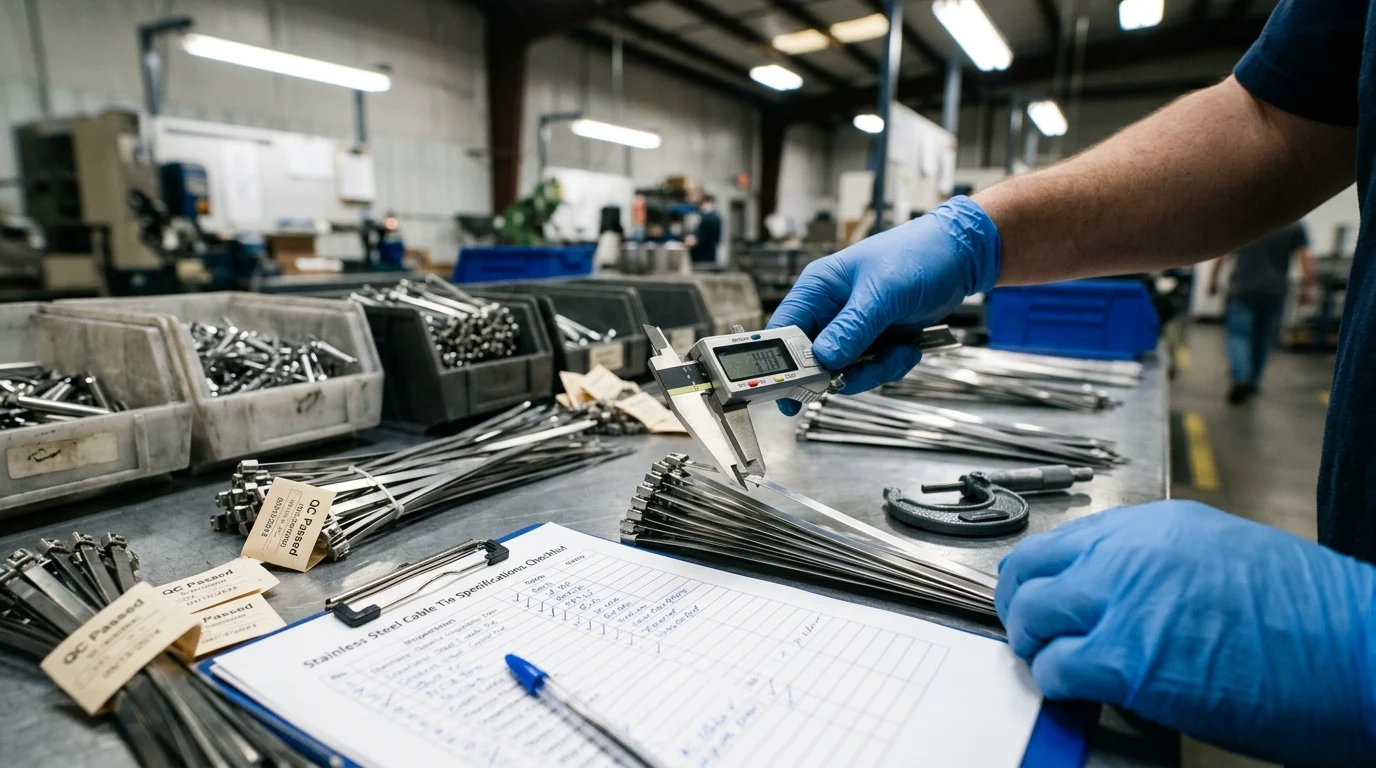
Evaluating the physical product and the factory that makes it is where the rubber meets the road. I always tell my procurement teams that you cannot just look at a spec sheet and assume every factory produces the exact same standard. The nuances in stainless steel manufacturing dictate how a tie will perform decades after it’s been locked into place.
To ensure you are getting exactly what you pay for, you have to dig into the metallurgical grades, the tensile strength ratings, and the automated processes the factory uses. A truly professional Stainless Steel Cable Tie Supplier will be completely transparent about their production capabilities and will gladly share their testing data with you.
Specs that predict performance
The first thing I evaluate is the steel grade. For most industrial applications, you are choosing between Grade 304 and Grade 316 stainless steel. Grade 304 is fantastic for general indoor or mild outdoor use, offering solid baseline corrosion resistance. However, if I’m dealing with marine environments, chemical plants, or extreme coastal weather, I strictly mandate Grade 316 because the added molybdenum provides crucial resistance to pitting and chloride corrosion.
Beyond the grade, loop tensile strength is the next critical spec. I expect a standard 4.6mm width ball-lock tie to hold at least 200 lbs (approx. 890N) of force before failing. For heavy-duty applications, a 7.9mm width tie must hit a minimum of 250 lbs (approx. 1112N). If a supplier’s spec sheet shows numbers lower than these industry benchmarks, I immediately question the thickness and temper of their raw steel.
Factory capability and batch consistency
Even if the specs look great on paper, factory capability determines whether the 10,000th tie you buy is just as good as the first one. I look for suppliers who utilize highly automated stamping and assembly lines. Manual assembly of the internal ball-lock mechanism introduces human error, which leads to ties that slip or fail to lock entirely.
Batch consistency is measured in Defect Parts Per Million (PPM). A premium manufacturer will utilize automated optical inspection (AOI) to check the roller ball seating in every single head, driving their defect rate well below 50 PPM. When a factory has this level of quality control, I know I can trust their bulk shipments to perform uniformly in the field.
Example of a strong product evaluation
Let me share an example of a strong product evaluation. I once audited a factory that didn’t just show me their finished ties; they walked me through their rigorous pull-testing lab. They took random samples from the production line, locked them onto a steel mandrel, and applied hydraulic force until the ties broke. Seeing a 7.9mm tie consistently snap the testing machine’s threshold at 300 lbs—well above the 250 lbs rating—was the exact proof of capability I needed.
They also demonstrated their edge-smoothing process. Unfinished stainless ties can have razor-sharp edges that slice through cable insulation and injure workers. A superior factory rolls and coats the edges to ensure a perfectly smooth finish, which is a massive advantage for both safety and installation speed.
Section 2 Key Takeaways & Data Summary:
| Specification | SS Grade 304 | SS Grade 316 |
|---|---|---|
| Nickel Content | 8.0% – 10.5% | 10.0% – 14.0% |
| Molybdenum | N/A | 2.0% – 3.0% |
| Loop Tensile (4.6mm) | Min 200 lbs (890N) | Min 200 lbs (890N) |
| Best Application | Standard / Indoor | Marine / Chemical |
- Defect Rates: Top-tier automated factories maintain defect rates below 50 PPM, whereas manual assembly often exceeds 500 PPM.
- Strength Baseline: Always verify that 7.9mm heavy-duty ties can withstand at least 250 lbs (1112N) of loop tensile force.
Sourcing, Compliance, and Quality Control Checks
It is one thing for an exporter to promise high quality; it is an entirely different challenge to prove it on paper through international compliance. I have learned the hard way that taking a supplier’s word for it is a recipe for disaster. You must trust, but aggressively verify.
Navigating international sourcing requires a deep dive into quality control checks and certifications. Whether you are distributing these products in North America or Europe, your local regulatory bodies don’t care about your supplier’s promises—they care about the paperwork. Partnering with a Reliable Hardware Supply means ensuring they have the institutional discipline to maintain flawless compliance records.
Required certifications and traceability
When I start vetting a new exporter, my first request is always their certification package. At an absolute minimum, the factory must hold an active ISO 9001:2015 certification, which proves they have a standardized quality management system in place. Depending on the market, I also look for UL listing, CE marking, and RoHS compliance to ensure the ties are free from restricted hazardous substances.
Traceability is equally important. If a tie fails in the field, I need to know exactly which batch of raw steel it came from. A reputable supplier will provide Mill Test Certificates (MTCs) for every batch of stainless steel they purchase. This document traces the exact chemical composition of the steel back to the original foundry, guaranteeing that the 316 stainless I ordered is actually 316, and not a cheaper 201 substitute.
How to verify supplier quality claims
Verifying these claims takes a bit of detective work. I never just accept a PDF certificate at face value—I cross-reference the certificate numbers with the issuing bodies like SGS, TUV, or Intertek. Unfortunately, forged certificates are more common than you might think in overseas sourcing.
I also ask for their internal testing reports, specifically salt spray test results. For a Grade 316 stainless steel cable tie, I want to see a neutral salt spray test report exceeding 1,000 hours without any signs of red rust. If a supplier hesitates to share their raw testing data or refuses a third-party pre-shipment inspection, I walk away immediately.
Example of compliance risk in sourcing
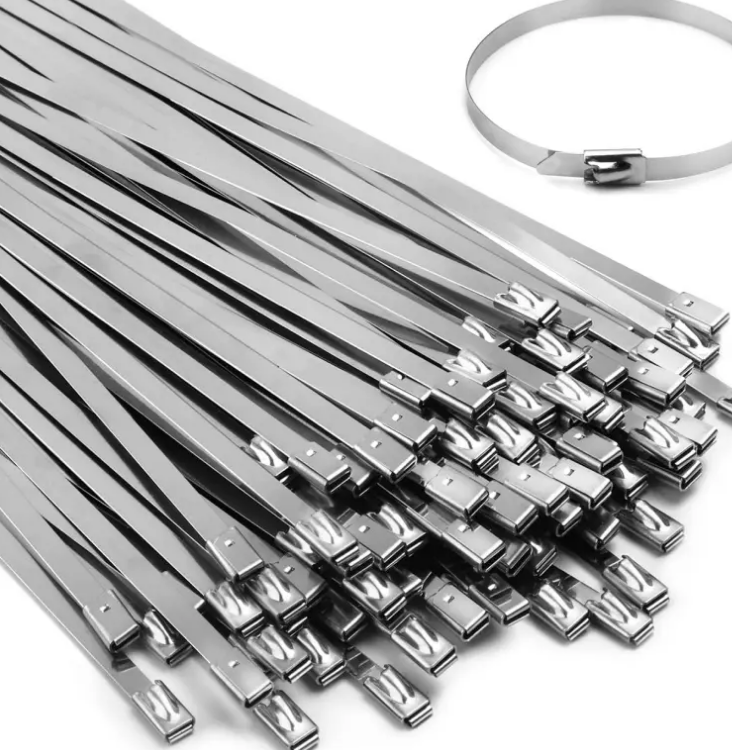
The risks of ignoring these compliance checks are severe. I know of a marine contractor who bought a massive container of ties from an unverified vendor because the price was 15% below market rate. The supplier claimed they were Grade 316, but they had actually substituted Grade 201 steel to pad their margins.
Within three months of installation on a coastal pier, the ties began to aggressively rust and fail. The contractor had to spend over $40,000 in labor to strip and replace the failing hardware, not to mention the severe damage to their reputation. This is why strict compliance verification isn’t just bureaucratic red tape; it is your ultimate insurance policy.
Section 3 Key Takeaways & Data Summary:
- Testing Benchmarks: Grade 316 ties must pass a minimum 1,000-hour neutral salt spray test with zero red rust.
- Risk Metric: Uncertified or mislabeled steel (e.g., swapping 201 for 316) can lead to a 100% failure rate in corrosive environments within 90 days.
- Audit Strategy: Always allocate 1-2% of your procurement budget to third-party pre-shipment inspections to verify Mill Test Certificates (MTCs) and compliance.
Logistics, Inventory Planning, and Export Strategy
Let’s shift gears and talk about getting the goods from the factory floor to your warehouse. You can negotiate the best price in the world, but if your logistics and export strategy are a mess, your margins will evaporate in freight overages and stockouts.
Importing Bulk Locking Ties requires a calculated approach to inventory planning. Because steel is heavy, freight costs represent a massive portion of your landed cost. Working with an experienced Industrial Fastener Exporter who understands how to optimize packaging, palletize securely, and navigate global shipping channels is an absolute game-changer for your supply chain.
Lead time, MOQ, packaging, and freight factors
First, you have to align your inventory needs with the factory’s Lead Time and Minimum Order Quantity (MOQ). A standard production lead time for bulk orders is typically 15 to 30 days. MOQs generally hover around 10,000 pieces per specific size. If you need custom lengths or specialized epoxy coatings, expect those lead times to stretch to 45 days.
Packaging is a highly underrated factor. Standard ties are packed in heavy-duty plastic bags of 100 pieces, then boxed and palletized. I always insist on reinforced export cartons and moisture-barrier wrapping on the pallets. If the factory uses cheap, flimsy cardboard, a month at sea will turn those boxes into mush, leaving you with thousands of loose, tangled ties when you open the container.
Using comparison tables for channel selection
Selecting the right freight channel is a balancing act between transit time and cost per kilogram. Because stainless steel is dense, air freight is incredibly expensive and should only be used for emergency shortages or initial sample approvals. Ocean freight is the lifeblood of this industry.
I constantly use comparison matrices to decide how to route my shipments. For instance, putting a 1,000 kg order on a plane might take 5-7 days but will cost around $5.00 to $6.00 per kg. That same ton of steel on a cargo ship will take 30-45 days but drops the freight cost down to roughly $0.15 to $0.30 per kg. Planning ahead to utilize ocean freight is the easiest way to protect your profit margins.
Example of better forecasting and delivery planning
The best way to manage these long transit times is through better forecasting. I work with my top suppliers using a 90-day rolling forecast. Every month, I give them visibility into what I expect to order three months out. A strong exporter will use this data to pre-position raw materials, cutting their production lead time in half.
In one instance, by staggering our sea freight shipments to arrive every two weeks instead of doing one massive quarterly container, we smoothed out our cash flow and completely eliminated the warehouse stockouts that had been plaguing our distribution center. It requires tight coordination, but a reliable factory partner will actively help you manage this flow.
Section 4 Key Takeaways & Data Summary:
| Freight Mode | Avg. Transit Time | Est. Cost per KG | Best Use Case |
|---|---|---|---|
| Express Air | 5 – 7 Days | $5.00 – $8.00 | Emergency stockouts, samples |
| Standard Ocean | 30 – 45 Days | $0.15 – $0.30 | Bulk inventory, planned stock |
| Rail (Eurasia) | 15 – 20 Days | $1.00 – $1.50 | Mid-weight, balanced urgency |
- Lead Time Planning: Standard production requires 15-30 days, plus 30-45 days for ocean transit. Always plan for a 60-75 day end-to-end lead time.
- MOQ Baselines: Expect standard bulk MOQs to start at 10,000 pieces per SKU to achieve optimal factory pricing.
Decision Framework for Choosing a Reliable Supplier
So, after evaluating specs, compliance, and logistics, how do I actually make the final call? Choosing a reliable supplier isn’t about going with your gut; it is about creating a structured, repeatable decision framework that removes emotion and focuses purely on data.
Over the years, I have developed a supplier scorecard system that forces me to look at the entire picture. It ensures that I don’t get blinded by a rock-bottom price while ignoring glaring holes in a factory’s quality control or communication habits. Here is exactly how I break down the final decision.
Step-by-step supplier scorecard
My step-by-step supplier scorecard assigns specific weights to four critical categories. I weight Quality and Manufacturing Capability at 40%. This includes their defect rates, automated machinery, and material certifications. If they fail here, the rest of the scorecard doesn’t matter.
Next, I weight Supply Chain Reliability at 30%. This tracks their historical on-time delivery rates, lead time accuracy, and inventory management. Cost/Pricing sits at 20%, ensuring we remain competitive but acknowledging that cheapest is rarely best. Finally, Communication and Service is weighted at 10%. A supplier who responds to emails within 12 hours with clear, fluent updates earns high marks here.
How to summarize supplier strengths
When summarizing a supplier’s strengths, I look for the “unfair advantages” they bring to the table. For example, a supplier whose core competency is direct manufacturing with in-house ball-lock insertion technology has a massive advantage over a trading company. I summarize these strengths in a simple pros and cons list to present to my stakeholders.
I also highlight their logistical flexibility. A factory that offers fast global logistics, possesses robust international certifications, and provides direct factory pricing without middleman markups is the exact profile of a partner that will help scale my business safely.
When to prioritize cost vs reliability
There is always a tension between prioritizing cost versus reliability, and knowing when to flex is crucial. If I am sourcing ties for temporary, indoor cable bundling where failure carries zero safety risk, I might lean slightly toward a lower-cost supplier. However, for 90% of industrial applications, reliability must win.
If the ties are going into a 25-year solar farm installation or a corrosive marine environment, the cost of failure is astronomical. In these high-stakes scenarios, I will gladly pay a 10% to 15% premium upfront to a verified, top-tier manufacturer. That premium buys me peace of mind, flawless compliance, and a guarantee that I won’t be paying for catastrophic rework five years down the line.
Section 5 Key Takeaways & Data Summary:
- Scorecard Weighting: Optimal evaluation balances Quality (40%), Reliability (30%), Cost (20%), and Communication (10%).
- Cost vs. Reliability Threshold: Paying a 10-15% premium for a reliable, fully-certified manufacturer routinely yields a 15-20% reduction in long-term Total Cost of Ownership (TCO) by eliminating defect-related downtime and rework.
Key Takeaways
- The most important conclusions and rationale for Stainless Steel Cable Ties
- Specs, compliance, and risk checks worth validating before you commit
- Practical next steps and caveats readers can apply immediately
Frequently Asked Questions
What is the most important KPI when evaluating a stainless steel cable tie exporter?
Start with On-Time Delivery. A reliable exporter should track OTD clearly and consistently achieve about 98% or higher, not just promise fast shipping.
Why should I look beyond the lowest cable tie price?
Low unit cost can raise total cost through delays, rework, emergency freight, and installation downtime. Compare total ownership cost, not price alone.
How can I tell if an exporter is a real manufacturer or just a trading company?
Ask whether production is done in-house, from steel processing to ball-lock assembly. Manufacturers usually offer better lead-time control and traceability than traders.
What supply chain questions should I ask Wow Stainless before ordering?
Ask about OTD rate, raw material buffer stock, export documentation process, lead times, rush-order capability, and quality traceability for each stainless steel cable tie batch.
Which applications need the most reliable stainless steel cable tie supply?
High-risk projects like offshore, solar, chemical, and heavy industrial sites need dependable supply most, because even short delays can stop crews and damage schedules.
https://www.facebook.com/people/Ningbo-Stainless-Steel/61579258196445/
Post time: May-26-2026


