
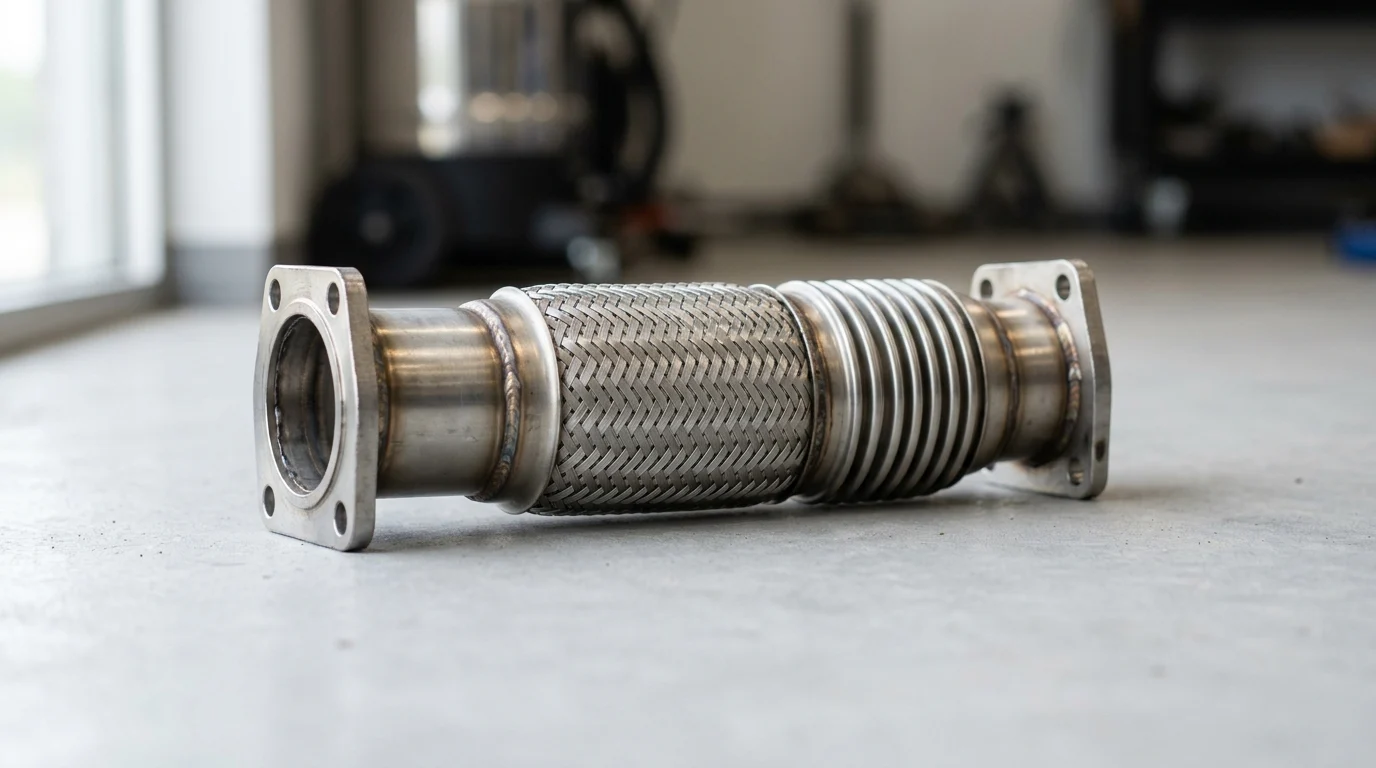
Why Exhaust Flexible Pipes Matter in 2026 Sourcing
Heading into 2026, sourcing exhaust components in the automotive and heavy-duty aftermarket is no longer just about finding the cheapest metal tube. Stricter emission mandates, supply chain volatility, and the rising cost of warranty claims are forcing B2B buyers to completely rethink their procurement strategies.
A massive shift is underway in how distributors and importers evaluate their supply base. Buyers focused purely on price per unit are likely losing money on the back end through premature failures and customer churn. Upgrading your sourcing approach for these critical components is non-negotiable for the upcoming year.
2026 market outlook
The 2026 market is heavily influenced by the rollout of Euro 7 and EPA 2027 emission standards. These regulations require exhaust systems to maintain structural integrity and leak-free performance for significantly longer periods, often pushing required lifespans past the 150,000-mile mark. Consequently, the global market for these flexible components is projected to grow at a 5.8% CAGR, reaching new valuation heights by the end of the decade.
For wholesale buyers, this means demand for high-durability, premium-grade materials is outpacing standard replacement parts. You can no longer rely on legacy inventory mixes; your 2026 catalog must reflect this shift toward longevity and regulatory compliance.
Product definitions and segment terms
Before diving deeper, it helps to standardize terminology. An Exhaust bellows is the core corrugated tube that absorbs thermal expansion and engine movement. The term “inner braid” refers to a woven wire mesh lining the inside of the bellows to smooth exhaust flow, typically used in standard passenger vehicles.
Conversely, an “interlock” design features a spiraled, interlocking metal strip inside the bellows. This provides superior durability and prevents the bellows from over-extending under high stress. Knowing exactly which segment you are buying for—light-duty passenger versus heavy-duty commercial—dictates which of these designs you should import.
Buyer cost-reduction example
Consider a real-world scenario from a mid-sized European auto parts distributor. They were importing 10,000 units annually of a basic SS201 inner-braid pipe. While their upfront unit cost was low, their warranty claim rate hovered around an unacceptable 8% due to internal mesh collapse.
By shifting their sourcing to a robust SS304 interlock design, their unit cost increased by $1.40. However, the warranty claim rate plummeted to 1.2%. When factoring in the saved costs on return shipping, replacement units, and protected customer trust, their Total Cost of Ownership (TCO) decreased by 12% over an 18-month period.
How to Compare Exhaust Flexible Pipes
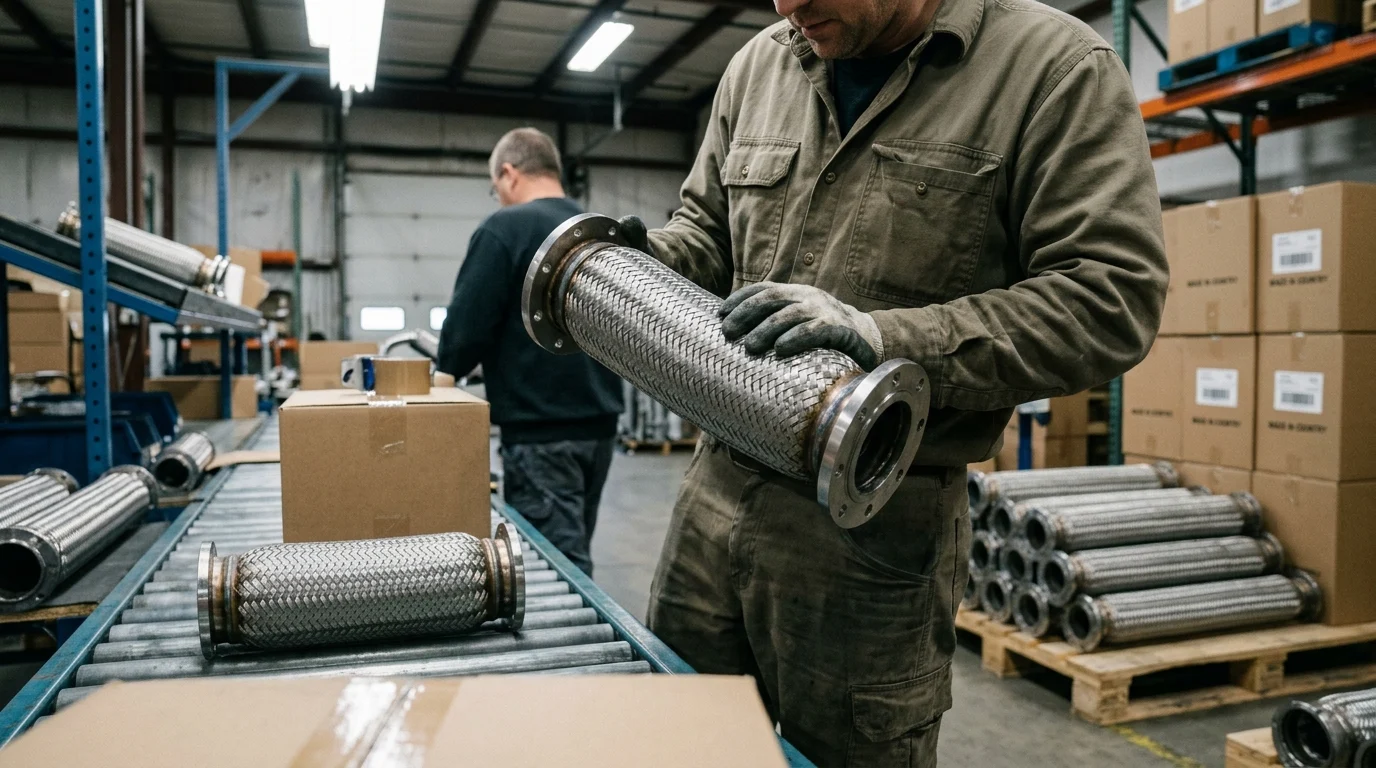
How do you accurately compare these components when every supplier claims to offer premium quality? Buyers must look past the sales pitch and dig into the metallurgy and structural engineering.
When evaluating a Stainless steel flex pipe, the difference between a part that lasts five years and one that rusts out in five months usually comes down to three factors: material grade, wall thickness, and ply count. Transparent suppliers will provide these specifications so buyers know exactly what they are paying for.
Materials and construction types
The foundation of any flexible exhaust component is its material. The market primarily uses three grades of stainless steel: 201, 304, and 316L. SS201 is the budget option, prone to rust in harsh climates. SS304 is the industry standard, offering excellent corrosion resistance for most applications. SS316L, with its added molybdenum, is the ultimate choice for heavy-duty, marine, or extreme high-temperature environments.
| Material Grade | Nickel Content | Corrosion Resistance | Relative Cost Index |
|---|---|---|---|
| SS201 | 3.5% – 5.5% | Low-Medium | 0.75x |
| SS304 | 8.0% – 10.5% | High | 1.0x (Baseline) |
| SS316L | 10.0% – 14.0% | Excellent | 1.45x |
At our manufacturing facilities, we leverage bulk material purchasing to keep premium SS304 and SS316L highly competitive, ensuring you do not have to sacrifice durability for margin.
Key specifications to prioritize
Beyond steel grade, buyers must scrutinize construction specifications. A critical metric is the bellows wall thickness. A standard single-ply bellows might be 0.25mm thick, making it prone to cracking under high vibration. Prioritizing 2-ply or even 3-ply constructions, where each layer is 0.25mm to 0.3mm thick, is highly recommended. This multi-layer approach offers superior flexibility while drastically increasing fatigue resistance.
Additionally, evaluate the pitch (the distance between the corrugations). A tighter pitch means more flexibility but requires more material and precise manufacturing. Ensure your supplier can maintain consistent pitch tolerances of ±0.5mm to guarantee uniform stress distribution.
Heavy-duty distributor selection example
Consider the case of a North American heavy-duty truck parts distributor experiencing frequent failures on fleet vehicles operating in extreme winter conditions where road salt is prevalent. They needed an Interlock hose that could survive constant thermal cycling and corrosive spray.
Transitioning from a 2-ply SS304 setup to a custom 3-ply SS316L specification solved the issue. While the upfront investment was 45% higher per unit, the new specification increased the average operational lifespan by over 60,000 miles per vehicle. This allowed the distributor to win three lucrative municipal fleet contracts by citing verifiable longevity data that cheaper competitors could not match.
How to Source Reliable Suppliers
Finding a supplier on a B2B directory is easy; finding a manufacturing partner who will not leave you stranded with a container full of defective parts is much harder.
Your supplier is an extension of your own business. If they fail on quality control or miss a critical shipping window, your reputation takes the hit. Systematically vetting manufacturers ensures they can meet rigorous 2026 demands.
Supplier assessment process
A robust supplier assessment should start with quality management systems. ISO/TS 16949 certification is non-negotiable for automotive parts. However, do not just ask for the certificate; ask for their in-house testing protocols.
Do they perform automated leak testing on 100% of their output? Do they have a fatigue testing rig that simulates engine vibration? One of our core advantages is our fully automated robotic TIG welding lines and strict in-house fatigue testing, which ensures every single unit can withstand minimum thresholds of 2 million vibration cycles before shipping.
MOQ, private label, and packaging factors
Procurement is not just about the product; it is about the terms. Minimum Order Quantities (MOQs) for custom exhaust components typically range from 500 to 1,000 pieces per SKU. If you want private label laser etching—highly recommended for brand building—you might need to hit the higher end of that range.
Packaging is equally critical and often overlooked. A container sitting on the ocean for 35 days is a highly corrosive environment. Insist on VCI (Volatile Corrosion Inhibitor) bags and reinforced, double-corrugated export cartons tested to withstand at least 200 lbs of crush weight. Poor packaging can quickly turn premium steel into scrap metal.
Distributor performance improvement example
Consider a wholesale importer struggling with a 15% product damage rate upon arrival due to flimsy single-wall cardboard packaging and mixed SKUs on loose pallets.
Auditing their supply chain led to moving their business to a vendor requiring a slightly higher MOQ of 800 pieces, but who provided automated, palletized packaging with VCI protection. Not only did shipping damage drop to zero, but the consolidated ordering reduced their average lead time from 60 days down to a predictable 35 days, massively improving inventory turnover.
How to Manage Compliance and Delivery Risk
After sourcing the right product and negotiating the best terms, buyers must ensure the product legally clears customs and performs in the field without sparking a wave of returns.
Managing compliance and mitigating delivery risk requires a proactive approach. You cannot wait until the container hits your domestic port to find out paperwork is missing or welds are failing.
Compliance and documentation checklist
Customs delays kill cash flow. When importing an Engine vibration isolator or similar metal component, documentation must be flawless. Always demand Material Test Reports (MTRs) from your supplier before the goods ship. These reports prove the chemical composition of the steel matches your order.
If you are selling into the European Union, ensure your supplier provides REACH and RoHS compliance declarations. Even though stainless steel is generally safe, the welding consumables, lubricants used in the corrugation process, or packaging materials can sometimes trigger customs flags if not properly documented.
Reducing failure claims
Reducing failure claims starts with understanding why these parts fail in the first place. The majority of issues stem from poor welding or improper installation, rather than the raw material itself.
| Failure Mode | Primary Cause | Manufacturer Prevention Strategy |
|---|---|---|
| Pin-hole Leaks | Inconsistent manual welding | Transition to 100% robotic TIG welding |
| Braid Fraying | Poor crimping at the collars | Use of high-tonnage hydraulic crimping presses |
| Bellows Cracking | Excessive vibration / thin walls | Upgrade to multi-ply walls & validate with fatigue testing |
By aligning your sourcing with a factory that implements these prevention strategies—such as automated production lines—you proactively engineer risk out of your supply chain.
Importer rework prevention example
An Australian importer faced a challenging scenario: a 4.5% defect rate on manual welds that were failing under pressure, requiring costly local rework before the parts could be sold to muffler shops.
They implemented a strict pre-shipment inspection protocol and switched to a supplier utilizing automated orbital welding. As a result, the defect rate plummeted to less than 0.2%. The money saved on local rework and the elimination of air-freight replacement parts added a full 6% back to their bottom-line net profit margin.
How to Build a 2026 Buying Strategy

Bringing all this data together requires a cohesive purchasing strategy. You cannot simply buy a little bit of everything and hope it sells. A profitable 2026 buying strategy requires intentional catalog design and a strict framework for making vendor decisions.
B2B buyers should look at their procurement not as a series of purchase orders, but as a balanced investment portfolio. Here is how to structure that portfolio for maximum margin and minimum headache.
Product mix strategy
Your product mix should balance volume with margin. A common and highly effective strategy is the 70/30 split. Dedicate 70% of your purchasing volume to standard SS304 inner-braid pipes. These are fast-movers for standard passenger vehicles—they keep cash flowing and maintain market presence.
Dedicate the remaining 30% of your spend to premium, high-margin SKUs. This includes SS316L variants and heavy-duty Flexible coupling interlock designs for commercial fleets and performance shops. These lower-volume items often yield double the gross margin of standard parts and position you as a comprehensive solutions provider rather than a commodity broker.
Shortlisting and decision framework
When shortlisting suppliers for this product mix, use a weighted decision matrix to remove emotion from the equation. Recommended criteria weighting is as follows: 40% to Quality/Testing capabilities (e.g., robotic welding and MTRs), 30% to Landed Price, 20% to Lead Time reliability, and 10% to Payment Terms.
Regarding payment terms, standard industry practice is a 30% T/T deposit with the 70% balance paid against the Bill of Lading (B/L) copy. However, for established 2026 partnerships, push for 20/80 terms or even OA (Open Account) 30 days if backed by export credit insurance. Better terms drastically improve working capital.
Buyer implementation example
To see this in action, consider a regional US distributor who overhauled their strategy using this exact framework. They previously bought 100% standard SS201 parts based purely on the lowest FOB price.
By implementing the 70/30 product mix and utilizing the weighted decision matrix, they partnered with a higher-tier manufacturer.
Key Takeaways
- Wholesale sourcing and supply-chain implications for exhaust flexible pipes
- Specifications, compliance, and commercial terms buyers should validate
- Actionable recommendations for distributors and procurement teams
Frequently Asked Questions
Which stainless steel grade is best for exhaust flexible pipes?
For most aftermarket and OEM-replacement use, SS304 offers the best balance of corrosion resistance, cost, and durability. Choose SS316L for marine, heavy-duty, or very high-heat applications; use SS201 only for budget, low-corrosion environments.
When should buyers choose inner braid versus interlock flex pipes?
Use inner braid for standard passenger vehicles and routine replacement demand. Choose interlock designs for heavy-duty, high-vibration, or longer-life applications because they resist over-extension and internal collapse better.
How can a distributor reduce warranty claims on flex pipes?
Prioritize SS304 or SS316L, verify wall thickness and ply count, and avoid buying on unit price alone. Upgrading from basic SS201 inner-braid to SS304 interlock can lower failures and improve total cost of ownership.
What specifications should I request from wowstainless.com before placing a bulk order?
Ask for steel grade, bellows construction, inner braid or interlock type, wall thickness, ply count, size range, and application fitment. Clear specs help you compare quotes accurately and avoid quality disputes after import.
Why are exhaust flexible pipes more important for 2026 sourcing plans?
Euro 7 and EPA 2027 rules are pushing buyers toward longer-lasting, leak-free exhaust parts. For importers and wholesalers, that means stocking higher-durability flex pipes to meet compliance, reduce returns, and protect customer trust.
Post time: Apr-16-2026


