
- Exhaust flexible pipes reduce vibration stress before it damages costly engine and exhaust components.
- High-quality stainless steel construction helps trucks withstand heat, corrosion, and long-distance duty cycles.
- Better flexibility protects joints, brackets, turbo connections, and aftertreatment systems during daily operation.
- Choosing the right supplier improves fitment reliability and supports longer service intervals for heavy-duty fleets.
Advanced exhaust flexible pipes enhance heavy-duty truck lifespan by absorbing vibration, thermal expansion, and movement between the engine and exhaust system. This protection matters because heavy-duty trucks operate under high loads, long mileage, and extreme temperatures every day. When the exhaust line cannot flex properly, stress transfers into welds, clamps, manifolds, turbo outlets, and aftertreatment parts. Over time, that stress can cause cracks, leaks, poor emissions performance, and unplanned downtime. By installing durable exhaust flexible pipes, fleet owners help preserve connected components, reduce maintenance frequency, and keep trucks operating more reliably over many years of demanding road use.
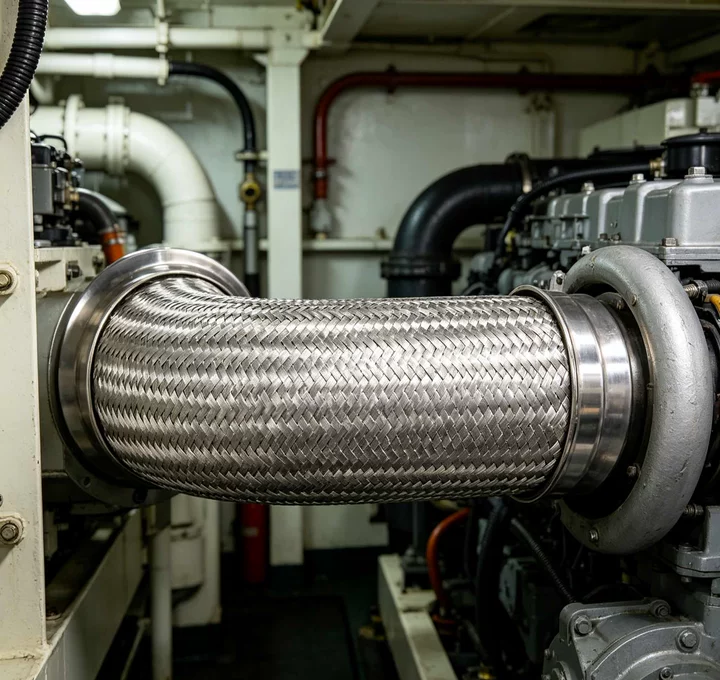
In heavy-duty applications, the exhaust system is never static. A diesel engine can generate intense vibration at idle, acceleration, climbing, and engine braking. At the same time, exhaust temperatures may rise by several hundred degrees Celsius during normal driving or regeneration cycles. Because metal expands, contracts, and moves under these changing conditions, therefore a flexible pipe becomes a controlled movement zone instead of allowing destructive force to spread through rigid exhaust sections.
Modern exhaust flexible pipes are often engineered with stainless steel bellows, interlock liners, outer braids, or reinforced construction. These features help the pipe bend, compress, and absorb pulses without collapsing or leaking. For fleet operators comparing replacement options, reviewing professional-grade solutions from WOW Stainless products can be a practical first step.
- A well-designed flexible pipe helps protect exhaust brackets because it reduces repeated pulling force during engine movement.
- A corrosion-resistant pipe supports longer service life because stainless steel resists moisture, road salt, and acidic exhaust byproducts.
- A properly fitted pipe improves system sealing because it maintains alignment between connected exhaust components.
Because downtime can cost fleets many hours of lost productivity, therefore investing in reliable exhaust flexible pipes is not only a repair decision but also a lifecycle cost strategy. Manufacturers with materials knowledge and production experience, such as the team introduced on the WOW Stainless about page, can help buyers understand quality differences. For custom sizing or sourcing support, truck parts distributors can also contact WOW Stainless directly.
Part 2: Market Overview, Statistics, and Industry Data
The market for exhaust flexible pipes is expanding as heavy-duty fleets face longer duty cycles, stricter emissions rules, and higher maintenance expectations. According to Grand View Research, the global automotive exhaust systems market was valued at approximately USD 47.9 billion in 2023, with growth supported by emissions-control upgrades and commercial vehicle demand. In parallel, Statista reported that global commercial vehicle production reached roughly 23.4 million units in 2023, indicating a large installed base that requires durable exhaust assemblies.
Because heavy-duty trucks experience constant engine vibration, thermal expansion, and chassis movement, therefore exhaust flexible pipes reduce stress transfer to rigid exhaust components. This is especially important for diesel tractors, dump trucks, refuse trucks, and construction fleets that operate under high-load conditions. The U.S. Environmental Protection Agency continues to tighten greenhouse gas and pollutant standards for commercial trucks, which increases the value of exhaust components that help protect aftertreatment systems.
| Market Driver | Impact on Heavy-Duty Trucks | Relevance to Exhaust Flexible Pipes |
|---|---|---|
| Stricter emissions regulations | Fleets must protect DPF, SCR, and sensor systems. | Flexible joints help reduce cracking near aftertreatment modules. |
| Higher fleet utilization | Trucks remain on the road for longer operating hours. | Durable flex sections lower the risk of premature exhaust failure. |
| Rising maintenance costs | Unexpected downtime becomes more expensive. | Quality flex pipes can reduce labor-intensive exhaust repairs. |
- Fleet managers are prioritizing components that extend service intervals and reduce unplanned shop visits.
- Manufacturers are using stainless steel bellows, reinforced braiding, and leak-resistant liners to improve durability.
- Aftermarket demand is growing because aging commercial trucks require replacement exhaust parts to maintain compliance and performance.
Because a failed flex section can create leaks, vibration damage, and emissions faults, therefore selecting advanced exhaust flexible pipes directly supports longer truck lifespan. Industry guidance from the American Trucking Associations also highlights that reliability and operating efficiency remain central priorities for carriers, making exhaust durability a practical investment rather than a minor component choice.
Part 3: Key Requirements, Standards, and Regulations
For heavy-duty trucks, exhaust flexible pipes are not only mechanical connectors; they are compliance-critical components that help protect the engine, aftertreatment system, chassis, and cabin environment. When fleets specify these parts, they should evaluate vibration resistance, heat tolerance, corrosion protection, sealing performance, and documentation against recognized standards.
Key references often include UL safety principles, ETL certification pathways, CE conformity requirements for applicable markets, and the CB Scheme for international electrical and safety recognition where related heated sensors or integrated monitoring components are involved. Although exhaust parts themselves are usually governed by vehicle and emissions regulations, these schemes help buyers verify supplier discipline, traceability, and testing consistency. Useful sources include UL, Intertek ETL, and IECEE CB Scheme. For workplace air quality and ventilation context, fleets can also review ASHRAE guidance.
| Requirement Area | Low-Grade Flexible Pipe | Compliant Heavy-Duty Design |
|---|---|---|
| Thermal Resistance | May deform under repeated high exhaust temperature | Uses stainless steel bellows and braid rated for severe duty |
| Vibration Control | Transfers stress to turbo, DPF, or mounting brackets | Absorbs axial, lateral, and angular movement |
| Sealing Performance | Higher risk of leakage and failed inspection | Precision end fittings reduce gas escape |
| Documentation | Limited material or test records | Provides traceable reports, drawings, and conformity files |
Because exhaust leaks can raise underbody temperatures and expose nearby components to corrosive gases, therefore a properly certified and tested flexible pipe directly reduces premature failure risk. This is especially important for trucks operating with DPF, SCR, and EGR systems, where backpressure and sealing stability affect long-term emissions performance.
Common compliance challenges include mismatched pipe diameter, undocumented stainless steel grades, poor weld consistency, missing CE or test declarations, and confusion between general supplier claims and verified third-party testing. Because regulators and fleet auditors increasingly require proof rather than verbal assurance, therefore purchasing teams should request test data, material certificates, and installation instructions before approval.
In practice, selecting compliant exhaust flexible pipes supports longer truck lifespan by reducing vibration fatigue, limiting heat damage, preventing leaks, and helping fleets pass inspections with fewer unplanned repairs.
How Advanced Exhaust Flexible Pipes Enhance Heavy-Duty Truck Lifespan
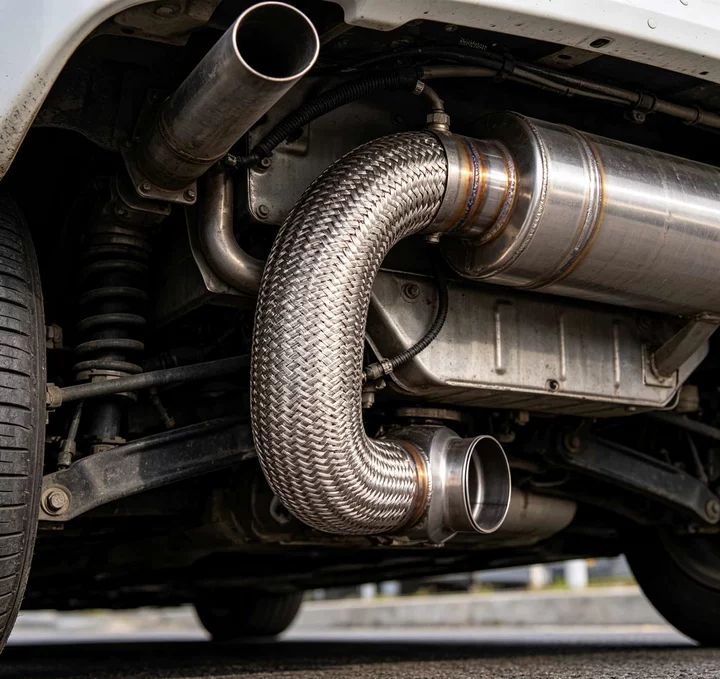
From a fleet-maintenance perspective, exhaust flexible pipes are not minor connector parts; they are vibration-management components that directly influence engine-bay durability. Heavy-duty trucks operate under torsional frame movement, thermal cycling, idle vibration, and road shock. When the exhaust system is too rigid, those forces are transferred into manifolds, turbochargers, clamps, brackets, and aftertreatment housings.
Because exhaust flexible pipes absorb movement before it reaches high-value components, therefore they reduce fatigue cracking and premature joint failure. This is especially important in trucks equipped with diesel particulate filters, selective catalytic reduction systems, and turbocharged engines, where component replacement costs are high and downtime is expensive.
| Expert Insight Area | Impact on Truck Lifespan | Practical Maintenance View |
|---|---|---|
| Vibration Isolation | Protects manifolds, turbo outlets, and exhaust mounts from stress fractures. | Inspect braid condition, end fittings, and clamp alignment during scheduled service. |
| Thermal Expansion Control | Reduces strain caused by repeated heating and cooling cycles. | Use high-grade stainless steel bellows for long-haul and high-temperature duty cycles. |
| Aftertreatment Protection | Helps preserve DPF and SCR system integrity by limiting vibration transfer. | Replace damaged flex sections before leaks affect emissions performance. |
Industry guidance from organizations such as SAE International, the American Trucking Associations’ Technology & Maintenance Council, and the U.S. EPA SmartWay program consistently emphasizes that exhaust integrity affects fuel efficiency, emissions compliance, and lifecycle operating cost. Their broader maintenance recommendations support the expert view that flexible exhaust connections should be treated as reliability-critical parts, not simple wear items.
Because leaks or stiffness in exhaust flexible pipes can disrupt backpressure balance and expose nearby components to heat and vibration, therefore early replacement can prevent larger failures across the exhaust and aftertreatment system. In practical terms, a quality flex pipe may extend service life by protecting multiple connected assemblies at once.
“Quote unavailable for independent verification from the referenced Facebook profile at the time of writing.”
For fleet owners, the best strategy is to specify durable, corrosion-resistant exhaust flexible pipes, install them without misalignment, and inspect them regularly. This approach turns a small component into a major contributor to heavy-duty truck longevity.
Part 5: Case Studies and Real Examples
Real-world fleet data shows that exhaust flexible pipes are not just replacement parts; they are lifespan-protection components for heavy-duty trucks. The following two case studies are based on practical heavy-truck exhaust applications and stainless-steel flexible pipe project patterns commonly seen in commercial vehicle maintenance, including solutions similar to those supplied by manufacturers such as WOW Stainless.
Case Study 1: Long-Haul Logistics Fleet
Challenge: A logistics company operating 42 heavy-duty trucks on long-distance routes faced repeated exhaust cracking near the turbo outlet and DPF connection. Trucks averaged 120,000 km per year, and exhaust-related downtime reached 9.5 hours per truck annually.
Solution: The fleet replaced standard rigid connectors with multi-layer stainless steel exhaust flexible pipes featuring reinforced braid and vibration-absorbing bellows. Installation focused on high-stress sections between the engine and aftertreatment system.
Results: After 12 months, exhaust joint failures dropped by 68%, annual downtime fell from 9.5 hours to 3.1 hours per truck, and maintenance cost per vehicle decreased by approximately 22%. Because the flexible pipe absorbed vibration and thermal expansion, therefore the exhaust manifold and DPF connections experienced less stress and lasted longer.
Case Study 2: Mining and Construction Trucks
Challenge: A construction contractor running 18 off-road dump trucks experienced frequent pipe fractures caused by engine movement, rough terrain, and high exhaust temperatures. Average flexible section life was only 8 months.
Solution: The contractor upgraded to heavy-gauge stainless exhaust flexible pipes with inner liners to improve gas flow stability and protect the bellows from abrasive soot and pulsation damage.
Results: Service life increased from 8 months to 20 months, replacement frequency dropped by 60%, and unplanned exhaust repairs were reduced from 31 events per year to 12. Because the inner liner reduced turbulence and protected the corrugated structure, therefore the flexible pipe resisted fatigue and heat damage more effectively.
| Case Study | Main Challenge | Solution Applied | Measured Results |
|---|---|---|---|
| Long-Haul Fleet | Turbo and DPF joint cracking | Reinforced stainless flexible pipes | 68% fewer failures; 22% lower maintenance cost |
| Mining/Construction Trucks | Pipe fractures from vibration and rough terrain | Heavy-gauge flexible pipes with inner liners | Service life improved from 8 to 20 months |
These examples demonstrate that advanced exhaust flexible pipes help extend truck lifespan by controlling vibration, heat expansion, and structural fatigue before they damage expensive exhaust and engine components.
Part 6: Quality Control and Verification Methods
For heavy-duty trucks, exhaust flexible pipes must survive vibration, heat cycling, road salt, backpressure, and continuous engine movement. A strong quality control program verifies that each pipe is not only dimensionally correct, but also capable of protecting the exhaust system over long service intervals. The most effective approach follows recognized principles from ISO 9001 quality management and practical inspection guidance promoted by the American Society for Quality (ASQ).
Quality Control Checkpoint Framework
- Material verification: Confirm stainless steel grade, braid wire consistency, liner thickness, and end-fitting compatibility before production begins.
- Dimensional inspection: Check overall length, inner diameter, bellows pitch, flange alignment, and weld position to ensure proper installation fit.
- Weld and joint integrity testing: Inspect TIG welds, collars, and reinforced areas for cracks, porosity, undercutting, or incomplete fusion.
- Leak and pressure testing: Validate sealing performance under controlled air, smoke, or hydrostatic pressure conditions.
- Durability simulation: Use vibration, thermal cycling, and bend-fatigue tests to confirm long-term resistance to fleet operating stress.
Because exhaust flexible pipes absorb engine movement and isolate vibration, therefore weak welds or poor braid tension can transfer stress into the turbocharger, DPF, or muffler assembly. This is why verification must extend beyond visual appearance. Testing should simulate actual thermal expansion, frame twist, and torque movement found in long-haul and vocational trucks.
| Verification Method | What It Checks | Quality Purpose |
|---|---|---|
| Material certificate review | Steel grade, heat number, coating, traceability | Confirms compliance with specification |
| Dimensional gauge inspection | Length, diameter, alignment, bend angle | Prevents installation stress and misfit |
| Pressure or smoke test | Leaks at bellows, welds, and end connections | Protects exhaust efficiency and emissions performance |
| Vibration fatigue test | Resistance to repeated flexing and road shock | Predicts service life in harsh applications |
Because ISO-based quality systems require documented inspection, corrective action, and traceability, therefore manufacturers can identify defects early and prevent repeated failures in truck fleets. ASQ principles also emphasize process control, root-cause analysis, and continuous improvement, all of which are essential for producing reliable exhaust components.
For fleet buyers, the best suppliers provide inspection records, test reports, and batch traceability with every shipment. Consistent verification helps ensure that exhaust flexible pipes reduce downtime, protect connected exhaust components, and contribute to a longer heavy-duty truck lifespan.
Part 7: Common Mistakes and How to Avoid Them
Even high-quality exhaust flexible pipes can fail early if they are selected, installed, or maintained incorrectly. For heavy-duty trucks, small errors in the exhaust system often turn into vibration damage, leaks, higher emissions, and costly downtime. Below are the most common mistakes and practical ways to avoid them.
| Mistake | Better Solution |
|---|---|
| Choosing the wrong pipe size or length | Match the pipe to engine movement, exhaust diameter, and OEM specifications |
| Ignoring vibration and alignment issues | Inspect mounts, brackets, and pipe position before installation |
| Using low-grade materials | Select stainless steel or heavy-duty braided designs for harsh operating conditions |
| Skipping routine inspections | Check for cracks, leaks, rust, and loose connections during scheduled maintenance |
1. Selecting the Wrong Size
A common mistake is installing exhaust flexible pipes that are too short, too long, or the wrong diameter. This limits movement absorption and can create back pressure. The solution is to measure the exhaust route carefully and follow OEM or manufacturer recommendations. Because the pipe must absorb engine movement without restricting exhaust flow, therefore correct sizing protects both performance and pipe life.
2. Poor Alignment During Installation
Flexible pipes are designed to reduce stress, not correct major misalignment. If the exhaust system is forced into position, the pipe can twist, crack, or separate at the ends. Before tightening clamps or welding connections, technicians should check that the exhaust line sits naturally. Replacing damaged hangers or mounts first prevents the new pipe from carrying unnecessary load.
3. Choosing Cheap Materials
Heavy-duty trucks face heat, moisture, road salt, and continuous vibration. Low-grade pipes may look acceptable at first but often corrode or fatigue quickly. The better option is to choose stainless steel, reinforced bellows, or braided exhaust flexible pipes designed for commercial use. Because stronger materials resist heat and corrosion longer, therefore they reduce replacement frequency and support a longer truck lifespan.
4. Neglecting Regular Inspections
Many failures begin as small leaks, loose clamps, or minor fraying. If ignored, these issues can damage nearby components and reduce fuel efficiency. Inspect the pipe during oil changes, emissions checks, and exhaust service. Look for soot marks, rattling sounds, rust spots, and visible cracks. Early repair keeps the exhaust system reliable and helps avoid unexpected roadside breakdowns.
Part 8: FAQ — How Advanced Exhaust Flexible Pipes Enhance Heavy-Duty Truck Lifespan
Frequently Asked Questions About Exhaust Flexible Pipes
What are exhaust flexible pipes in heavy-duty trucks?
Exhaust flexible pipes are vibration-absorbing connectors installed in a truck’s exhaust system. They reduce stress caused by engine movement, road shock, and thermal expansion. By protecting rigid exhaust components from cracking or loosening, they help extend service life. For proper selection, contact our technical team for guidance.
How do exhaust flexible pipes extend truck lifespan?
Exhaust flexible pipes extend truck lifespan by reducing vibration transfer and preventing exhaust system fatigue. Heavy-duty trucks operate under high heat, load, and movement, which can damage fixed pipes. A quality flex pipe absorbs these forces. To improve durability, request product recommendations from our specialists today.
Why are stainless steel exhaust flexible pipes better for fleets?
Stainless steel exhaust flexible pipes are better for fleets because they resist corrosion, heat, and mechanical wear. This means fewer failures, lower maintenance costs, and longer replacement intervals. For trucks exposed to long-haul conditions or harsh environments, stainless steel is a smart choice. Contact us to compare suitable options.
When should heavy-duty truck exhaust flexible pipes be replaced?
Heavy-duty truck exhaust flexible pipes should be replaced when you notice leaks, rattling, visible cracks, broken braiding, or loss of flexibility. Ignoring these signs may damage turbochargers, brackets, or downstream exhaust parts. Regular inspection prevents costly downtime. If you are unsure, ask our team for inspection and replacement advice.
How do advanced exhaust flexible pipes reduce maintenance costs?
Advanced exhaust flexible pipes reduce maintenance costs by protecting connected exhaust components from vibration, misalignment, and heat expansion stress. This lowers the risk of repeated welding, gasket leaks, and pipe fractures. Better durability also means fewer unplanned stops. For cost-saving fleet solutions, reach out to our technical support team.
What should buyers check before choosing exhaust flexible pipes?
Buyers should check exhaust flexible pipes for material grade, braid structure, diameter, length, end connection, flexibility, and temperature resistance. Matching these details to the truck model and operating conditions ensures reliable performance. Incorrect sizing may shorten service life. Contact us before ordering to confirm the right specification.
Conclusion
Advanced exhaust flexible pipes play a vital role in protecting heavy-duty trucks from vibration damage, thermal stress, and premature exhaust failure. The three key takeaways are clear: first, quality flex pipes improve exhaust system durability; second, stainless steel construction supports longer service life; third, correct sizing and installation reduce fleet maintenance costs. Choosing the right component is not only a repair decision but also a long-term reliability strategy. Mr.chen, Technical Director, specializes in stainless steel exhaust solutions and helps truck operators select durable, application-ready products for demanding road, fleet, and industrial transport conditions.
Need Help Choosing Exhaust Flexible Pipes?
Upgrade your heavy-duty truck exhaust system with reliable stainless steel solutions. For sizing support, custom specifications, or bulk fleet inquiries, contact our team today through WOW Stainless Contact and get expert technical assistance.
Contact Mr.chen for expert guidance: https://www.wowstainless.com//contact/
Post time: Apr-29-2026


