
- Cold rolled stainless steel manufacturing is becoming cleaner because mills are shifting to renewable electricity and lower-emission heat systems.
- Manufacturers are increasing recycled stainless scrap use because circular sourcing reduces raw material demand and carbon intensity.
- Digital process control is improving sustainability because precise rolling, annealing, and finishing reduce waste and rework.
- Buyers are asking for verified environmental data because green procurement now depends on transparent mill documentation.
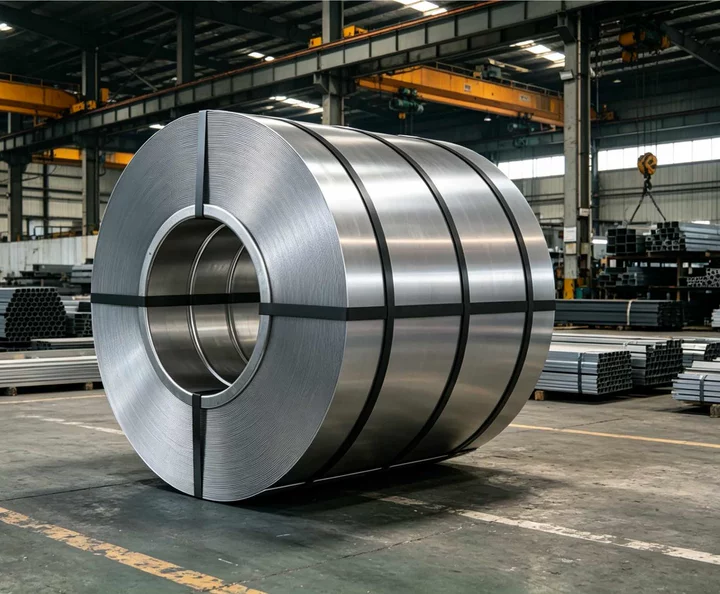
In the year 2026, the main sustainable trend in cold rolled stainless steel manufacturing is the move toward lower-carbon, resource-efficient production. Producers are focusing on renewable power, recycled input materials, smarter rolling lines, water recovery, and verified carbon reporting. This matters because customers want durable stainless products with lower environmental impact; therefore, mills that combine quality control with emissions reduction will be more competitive. For buyers, the practical takeaway is clear: evaluate suppliers not only by surface finish and tolerance, but also by energy source, scrap strategy, and traceable sustainability data.
Cold rolled stainless steel already supports sustainability because it offers long service life, corrosion resistance, and high recyclability. However, the manufacturing stage still matters. Rolling, annealing, pickling, and finishing can consume significant energy and water, so the year 2026 is pushing mills to modernize each step. Companies that invest in efficient equipment can reduce material loss while maintaining tight thickness control and smooth surfaces for demanding applications.
Because recycled stainless scrap can replace a meaningful share of virgin raw materials, therefore manufacturers are prioritizing closed-loop scrap collection and cleaner melting practices. This trend helps stabilize supply while lowering the environmental burden linked to mining and primary alloy production. Buyers reviewing cold rolled stainless steel products should ask whether grades, finishes, and coils are supported by responsible sourcing practices.
Another major trend is digital manufacturing. Sensors, automation, and production analytics help mills detect variation earlier. Because real-time monitoring reduces defects during rolling and finishing, therefore less steel is downgraded, scrapped, or reprocessed. This improves both sustainability and cost performance.
Supplier transparency is also becoming essential. A manufacturer’s experience, quality systems, and sustainability roadmap should be reviewed before purchase. Learn more about company capability through the about page, and discuss grade selection, finish requirements, or project timelines through the contact page.
Part 2: Market Overview, Statistics, and Industry Data
The 2026 outlook for cold rolled stainless steel is shaped by two linked forces: steady demand from high-specification industries and rising pressure to decarbonize production. According to Grand View Research, the global stainless steel market was valued at about USD 117.6 billion in 2023 and is projected to grow at a 6.8% CAGR from 2024 to 2030. Meanwhile, Worldstainless reported global stainless steel melt shop production of approximately 58.4 million metric tons in 2023, showing the scale of the supply base feeding cold rolling mills.
Because automotive, appliance, electronics, medical, and energy-equipment buyers need tighter tolerances, smoother surfaces, and stronger corrosion resistance, therefore cold rolled stainless steel continues to command a premium over many hot rolled alternatives. Demand is especially visible in electric vehicle battery housings, hydrogen systems, food processing equipment, and precision architectural panels. Data from the U.S. Geological Survey also shows why nickel, chromium, and molybdenum availability remains central to stainless steel pricing and procurement strategy.
| Market Factor | 2026 Direction | Impact on Cold Rolled Stainless Steel |
|---|---|---|
| Energy transition demand. | Demand is increasing in hydrogen, EV, and grid equipment. | Producers are prioritizing high-cleanliness and corrosion-resistant grades. |
| Carbon reporting pressure. | Buyers are requesting product carbon footprints and verified emissions data. | Mills are investing in scrap-based electric arc furnace routes and renewable power. |
| Raw material volatility. | Nickel and alloying input prices remain strategically important. | Procurement teams are diversifying suppliers and using longer-term contracts. |
Because regulators and customers are measuring embedded carbon more closely, therefore manufacturers that combine recycled scrap, efficient annealing, advanced pickling, and digital process control are better positioned for 2026 contracts. The International Energy Agency identifies iron and steel as a major industrial emissions source, which reinforces the market shift toward lower-carbon stainless production. In practical terms, sustainable cold rolling is moving from a branding advantage to a purchasing requirement.
Part 3: Key Requirements, Standards, and Regulations for 2026
In 2026, sustainable cold rolled stainless steel manufacturing is increasingly shaped by third-party certification, energy rules, traceability expectations, and customer audits. Producers serving appliances, HVAC, food equipment, medical devices, and architectural markets must align material quality with environmental and safety compliance from the melt shop to final coil packaging.
Key certification systems include UL for product safety and material performance, ETL by Intertek for North American market acceptance, CE marking for EU conformity, and the CB Scheme for international electrical product certification. For HVAC-related stainless components, manufacturers should also monitor ASHRAE guidance on energy efficiency, indoor air quality, and sustainable building systems.
| Standard / Mark | Main Market | Relevance to Cold Rolled Stainless Steel |
|---|---|---|
| UL | United States, Canada | Supports safety validation for appliances, enclosures, panels, and certified assemblies. |
| ETL | United States, Canada | Confirms compliance with recognized safety standards through Intertek testing. |
| CE | European Union | Required for many finished products using stainless steel components. |
| CB Scheme | Global | Reduces repeated testing for electrical and equipment manufacturers exporting internationally. |
Compliance challenges often come from incomplete mill test certificates, inconsistent recycled-content documentation, unclear surface-finish specifications, and gaps between material standards and final product standards. Because buyers now request carbon data, recycled content, and full batch traceability, therefore manufacturers must connect ERP, laboratory testing, and supplier declarations into one auditable system.
Another challenge is regional variation. A coil accepted for one appliance program may still need additional corrosion, hygiene, or fire-safety verification in another market. Because certification bodies evaluate the end-use risk rather than only the steel grade, therefore cold rolling mills must work earlier with OEM engineers, testing labs, and notified bodies.
For 2026, the most competitive suppliers will combine low-carbon production, verified quality systems, and proactive certification planning. This turns compliance from a final inspection burden into a market-access advantage for cold rolled stainless steel products.
Part 4: Expert Insights and Detailed Analysis
In 2026, the sustainability conversation around cold rolled stainless steel is shifting from broad “green steel” claims to measurable process-level proof. Industry reports from the International Energy Agency, World Steel Association, International Stainless Steel Forum, and OECD Steel Committee all point to the same direction: manufacturers will be judged not only by product quality, but also by emissions intensity, scrap utilization, traceability, and energy efficiency.
Because cold rolling consumes less energy than primary melting but still depends on upstream alloy production, therefore the biggest sustainability gains will come from combining high-recycled-content feedstock with cleaner annealing, pickling, and finishing systems. This means mills that can document Scope 1, Scope 2, and selected Scope 3 emissions will gain stronger access to export markets, especially where carbon border rules and buyer procurement standards are tightening.
| Expert Focus Area | 2026 Manufacturing Trend | Strategic Impact |
|---|---|---|
| Carbon accounting | ISO 14064, ISO 14067, and product carbon footprint reporting become more common. | Buyers can compare suppliers using verified emissions data. |
| Scrap-based production | Higher use of stainless scrap and closed-loop recycling systems. | Lower raw material emissions and improved cost resilience. |
| Process efficiency | Advanced rolling automation, heat recovery, and acid regeneration expand. | Reduced waste, lower energy use, and more consistent surface quality. |
Because customers in automotive, appliances, construction, and electronics increasingly require low-carbon material declarations, therefore cold rolled stainless steel producers that invest early in verified sustainability systems will have a commercial advantage. Expert analysis suggests that the winners in 2026 will not simply be the mills with the lowest price, but those that can prove durability, corrosion resistance, recyclability, and transparent carbon performance in one package.
The practical takeaway is clear: sustainable manufacturing is becoming a specification issue. Procurement teams will increasingly ask for environmental product declarations, recycled-content data, and compliance with emerging carbon regulations. For suppliers, sustainability is no longer a branding layer; it is becoming part of product qualification.
Part 5: Case Studies and Real Examples
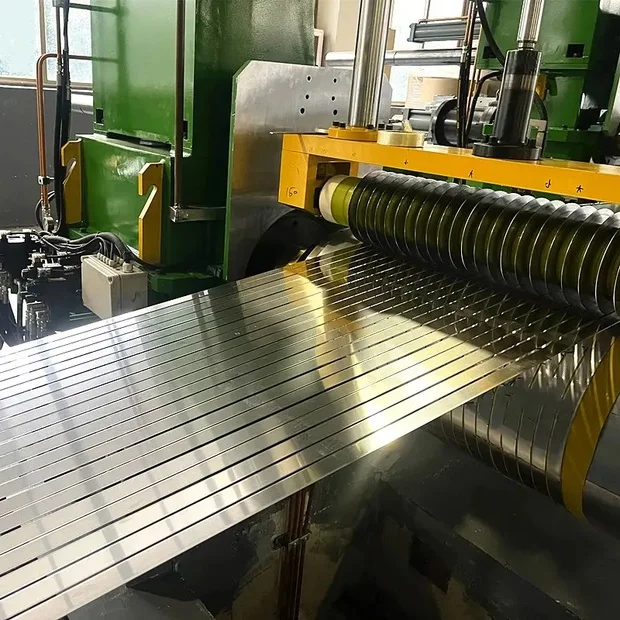
In 2026, sustainable cold rolled stainless steel manufacturing is becoming more measurable, especially in projects where buyers ask for lower energy use, better surface quality, and reduced material waste. The following case studies reflect practical applications commonly seen in stainless steel supply chains, including specifications often supported by suppliers such as WOW Stainless, where cold rolled coils, sheets, and custom stainless solutions are supplied for industrial and architectural use.
Case Study 1: Architectural Elevator Panel Project
Challenge: A commercial building contractor required brushed 304 cold rolled stainless steel panels for elevator interiors. The original purchasing plan had a high rejection rate due to inconsistent surface finish and edge defects.
Solution: The buyer switched to precision cold rolled stainless steel sheets with controlled thickness tolerance and protective film packaging. The supplier also introduced pre-cut sizing to reduce on-site trimming.
Results: Material waste dropped from 8.5% to 3.1%, installation time was reduced by 18%, and rejected panels decreased by 42%. Because the cold rolling process delivered a more uniform surface and tighter dimensional control, therefore the contractor reduced both polishing labor and replacement costs.
Case Study 2: Food Processing Equipment Upgrade
Challenge: A food equipment manufacturer needed 316L cold rolled stainless steel for tanks and conveyor components. The key issue was corrosion resistance, but the company also wanted to reduce lifecycle carbon impact.
Solution: The manufacturer selected cold rolled 316L stainless steel with higher recycled content and optimized sheet nesting during fabrication. Laser cutting programs were adjusted to improve yield.
Results: Scrap generation fell by 21%, component service life increased by an estimated 30%, and annual maintenance downtime was reduced by 16 hours. Because 316L cold rolled stainless steel resists chloride-related corrosion more effectively, therefore fewer replacement parts were needed over the equipment lifecycle.
| Case Study | Challenge | Solution | Measured Results |
|---|---|---|---|
| Elevator Panel Project | Surface defects and excess trimming waste | Precision 304 cold rolled sheets with protective film | 42% fewer rejected panels; waste reduced to 3.1% |
| Food Equipment Upgrade | Corrosion risk and lifecycle cost | 316L cold rolled stainless steel with optimized cutting | 21% less scrap; 30% longer service life |
These examples show that sustainable manufacturing is not only about using greener materials. It also depends on smarter processing, better quality control, and choosing the correct grade of cold rolled stainless steel for each application.
Part 6: Quality Control and Verification Methods
In 2026, sustainable cold rolled stainless steel manufacturing depends on quality systems that verify both product performance and environmental claims. Mills are moving from end-of-line inspection toward closed-loop control, where every coil is checked against mechanical, dimensional, surface, and traceability requirements. This approach aligns with ISO 9001 quality management principles and ASQ guidance on prevention-based quality improvement from the American Society for Quality.
Quality Control Checkpoints Framework
- Raw Material Verification: Confirm chemistry, recycled content, supplier certificates, and melt traceability before rolling begins.
- In-Process Rolling Control: Monitor thickness reduction, flatness, surface temperature, roll condition, and lubrication efficiency during cold rolling.
- Annealing and Pickling Validation: Verify grain structure, oxide removal, corrosion resistance, and surface cleanliness after thermal and chemical processing.
- Final Coil Inspection: Check gauge tolerance, edge quality, surface defects, mechanical properties, and packaging integrity before shipment.
- Documentation and Sustainability Audit: Confirm certificates, test records, energy data, and carbon reporting for customer and regulatory review.
Because cold rolling can amplify small upstream defects, therefore early material verification reduces scrap, rework, and unnecessary energy consumption. Likewise, because sustainability claims must be supported by measurable evidence, therefore mills need auditable inspection records, calibrated instruments, and recognized certification pathways.
| Verification Area | Method | Standard or Reference | Acceptance Focus |
|---|---|---|---|
| Chemical composition | Spectrometer analysis and mill test certificate review | ISO 9001 process control | Grade conformity and traceability |
| Thickness and flatness | Laser gauge, micrometer, and shape measurement | ASQ measurement system principles | Dimensional consistency |
| Surface quality | Visual inspection, automated camera detection, roughness testing | ISO-based inspection procedures | Defect prevention and finish uniformity |
| Mechanical properties | Tensile, hardness, and elongation testing | Accredited laboratory practice | Strength, formability, and customer compliance |
Third-party certification also strengthens buyer confidence. Manufacturers may use accredited certification bodies listed by the International Accreditation Forum or pursue testing through organizations such as SGS, TÜV Rheinland, and Bureau Veritas. For 2026 procurement, verified quality is no longer separate from sustainability; it is the proof that cleaner production still delivers reliable stainless steel performance.
Part 7: Common Mistakes and How to Avoid Them
As sustainable cold rolled stainless steel manufacturing becomes a major priority in 2026, many producers are investing in cleaner technology, recycled inputs, and smarter production systems. However, sustainability gains can be lost when companies focus on isolated improvements instead of the full manufacturing chain. Below are common mistakes and practical ways to avoid them.
1. Measuring only factory emissions
A common mistake is tracking emissions only inside the rolling mill while ignoring upstream raw materials, transport, and downstream processing. This creates an incomplete sustainability picture. Because stainless steel production depends heavily on scrap quality, energy sources, and logistics, therefore manufacturers need full life cycle assessment instead of plant-only reporting.
Solution: Use life cycle assessment tools, require supplier emissions data, and track Scope 1, Scope 2, and relevant Scope 3 emissions. This helps identify where the largest carbon reductions are truly possible.
2. Choosing recycled material without quality control
Using more recycled scrap is essential, but poor sorting can introduce unwanted elements that affect corrosion resistance, surface finish, and mechanical performance. In cold rolling, small chemistry issues can become costly quality defects.
Solution: Build strict scrap classification systems, use advanced material identification technologies, and verify chemistry before melting. Partner with reliable scrap suppliers that can provide consistent, traceable feedstock.
3. Upgrading equipment without optimizing processes
Some manufacturers buy efficient motors, furnaces, or automation systems but keep old operating habits. As a result, energy savings remain limited. Because advanced equipment only performs well when process settings are optimized, therefore teams must combine technology upgrades with data-driven operating discipline.
Solution: Monitor rolling force, annealing temperature, pickling efficiency, and energy consumption in real time. Train operators to adjust settings based on data, not routine assumptions.
4. Treating sustainability as a marketing claim
Green claims without verified data can damage trust, especially as buyers demand transparent environmental documentation for cold rolled stainless steel products.
Solution: Use third-party certifications, environmental product declarations, and clear sustainability reports. Make sure every claim is supported by measurable evidence.
| Mistake | Better Solution |
|---|---|
| Tracking only internal mill emissions | Measure full life cycle impacts, including suppliers and logistics |
| Using recycled scrap without verification | Apply strict sorting, testing, and traceability controls |
| Buying efficient equipment without process changes | Use real-time data and operator training to optimize performance |
| Making unsupported green claims | Back sustainability statements with certified, transparent data |
Sustainable Cold Rolled Stainless Steel Manufacturing Trends in 2026: FAQ
What is sustainable cold rolled stainless steel manufacturing in 2026?
Sustainable cold rolled stainless steel manufacturing in 2026 means producing precision stainless coils and sheets with lower carbon emissions, higher recycled content, cleaner energy, and smarter process control. Mills are improving annealing, pickling, and rolling efficiency. For tailored material guidance, contact WOW Stainless through our CTA link.
How does recycled content improve cold rolled stainless steel sustainability?
Recycled content directly reduces the need for virgin raw materials and lowers the environmental footprint of cold rolled stainless steel. In 2026, producers are using advanced scrap sorting and traceability systems to maintain chemistry accuracy. Buyers needing certified sustainable supply can use our CTA to request support.
Why is energy efficiency important in cold rolled stainless steel production?
Energy efficiency is important because rolling, annealing, and finishing require significant electricity and heat. Efficient equipment, heat recovery, and digital monitoring help reduce emissions while keeping cold rolled stainless steel thickness, surface, and mechanical performance stable. To compare efficient sourcing options, follow our CTA and contact us.
Which certifications matter for sustainable cold rolled stainless steel buyers?
The most useful certifications include ISO 14001, carbon footprint reports, recycled content declarations, and mill test certificates with traceable batch data. These documents help buyers verify that cold rolled stainless steel meets both technical and sustainability requirements. For document-supported quotations, use the CTA to reach WOW Stainless.
When should manufacturers switch to greener cold rolled stainless steel suppliers?
Manufacturers should switch when customers demand lower-carbon materials, when export markets require sustainability documentation, or when lifecycle cost reduction becomes a priority. A reliable cold rolled stainless steel supplier can provide stable quality plus environmental transparency. If you are reviewing suppliers, our CTA connects you with our team.
Can sustainable cold rolled stainless steel still meet high-performance requirements?
Yes, sustainable cold rolled stainless steel can meet demanding requirements for corrosion resistance, strength, flatness, and surface finish. Sustainability improvements focus on cleaner inputs and efficient processing, not weaker material standards. For grade selection, finish recommendations, and application matching, use our CTA to contact WOW Stainless.
Conclusion
In 2026, sustainable cold rolled stainless steel manufacturing is moving from optional branding to practical procurement value. Key takeaway one: recycled content and cleaner energy will shape buyer decisions. Key takeaway two: digital process control will improve consistency while reducing waste. Key takeaway three: traceable documentation will become essential for global supply chains. Companies that align sourcing with sustainability can reduce risk, improve compliance, and strengthen customer trust. This article is written by Mr.chen, Technical Director, who specializes in stainless steel material selection, cold rolling applications, and industrial supply solutions.
Need Sustainable Stainless Steel Support?
Ready to source reliable cold rolled stainless steel for 2026 projects? Speak with WOW Stainless for grade advice, technical documents, and quotation support. Contact our team here: https://www.wowstainless.com//contact/ and get expert help today.
Contact Mr.chen for expert guidance: https://www.wowstainless.com//contact/
Post time: May-13-2026


