
They also matter for safety and visibility. In a room with hundreds of ports and pathways spanning 10 m to 100 m, clean bundling supports easier tracing, cleaner labeling, and faster fault isolation. Smart facilities rely on sensors, automation, and monitoring, but those systems still depend on physical order. Precision cable tie guns make that order repeatable. Because infrastructure teams need predictable results, so standardized fastening becomes a low-cost way to improve uptime, cooling efficiency, and labor productivity across modern data halls.
TL;DR
- Precision matters: repeatable tie tension across bundles from 5 mm to 50 mm helps prevent jacket damage and loose cable drift.
- Airflow improves: disciplined bundling around racks rated at 5 kW to 80 kW can help keep hot and cold paths clear.
- Maintenance gets faster: organized pathways can save 3 min to 12 min during tracing and replacement tasks.
- Scale changes the math: in facilities with 100 racks to 1,000 racks, small fastening gains multiply into meaningful labor savings.
- Tool choice matters: matching Cable Tie Tools to bundle size, tie material, and access constraints reduces rework over service cycles of 12 months to 60 months.
Why smart data centers are redefining cable management
Smart data centers are not just buildings full of servers. They are highly measured environments where power, cooling, security, and network performance are tracked in near real time. Yet beneath the dashboards and software layers sits a physical foundation of cables, trays, patch panels, and equipment interconnects. Physical order remains essential. Clean routing, stable bundles, visible labels, and consistent fastening create the conditions that digital management platforms need to succeed.
High-density deployments intensify the issue. AI clusters, edge cabinets, and storage fabrics often push cable counts sharply upward. Because more links are being packed into the same 1 rack unit to 42 rack unit footprint, so every fastening decision affects serviceability. When technicians rush through installation with generic hand methods, tie tension may vary widely from bundle to bundle. Some groups become too loose and shift by 10 mm to 30 mm. Others become too tight and mark the jacket surface. Precision cable tie guns reduce that variability.
Key point: Smart infrastructure is only as smart as its physical discipline. Automation depends on organization, and organization depends on repeatable tools.
The hidden cost of poor fastening in dense environments
It is easy to underestimate cable fastening because a single tie looks inexpensive. However, poor fastening can generate cascading costs. A misrouted bundle might interfere with venting at the rear of a switch. A rough tail cut can scrape a technician’s hand during future service. A mixed bundle with inconsistent tension may trap labels or obscure color coding. Because service teams need to move quickly under pressure, so anything that adds uncertainty raises labor time and risk.
Consider a facility with 250 racks and an average of 120 cable endpoints per rack. If technicians lose only 4 min per rack during audits or moves due to cluttered cable groups, that becomes 1,000 min of extra work across one full pass. Add repeat visits over 12 months, and the labor burden grows further. Orderly fastening is therefore not cosmetic; it is operational.
Another issue is thermal behavior. Data center cooling is engineered around predictable air movement. Because uncontrolled cable mass can block perforations, side channels, or equipment intakes, so airflow efficiency may decline in exactly the zones with the highest thermal load. Even a partial obstruction of 20 mm to 40 mm near intake paths can matter in compact deployments. Structured cable bundles are easier to keep inside tray boundaries and away from cooling-critical openings.
What precision cable tie guns actually do
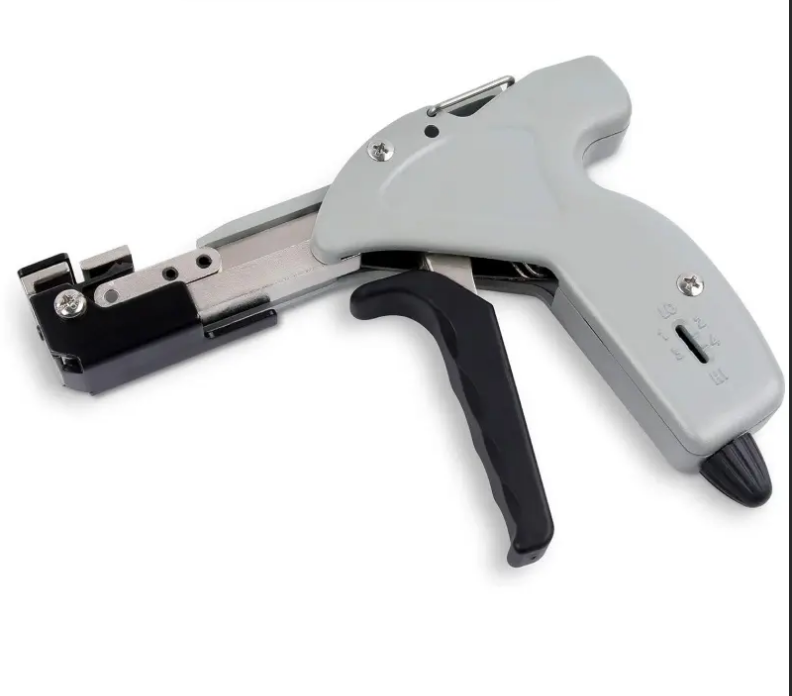
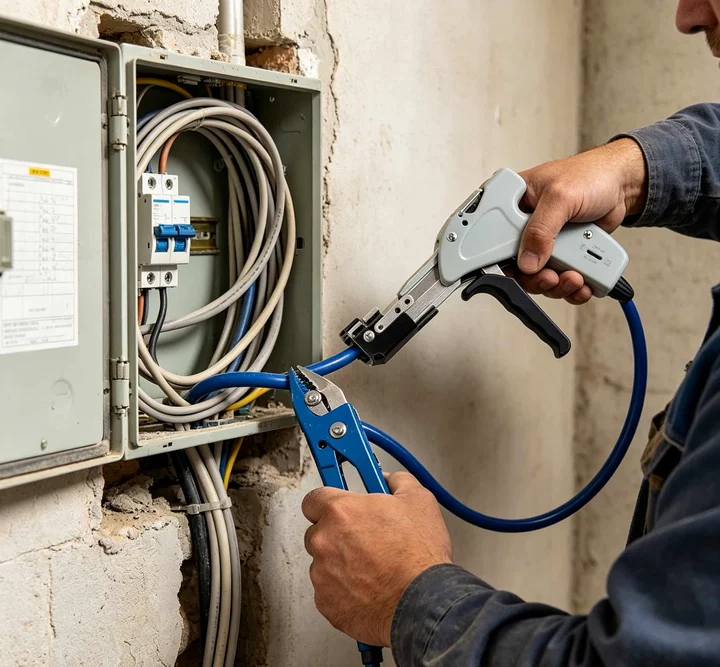
Precision cable tie guns are designed to tension and cut cable ties in a controlled, repeatable way. Rather than relying entirely on hand feel, the user applies a set amount of force appropriate for the cable type, bundle diameter, and tie material. That improves consistency across installations performed by different technicians on different shifts.
The value is straightforward:
- Repeatable tension helps protect cable jackets.
- Clean tail trimming reduces sharp edges.
- Faster application supports higher productivity.
- Uniform appearance helps audits and traceability.
- Reduced rework lowers long-term labor.
For teams evaluating Cable Tie Tools, the practical advantage is control. In smart facilities, control matters because consistency feeds reliability. Because one aisle may contain copper links, fiber pathways, sensor wires, and power-adjacent control cables, so technicians need tools that can adapt without introducing unnecessary tension variation.
How precision fastening supports smart data center goals
1. Better airflow discipline
Airflow management is a core data center priority. Organized bundles stay closer to intended routes, making it easier to preserve cold-aisle and hot-aisle separation. Because tangled loops and sagging groups create micro-obstructions, so disciplined bundling contributes to cleaner cooling paths. The benefit becomes more visible in cabinets operating above 20 kW per rack, where margin is often tighter.
2. Faster maintenance and tracing
Service speed depends on visibility. When tie tails are trimmed cleanly and bundle spacing is consistent, labels remain readable and ports are easier to identify. A technician replacing one failed connection among 48 ports or 96 ports can work faster when cable groups are separated logically instead of compressed into random masses. Structured bundles reduce searching time.
3. Lower risk of cable stress
Over-tightening is not always immediately obvious, but long-term compression can be harmful. Precision tools address that by applying more controlled tension. Because the goal is secure fastening without crushing the jacket, so repeatable settings are preferable to guesswork, especially across large projects with 1,000 ties to 20,000 ties.
4. Improved worker safety
Flush cuts matter in crowded racks. Sharp protruding tie tails can cause scratches during troubleshooting. Precision tools often provide cleaner cuts, which makes routine handling safer during repeated interventions over 24 months to 60 months.
5. Standardized installation quality
Data centers often rely on multiple technicians or contractors. Standardization reduces differences in workmanship. Because team members vary in experience and hand strength, so tools that enforce more uniform tension create more predictable outcomes from row to row.
Where cable tie tools fit into a modern infrastructure toolkit
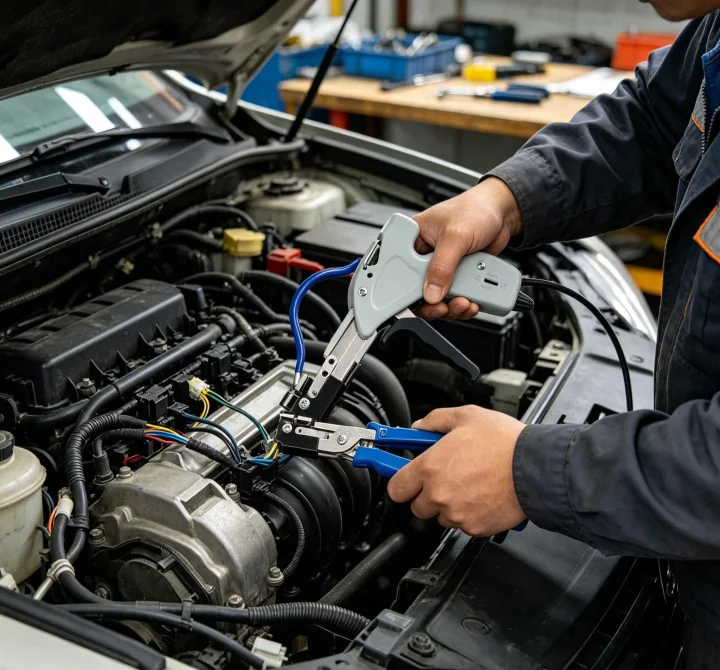
Not every job in a smart data center requires the same fastening method. Technicians may work on patching inside a cabinet in the morning and on tray support or perimeter routing in the afternoon. That is why a flexible toolkit matters. Cable tie tools are valuable for routine, repeatable bundling, while heavier fastening applications may call for strap banding tools or specialized hardware.
For robust fastening tasks, teams can also evaluate solutions such as the S001 heavy duty hand operating strap banding tool. It is relevant where larger assemblies or tougher strapping requirements exceed the needs of standard lightweight ties. Tool matching is critical because the wrong tool can slow work, distort materials, or create inconsistent tension.
| Application area | Typical bundle size | Primary concern | Recommended tool focus |
|---|---|---|---|
| Server rack patching | 5 mm to 20 mm | Label visibility and service access | Precision tension and clean cut |
| Top-of-rack aggregation | 15 mm to 35 mm | Airflow clearance and traceability | Consistent bundling |
| Cable tray routing | 20 mm to 50 mm | Path stability over longer runs | Durable fastening |
| Heavy-duty support tasks | 30 mm to 80 mm | Stronger securing force | Strap banding capability |
Choosing the right cable tie tools for 2026 operations
In 2026, the right tool is the one that fits the operating environment, not just the purchase price. Teams should evaluate several factors before standardizing on a model:
- Tension range: Can it handle delicate bundles and denser groups within a defined force window?
- Material compatibility: Is it suitable for the tie material being used across the site?
- Ergonomics: Can technicians use it comfortably over shifts lasting 4 h to 10 h?
- Cut quality: Does it leave a clean finish that reduces snag risk?
- Durability: Will it perform across repeated cycles in active facility conditions?
- Access constraints: Can it work in narrow rack spaces and overhead tray zones?
Ergonomic design matters more than many buyers expect. Because repetitive fastening can involve hundreds of cycles per day, so grip comfort and trigger effort can affect both productivity and technician fatigue. In large rollouts, even a savings of 1 s to 2 s per tie may become meaningful over 5,000 ties.
Implementation best practices for smarter cable management
Buying a better tool is useful, but results improve most when the tool is part of a standard method. Smart data centers should document how bundles are grouped, where ties are positioned, how often labels are placed, and what tension settings apply to different cable classes. Process discipline turns tool precision into infrastructure precision.
Create bundle standards
Define acceptable bundle diameters, tie spacing, and route separation. For example, teams may require tie spacing every 150 mm to 300 mm on certain vertical runs and wider intervals on protected tray segments. Consistency makes audits simpler.
Protect service loops
Leave enough controlled slack for maintenance without creating clutter. Because future replacements are inevitable, so service loops should be planned rather than improvised. The goal is not maximum tightness; it is stable accessibility.
Separate by function
Group cables by application, destination, or service domain. Logical separation supports faster tracing and cleaner documentation during adds, moves, and changes.
Train for repeatability
Even excellent tools benefit from technician training. A short standard work instruction of 15 min to 30 min can improve installation uniformity. Repeatability is a learned habit as much as a product feature.
The role of cable management in resilience and uptime
Resilience is often discussed in terms of power redundancy, network diversity, and backup systems, but cable discipline is part of resilience too. When pathways are clearly structured, incident response becomes easier. A technician can identify the correct route faster, isolate affected segments with more confidence, and avoid disturbing adjacent links. Order supports recovery.
This matters during both routine maintenance and unexpected events. In a partial outage, every minute matters. Because confusion spreads when cable paths are crowded and undocumented, so organized fastening can indirectly improve mean time to intervention. It will not eliminate failures, but it can reduce friction in the recovery process.
FAQ
1. Why do smart data centers care so much about cable fastening precision?
Smart data centers care about fastening precision because cable density, airflow discipline, and maintenance speed all depend on orderly physical infrastructure. A tie that is too loose may allow bundles to drift by 10 mm to 30 mm, while a tie that is too tight can stress a jacket over service cycles lasting 12 months to 60 months. Precision fastening helps create repeatable results across many technicians and many racks, which supports cleaner audits, easier tracing, and more reliable day-to-day operations.
2. How do cable tie guns support airflow management?
Cable tie guns support airflow management by helping technicians build consistent bundles that remain inside intended pathways. In facilities with loads of 20 kW to 80 kW per rack, clutter near intakes, vent zones, or aisle boundaries can make cooling control harder. Uniform bundles reduce sagging and help preserve clear air movement. Because cooling paths depend on physical clearance, so better fastening supports more predictable thermal conditions.
3. Are manual cable tie tools still useful in 2026?
Yes, manual cable tie tools remain highly useful in 2026. Many data center tasks happen in tight spaces, overhead tray zones, or remote areas where simplicity is valuable. Manual tools are portable, dependable, and often easier to deploy quickly. Well-designed hand tools still deliver excellent control for routine fastening work, especially when technicians need to move efficiently between cabinets, patch fields, and support structures.
4. What is the main risk of over-tightening cable ties?
The main risk is cable stress. Excessive pressure can mark or compress the jacket, reduce flexibility, and complicate later maintenance. In some cases, overtight bundles also trap labels or distort group shape, making ports harder to trace. Controlled tension is important because the goal is secure organization rather than maximum compression. Because cable systems need both protection and accessibility, so proper tension is a practical quality metric.
5. Can better cable management reduce maintenance time?
Absolutely. Better cable management reduces maintenance time because technicians spend less effort sorting, tracing, and separating crowded runs. In a rack with 48 ports to 96 ports, a clean layout can save 3 min to 12 min during identification and replacement tasks. Readable labels, clear grouping, and clean tie cuts all contribute to faster work and fewer errors during changes.
6. Where should teams use heavy-duty strap banding tools?
Heavy-duty strap banding tools are most appropriate where stronger securing force is needed for larger assemblies, tray support work, or tougher fastening requirements that go beyond standard cable tie applications. For example, larger groupings in the 30 mm to 80 mm range may benefit from more robust strapping methods. Application matching is essential because a tool designed for light bundling is not always ideal for structural or heavier-duty fastening tasks.
7. What metrics improve when cable management improves?
Several metrics can improve, including installation time, audit speed, label visibility, maintenance accuracy, and recovery speed during incidents. Facilities may also see smoother airflow behavior when cable pathways remain unobstructed. While exact gains vary, it is common for organized layouts to save several minutes per rack during inspections or service work. Operational efficiency improves because technicians interact with infrastructure more confidently and with fewer unnecessary touches.
8. How should operators choose cable tie tools?
Operators should choose cable tie tools by aligning the tool’s tension behavior, ergonomics, material compatibility, and cut quality with real facility conditions. A good selection process includes reviewing bundle diameters from 5 mm to 50 mm, tie materials, rack clearance, and expected fastening volume per shift. The best tool is the one that delivers repeatable results in the spaces where technicians actually work, not simply the one with the lowest initial price.
Final thoughts
The rise of smart data centers is often told through software, AI, and automation, but the physical layer still determines whether those systems run cleanly at scale. Precision cable tie guns may seem like a small part of the toolkit, yet they directly influence airflow discipline, service speed, cable protection, and installation consistency. In environments measured by uptime and response time, that matters.
As facilities evolve through 2026 and beyond, infrastructure teams will continue to face greater density, tighter thermal margins, and faster service expectations. Because those pressures reward standardization, so disciplined cable fastening will keep becoming more important. For operators looking to improve physical organization, start with the basics: the right pathways, the right method, and the right Cable Tie Tools.
Post time: Apr-24-2026


