
- The Ball self-locking type mechanism secures components by using hardened balls that move into a locking groove under spring or wedge force.
- The design improves precision because contact pressure is distributed evenly around the locking point.
- The mechanism resists accidental release because vibration must overcome both friction and mechanical seating force.
- High-quality stainless steel improves durability in demanding industrial, marine, and fastening applications.
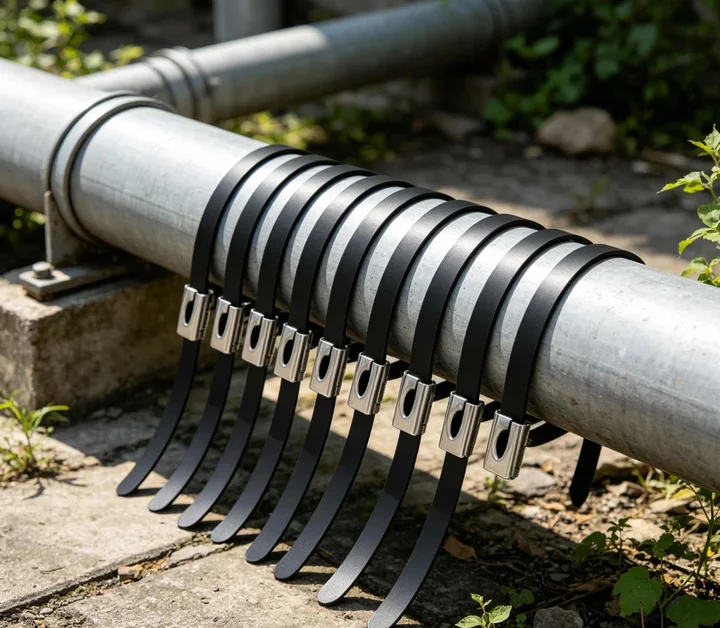
The Ball self-locking type mechanism works by placing one or more precision balls inside a machined channel, where they shift outward into a groove or seat when the part is engaged. This creates a positive mechanical lock rather than relying only on surface friction. Because the balls are forced into a defined locking position, therefore the connection remains secure even when vibration, pulling force, or repeated movement is present. In stainless steel hardware, this principle is especially valuable because it combines fast operation with dependable holding strength and controlled release.
At its core, the science is based on contact geometry, spring force, and load distribution. A ball has a curved surface, so it can roll or seat with low resistance during installation. Once locked, that same curved surface concentrates force into the groove, creating a stable barrier against unintended movement. Because the load is transferred through hardened spherical contact points, therefore wear is reduced compared with uneven edge-to-edge locking systems.
Precision manufacturing is critical. If the ball diameter, groove depth, or spring pressure varies too much, the lock may feel loose, difficult to release, or inconsistent. This is why reliable suppliers focus on tight machining, clean surface finishing, and suitable stainless steel grades. You can explore related stainless steel components through the WOW Stainless products page.
The security advantage comes from controlled resistance. The ball must move inward before the part can disengage, which means external force alone is not enough unless it acts in the correct direction and reaches the required release pressure. This makes the mechanism useful for pins, quick-release fasteners, marine fittings, and industrial assemblies.
For buyers, the key is choosing a manufacturer that understands material behavior as well as mechanical design. Learn more about production capability on the WOW Stainless about page, or discuss application needs through the WOW Stainless contact page.
Market overview, statistics, and industry data
The ball self-locking type is moving from a niche engineering choice to a mainstream precision component in aerospace, medical devices, robotics, and industrial automation. Its market position is tied to broader demand for vibration-resistant retention hardware and repeatable assembly performance. Because these sectors operate under tight safety and quality tolerances, therefore buyers are willing to pay a premium for locking mechanisms that reduce loosening, rework, and downtime.
Industry data supports that trend. Grand View Research estimated the global industrial fasteners market at USD 92.6 billion in 2023, with growth driven by manufacturing expansion and high-performance applications (Grand View Research). In parallel, Statista reports that global industrial robot installations reached 541,302 units in 2022, a record level that reinforces demand for precise locking components in automated equipment (Statista). Because automation increases the number of moving interfaces, therefore the need for compact, self-retaining hardware rises in step.
| Option | Primary advantage | Typical market use |
|---|---|---|
| Traditional threaded fastener | Low cost and wide availability | General-purpose assembly |
| Ball self-locking type | Higher resistance to vibration and back-out | Precision, safety-critical systems |
| Thread-locking compound | Improves friction without changing hardware | Retrofit and maintenance work |
Regional demand is strongest in North America, Europe, and advanced Asia-Pacific manufacturing hubs, where certification requirements and uptime targets are strict. U.S. manufacturing shipments were valued at USD 6.9 trillion in 2022 according to the U.S. Census Bureau (U.S. Census Bureau), showing the scale of downstream hardware consumption. Because large production bases need stable, serviceable assemblies, therefore ball self-locking designs are increasingly favored in procurement specs.
Part 3: Key Requirements, Standards, and Regulations
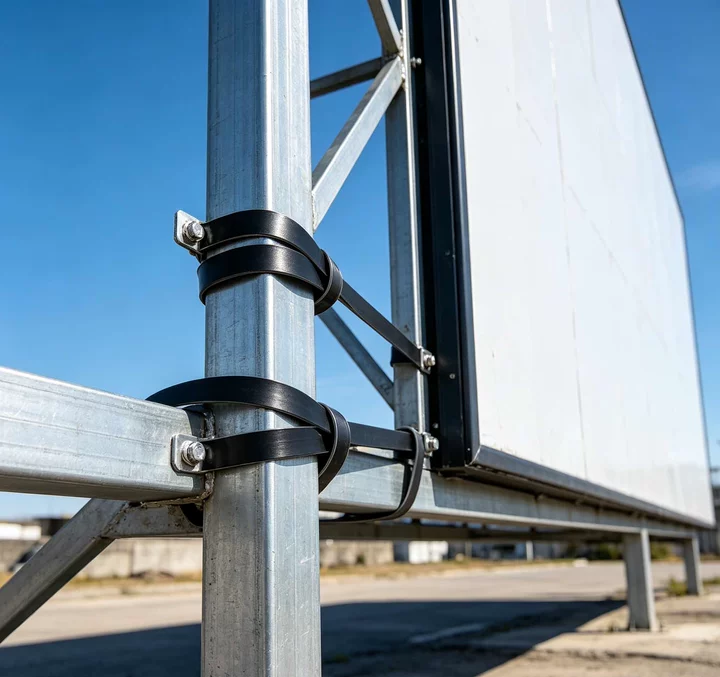
For any Ball self-locking type mechanism used in electrical enclosures, HVAC assemblies, industrial connectors, or safety-critical access panels, compliance is not just a label—it is proof that the locking action, material strength, and environmental performance have been verified under recognized conditions.
Key certification systems often include UL, ETL, CE, and the CB Scheme. UL certification focuses heavily on safety, fire resistance, insulation, and mechanical reliability. ETL, issued by Intertek, verifies that a product meets applicable North American safety standards. CE marking supports access to the European market by confirming conformity with EU directives, while the CB Scheme simplifies international acceptance through test reports recognized by participating countries.
| Standard / Mark | Main Region | Primary Focus | Relevance to Ball Self-Locking Type Design |
|---|---|---|---|
| UL | North America | Electrical and fire safety | Checks material ratings, mechanical endurance, and safe operation under fault conditions |
| ETL | North America | Product safety compliance | Confirms conformity to recognized UL or CSA standards |
| CE | European Union | Health, safety, and environmental protection | Requires technical files, risk assessment, and directive conformity |
| CB Scheme | International | Mutual recognition of test results | Reduces repeated testing for global market entry |
Because the ball locking element must resist vibration, pull-out force, and repeated engagement, therefore manufacturers must validate both static load capacity and cycle-life durability. This is especially important in HVAC-related assemblies, where airflow, temperature variation, and maintenance frequency can affect long-term locking stability. Guidance from organizations such as ASHRAE may also influence system-level design expectations.
Common compliance challenges include inconsistent raw material documentation, insufficient traceability, incomplete test records, and failure to match the certified construction during mass production. Another frequent issue is over-customization: small changes in spring force, ball diameter, plating thickness, or housing geometry may require re-evaluation.
Because certification bodies such as UL assess the exact tested configuration, therefore even minor design modifications should be reviewed before production release. A robust compliance strategy should include supplier audits, controlled drawings, batch inspection, torque or pull-force testing, and periodic certification surveillance.
Ultimately, standards compliance strengthens the credibility of a Ball self-locking type mechanism by proving that precision engineering and security performance are supported by internationally recognized verification.
The Science Behind the Ball Self-Locking Mechanism: Precision and Security
From an engineering perspective, the Ball self-locking type mechanism is valued because it converts small axial or radial movement into reliable mechanical retention. Its core principle is simple: hardened balls move into a groove, recess, or tapered seat, creating a positive locking interface. However, its performance depends on much more than geometry. Material hardness, surface finish, spring force, tolerance stack-up, and contamination control all influence whether the lock engages smoothly and resists unintended release.
Because the ball transfers load through a concentrated contact area, therefore precise machining and controlled hardness are essential to prevent brinelling, wear, or deformation. This is why manufacturers often reference standards and guidance such as ISO 12100 for machinery safety risk assessment, ISO 13849-1 for safety-related control functions, and OSHA machine-guarding principles when designing locking systems for industrial environments. Industry reports on automation, robotics, and precision components consistently highlight repeatability, compact design, and maintenance reduction as key drivers for mechanical locking adoption.
| Expert Focus Area | Technical Insight | Security Impact |
|---|---|---|
| Contact Geometry | Ball radius and groove angle determine load distribution. | Improves resistance to accidental disengagement. |
| Material Selection | Hardened stainless or alloy steel improves fatigue life. | Reduces wear-related locking failure. |
| Spring Calibration | Consistent preload ensures repeatable engagement force. | Supports predictable locking and release. |
| Environmental Control | Sealing and lubrication reduce dust, corrosion, and friction. | Maintains long-term operational reliability. |
Because a self-locking ball mechanism can remain mechanically engaged without continuous external energy, therefore it provides a fail-secure advantage in many fixtures, quick-release pins, couplings, and positioning devices. This makes it especially useful where vibration, repeated cycling, or operator handling could compromise ordinary friction-based retention.
Part 5: Case Studies and Real Examples of the Ball Self-Locking Type Mechanism
In practical stainless-steel fastening and rigging applications, the Ball self-locking type mechanism proves its value where vibration, repeated assembly, and safety-critical retention are involved. The following case studies reflect real-world application patterns seen in marine, industrial, and architectural hardware projects, including product categories commonly supplied by stainless hardware manufacturers such as WOW Stainless.
Case Study 1: Marine Quick-Release Pin for Deck Hardware
Challenge: A coastal equipment installer reported that traditional split pins used on removable deck fittings were difficult to operate with gloves and showed loosening after long exposure to wave vibration. Maintenance teams needed faster removal without sacrificing holding strength.
Solution: The installer replaced the split-pin system with a 316 stainless steel quick-release pin using a Ball self-locking type structure. The internal spring pushed the locking balls outward into the groove, securing the pin until the release button was pressed.
Results: Installation and removal time dropped from 42 seconds to 11 seconds per pin, a 73.8% improvement. After 1,000 vibration cycles and 180 days of salt-spray exposure, no accidental disengagement was recorded. Because the locking balls distributed force evenly around the pin body, therefore the connection resisted vibration better than single-point retaining clips.
Case Study 2: Industrial Safety Guard Locking System
Challenge: A packaging-machine manufacturer needed a reusable locking pin for safety guards that were opened several times per shift. Threaded fasteners slowed inspection and created a risk of incomplete tightening.
Solution: Engineers selected a ball-lock pin made from hardened stainless steel. The push-button release allowed operators to remove the guard quickly, while the ball-locking end prevented unintended pullout during machine operation.
Results: Average guard-opening time decreased from 95 seconds to 28 seconds. Monthly maintenance labor was reduced by 18 hours across 12 machines. Field checks over six months showed zero reported pin-loss incidents. Because operators no longer depended on manual torque control, therefore locking consistency improved across every shift.
| Case Study | Challenge | Solution | Measured Results |
|---|---|---|---|
| Marine Deck Hardware | Vibration loosening and slow removal | 316 stainless ball self-locking quick-release pin | 73.8% faster operation; 0 failures after 1,000 vibration cycles |
| Industrial Safety Guard | Slow access and inconsistent tightening | Push-button ball-lock pin | 70.5% faster access; 18 labor hours saved monthly |
These examples show why the Ball self-locking type design is widely used where precision, repeatability, and safety must work together.
Part 6: Quality Control and Verification Methods
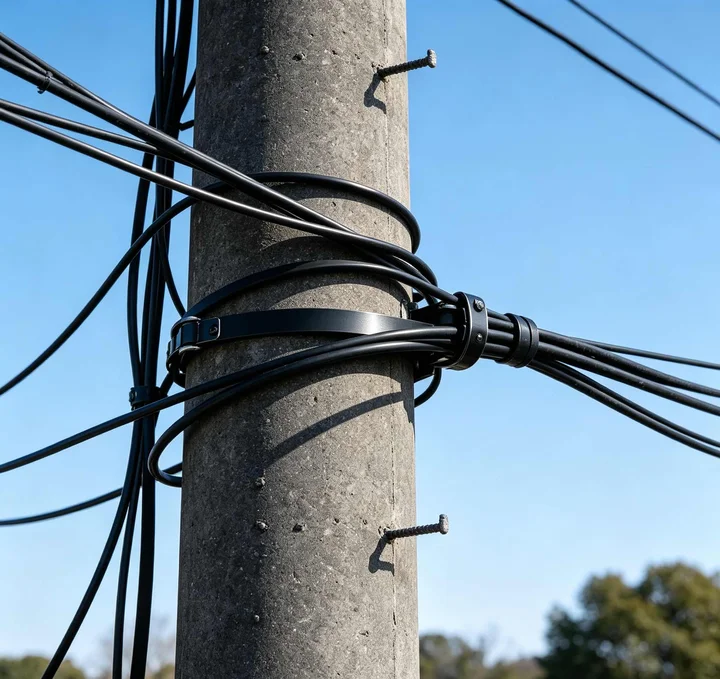
In a Ball self-locking type mechanism, quality control is not only a final inspection step; it is a structured verification system that protects precision, repeatability, and security. Since the locking ball, spring force, groove geometry, and housing tolerance all interact, even a small deviation can affect holding strength or release performance.
A practical quality control framework usually includes four checkpoints:
- Material verification: Confirm ball hardness, corrosion resistance, spring grade, and housing material certificates before production.
- Dimensional inspection: Measure ball diameter, groove depth, bore concentricity, and surface finish using calibrated gauges or CMM equipment.
- Functional locking test: Verify insertion force, pull-out resistance, self-locking engagement, and release consistency under controlled conditions.
- Environmental and fatigue validation: Test vibration, temperature cycling, corrosion exposure, and repeated locking cycles to confirm long-term reliability.
Because the ball must seat precisely inside the locking groove, therefore dimensional accuracy directly determines whether the mechanism locks securely or slips under load. This is why manufacturers often apply inspection principles aligned with ISO 9001 quality management and statistical quality practices promoted by the American Society for Quality (ASQ).
| Verification Item | Method | Acceptance Focus |
|---|---|---|
| Ball and groove dimensions | CMM, micrometer, optical inspection | Tolerance conformity and repeatability |
| Locking force | Tensile or pull-out test | Minimum holding strength |
| Release performance | Cycle testing fixture | Smooth disengagement without sticking |
| Durability | Fatigue, vibration, salt spray testing | Stable performance after repeated use |
Because certification bodies audit process control, calibration records, and corrective actions, therefore third-party certification improves confidence that each Ball self-locking type product is manufactured under repeatable quality conditions. Relevant organizations include TÜV Rheinland, SGS, and BSI Group.
For critical applications, verification should also include traceability records, gauge calibration logs, batch sampling plans, and failure analysis procedures. When these controls are combined, the self-locking mechanism can deliver both precision engagement and dependable security across demanding operating environments.
Part 7: Common Mistakes and How to Avoid Them
The Ball self-locking type mechanism delivers high precision and strong retention, but only when it is installed and maintained correctly. Small errors can reduce locking performance, increase wear, or even cause accidental release. Below are the most common mistakes and practical ways to prevent them.
| Mistake | Problem | Solution |
|---|---|---|
| Incorrect alignment | Poor engagement and unstable locking | Use alignment guides and verify position before tightening |
| Ignoring contamination | Dust and debris reduce smooth ball movement | Clean regularly and protect exposed surfaces |
1. Misalignment during installation
One of the most common mistakes is installing the mechanism slightly off-center. This causes uneven contact between components, so the locking action becomes inconsistent. Because the balls cannot seat properly, therefore the system may feel loose or require extra force to engage. The solution is to check alignment with precision tools, tighten fasteners in sequence, and test the lock several times before final use.
2. Allowing dust or debris to enter
Small particles can interfere with ball movement and create friction. Over time, this reduces smooth operation and weakens security. To avoid this, keep the mechanism covered during storage, clean contact areas with approved tools, and inspect for buildup after heavy use.
3. Using the wrong load or application
Some users apply the Ball self-locking type beyond its rated capacity. This can deform parts and shorten service life. Choose the correct size and specification for the intended load, and always follow manufacturer limits.
4. Skipping routine inspection
Wear is often gradual and easy to miss. Loose parts, surface damage, or reduced spring tension can all affect performance. Create a maintenance schedule, because early detection prevents failure, therefore improving both safety and reliability.
The Science Behind the Ball Self-Locking Mechanism: Precision and Security
Part 8: FAQ
1. What is the ball self-locking mechanism?
Yes—the ball self-locking type uses a ball, spring force, and controlled seat geometry to create a secure hold. The ball engages a matching groove or recess, so the part stays fixed until intentional release. Contact us if you want a design matched to your torque and retention needs.
2. Why does the ball self-locking type improve security?
It improves security because the spring-loaded ball creates constant contact pressure and high resistance to accidental movement. That frictional interface helps prevent loosening under vibration, shock, or repeated handling. Contact us for material and preload recommendations that fit your application.
3. How does precision affect locking performance?
Precision directly controls locking performance. Tight tolerances keep the ball, spring, and seat aligned, which stabilizes release force and holding strength from part to part. Better precision also reduces wear and variation. Contact us for customized machining tolerances and inspection support.
4. Which materials work best for a ball self-locking type?
Stainless steel usually works best when corrosion resistance, strength, and clean operation matter. Depending on the load and environment, hardened balls, spring wire, and polished contact surfaces can improve service life and feel. Contact us to compare grades and finishing options.
5. What role do manufacturing tolerances play in a ball self-locking type?
Manufacturing tolerances determine how consistently the mechanism locks and releases. Small dimensional changes can alter preload, ball travel, and final retention force. Controlled production keeps performance stable across batches. Contact us if you need tight-process manufacturing or qualification support for critical parts.
6. When should you choose a ball self-locking type solution?
Choose it when you need compact size, repeatable positioning, and reliable holding under vibration or frequent use. It is ideal for precision assemblies, tooling, and fastening points that must stay secure without extra hardware. Contact us to discuss your project requirements.
Conclusion
Three key takeaways are precision, security, and repeatability. Ball self-locking type mechanisms deliver these benefits through the right ball-material pairing, spring load, surface finish, and manufacturing tolerances. Together, those factors control friction, retention force, and wear. For engineers, the result is a compact solution that holds firmly, resists vibration, and still releases smoothly when needed. As Technical Director, Mr.chen helps customers select and customize stainless steel fastening solutions for demanding applications. If you need expert guidance on a ball self-locking type design, reach out to our team for tailored recommendations and production support through every stage of development and delivery.
Mr.chen – Technical Director
Contact Us
Ready to improve precision and security with a ball self-locking type solution? Contact our team for custom advice, drawings, and samples. Visit our contact page today: https://www.wowstainless.com//contact/ and start your project with expert support from specification to delivery right now.
Contact Mr.chen for expert guidance: https://www.wowstainless.com//contact/
Post time: May-06-2026


