
Why Stainless Steel Cable Ties Are in High Demand for Industrial Applications
Market Demand for Stainless Steel Cable Ties
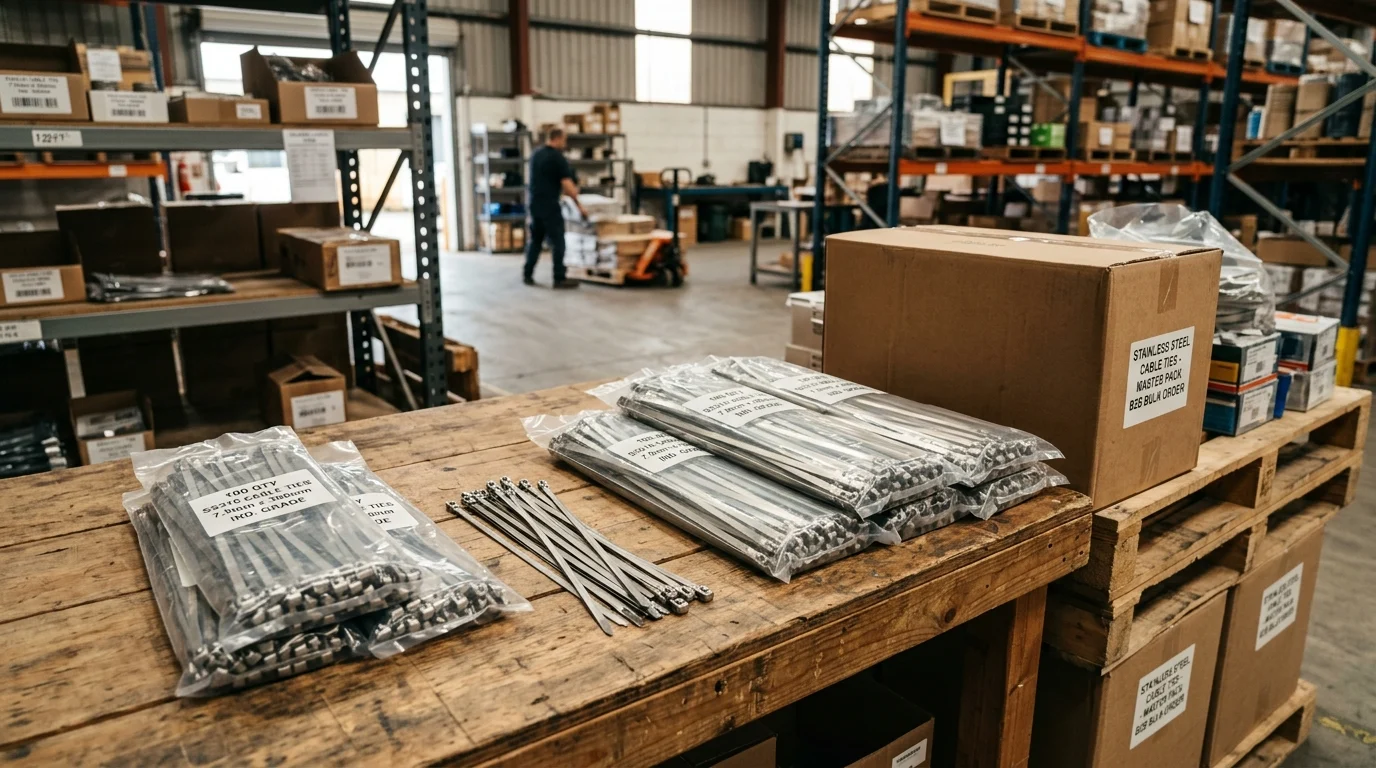
If you monitor industrial hardware, you have likely noticed a massive shift in heavy-duty fastening. Over the last few years, demand for Stainless Steel Cable Ties has skyrocketed across multiple global sectors. This isn’t a temporary spike; it is a fundamental change in how engineers and procurement teams approach long-term installations.
The industry is moving away from temporary fixes toward solutions offering decades of reliability. Analyzing current Fastener market trends, data points strictly toward environments where extreme temperatures, chemical exposure, and mechanical stress render traditional plastics obsolete. B2B distributors recognizing this shift are capturing lucrative, high-volume contracts.
For wholesale buyers, understanding this demand is the first step to building profitable inventory. The market is increasingly unforgiving of component failures, meaning the upfront cost of stainless steel is easily justified by eliminating future maintenance and replacement cycles.
Industrial sectors driving adoption
The heaviest adoption occurs in the oil and gas, shipbuilding, renewable energy, and telecommunications sectors. Solar farms require cable management that withstands 25 years of direct UV exposure without degrading. Similarly, petrochemical plants rely on these ties because they will not melt or release toxic gases during a localized fire, ensuring critical cabling remains intact.
Key procurement drivers
Procurement managers signing off on bulk orders are primarily driven by Total Cost of Ownership (TCO) and risk mitigation. The drivers are clear: high tensile strength (often exceeding 250 lbs), absolute UV resistance, and wide operating temperature ranges (-80°C to +538°C). Buyers are purchasing an insurance policy against catastrophic system failure.
Example: Offshore and coastal projects in Southeast Asia
Take the offshore wind and coastal infrastructure projects booming in Southeast Asia. Buyers in Vietnam and the Philippines outright refuse standard 304-grade stainless. Because of the extreme saline environment and high humidity, they strictly source 316-grade coated ties to prevent galvanic corrosion. This regional demand drives massive bulk orders for specialized, epoxy-coated variants.
Buyer Checklist Before Sourcing
Entering the stainless steel fastener market requires more technical diligence than buying standard nylon zip ties. As an importer or distributor, your reputation hinges on the metallurgical integrity of the products you supply. A misstep in material grading can lead to massive project failures and expensive liabilities.
Smart B2B procurement means having a rigid checklist before requesting a sample. You must look beyond the price per piece and dig into raw material certificates. Treat these ties as critical structural components rather than simple consumables.
If you don’t know exactly what your end-user needs, you risk sitting on dead stock. Here are the exact parameters to verify with your manufacturing partner before issuing a purchase order.
Core product specifications
Specify the exact steel grade—typically SS304 for general outdoor use or SS316 for marine and highly corrosive environments. Next, decide on the locking mechanism. The ball-lock design is popular for fast installation, while ladder-style or releasable ties serve specific niches. Finally, clarify if you need bare metal or coated ties (like PVC or epoxy) to prevent damage to soft cable jackets.
Sizing and application fit
Width and length dictate tensile strength and bundle diameter. Standard widths are 4.6mm (yielding around 100 lbs tensile strength) and 7.9mm (yielding up to 250 lbs). Stock a strategic mix of lengths, typically ranging from 100mm to 1000mm, to cover everything from tight telecom bundles to massive industrial piping.
Example: EPC sourcing for outdoor solar installations
I recently helped a distributor supply an EPC firm building a massive solar array. The EPC had a strict mandate: ties had to guarantee a 25-year lifespan under intense desert sun and high winds. We sourced 7.9mm wide, 316-grade ties with a black polyester coating, ensuring zero UV degradation and no abrasive wear on the solar panel wiring.
Comparison with Nylon and Other Fastening Options
When pitching these products to clients, you will inevitably face price objections. Nylon ties cost a fraction of stainless steel ties. However, comparing them strictly on price is a fundamentally flawed approach.
The conversation must shift from “cost per unit” to “cost per decade.” Nylon is fantastic for indoor, climate-controlled, low-stress applications. But the moment you introduce harsh UV light, extreme cold, chemical washdowns, or heavy mechanical vibration, nylon becomes a liability.
To help frame this for buyers, keep hard comparative data on hand. When you show a client the actual performance limits, the higher unit cost of stainless steel suddenly looks like a bargain.
Performance and cost comparison
Here is a quick reference table for explaining the difference to procurement teams:
| Feature | Standard Nylon 6/6 | SS304 (Bare) | SS316 (Coated) |
|---|---|---|---|
| Operating Temp | -40°C to +85°C | -80°C to +538°C | -80°C to +150°C |
| Tensile Strength | Up to 120 lbs | Up to 250+ lbs | Up to 250+ lbs |
| UV Resistance | Moderate (if UV black) | Excellent | Excellent |
| Chemical/Salt | Poor | Good | Excellent |
| Relative Cost | Low ($) | Medium ($$$) | High ($$$$) |
When stainless steel justifies higher unit cost
Stainless steel justifies its cost in any scenario where replacement is physically impossible or prohibitively expensive. If an engineer must rent a cherry picker, shut down a production line, or send a diver underwater to replace a snapped nylon tie, the labor cost alone dwarfs the price of the premium fastener.
Example: Rail and tunnel upgrades in Europe
In European rail and subway upgrades, fire safety is the ultimate deciding factor. Massive tenders specifically demand stainless steel because nylon ties melt and release toxic, halogenated smoke during a fire. Stainless steel ties keep overhead cables secured even in blazing temperatures, ensuring emergency lighting and communication lines stay active.
Compliance, Testing, and Documentation
In the B2B industrial space, a product without paperwork is practically worthless. If you import these ties to supply major infrastructure projects, clients will demand a mountain of compliance documentation before looking at your pricing.
Navigating this red tape separates top-tier distributors from amateur importers. Ensure your factory can provide verifiable, third-party testing data. Falsified or missing material test reports (MTRs) will get you blacklisted from government and utility tenders immediately.
Always ask for the paperwork before asking for a sample. If a supplier hesitates to share certifications, walk away.
Required certificates and test reports
At a minimum, you need RoHS and REACH compliance to sell into Europe. Globally, UL listing is a massive selling point, proving tensile strength and fire resistance claims. You should also demand SGS or TUV reports verifying the exact chemical composition of the steel (e.g., proving a 316 tie contains the required molybdenum content).
Application-specific compliance needs
Different industries have their own gatekeepers. For marine and offshore applications, DNV or ABS type approvals are non-negotiable. For food and beverage processing plants, coated ties must often meet FDA guidelines, ensuring no toxic leaching occurs during high-pressure chemical washdowns.
Example: Utility distributor approval requirements
A client was trying to break into the North American utility sector, supplying ties for power pole installations. The regional utility board required a specific ASTM standard test report for salt-spray resistance over 1000 hours. Because we sourced from a factory maintaining rigorous, documented batch testing, the client won a multi-year, high-margin contract.
How to Evaluate Suppliers
Finding a supplier is easy; finding a reliable manufacturing partner is hard. When evaluating a factory producing stainless steel ties, look beyond their Alibaba storefront. The quality of the Stainless steel supply chain is highly variable, and cutting corners on raw materials is the most common way bad factories artificially lower prices.
Audit their production process. Are they stamping the ties cleanly, or are there sharp burrs that will slice through cable jackets? Are the ball bearings in the locking mechanism actually stainless steel, or are they using cheaper metals that will rust internally and cause the lock to fail?
Commercial terms are just as critical. You need a supplier who understands international trade risks and is willing to work with you on quality control holdbacks and fair MOQs.
Manufacturing and quality checkpoints
First, check the edge treatment. High-quality ties have fully rounded or deburred edges. Next, test the rollerball mechanism; it should engage smoothly without excessive force but lock immovably once tensioned. Finally, review raw material intake logs to ensure they buy premium steel coils, not recycled scrap with inconsistent metallurgy.
Commercial terms and risk control
Never pay 100% upfront for a bulk order. Standard B2B terms are a 30% deposit and 70% against the Bill of Lading, but implementing a pre-shipment inspection clause via a third party like SGS is highly recommended. Also, negotiate Minimum Order Quantities (MOQs) carefully; a good supplier will let you mix lengths and widths to hit bulk weight requirements.
Example: Private label sourcing for importers
Many top importers don’t sell generic ties; they private label them. Evaluate suppliers based on their ability to laser-etch your logo directly onto the tie head and provide custom-printed polybags. This builds brand equity and prevents end-users from bypassing you to buy direct from the factory.
Packaging, Logistics, and Inventory Strategy
Shipping steel is fundamentally different from shipping plastic. The weight-to-volume ratio is incredibly high, meaning your freight strategy can make or break profit margins. Importers can wipe out their entire margin by failing to optimize pallet configurations for heavy cargo.
Global sourcing ties requires a deep understanding of packaging durability. A flimsy cardboard box that works for nylon will completely disintegrate under the weight of stainless steel during ocean transit, leaving a container full of loose, tangled metal.
Dictate packaging standards to your factory. Do not let them default to their cheapest export cartons.
Packaging formats for distribution and projects
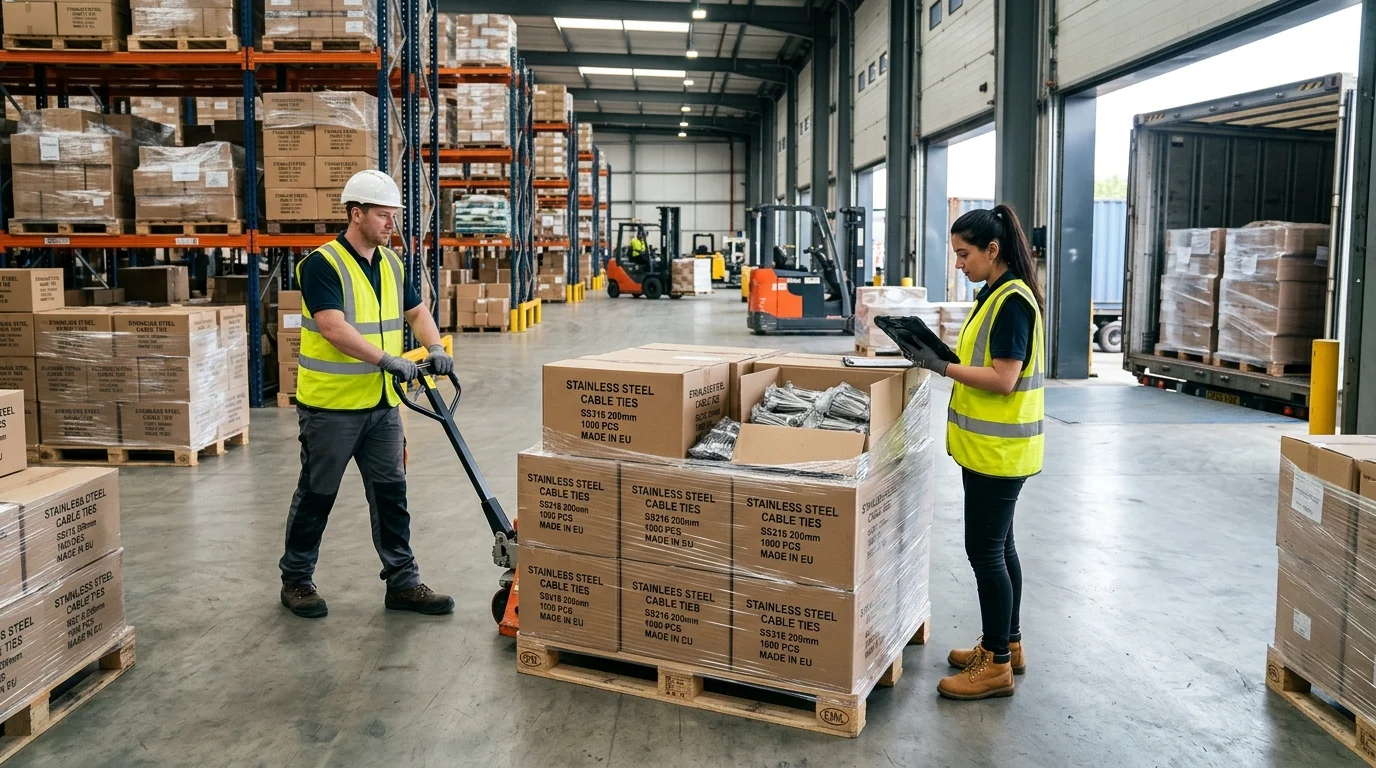
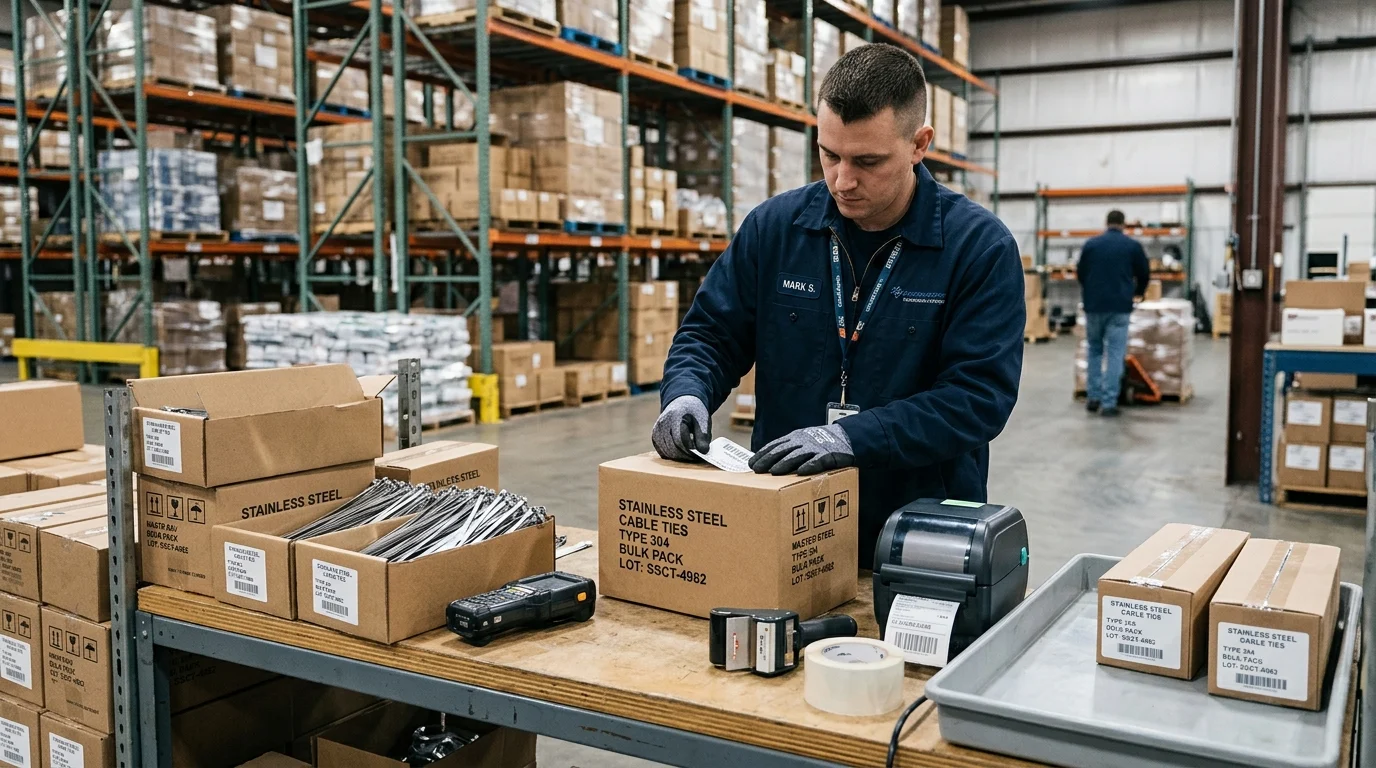
Standard distribution packaging usually involves heavy-duty polybags of 100 pieces, packed into reinforced inner boxes, and placed in double-corrugated master cartons. For massive project orders, skip retail bags entirely and pack ties in bulk plastic tubs or reinforced wooden crates to save on packaging costs and reduce on-site waste.
Freight planning and SKU strategy
Because these products are dense, you will likely hit your container weight limit long before running out of volume space. Consolidate these shipments with lighter, higher-volume goods if possible. For your SKU strategy, apply the 80/20 rule: 80% of your inventory should be the fast-moving 4.6mm and 7.9mm widths in standard lengths (200mm-500mm), keeping custom sizes strictly as made-to-order.
Example: Telecom field supply standardization
A major telecom contractor overhauled their logistics by standardizing just three SKUs of stainless ties for all cell tower riggers. Packaging these specific sizes in weather-resistant, color-coded bags dramatically simplified warehouse inventory, reduced dead stock, and made field deployments vastly more efficient.
Margin Growth by Sales Channel
Selling these ties purely as a commodity leaves money on the table. The real profit in industrial fasteners comes from how you position them and who you sell them to. Different sales channels tolerate vastly different markups.
Distributors must segment their market. The price a local hardware store is willing to pay is completely different from what a specialized marine outfitter will pay for the exact same 316-grade tie.
To maximize margins, understand the buying psychology of each channel and adjust your product mix and marketing accordingly.
Channel strategy by buyer type
Selling direct to large EPC contractors usually means tighter margins but massive, predictable volumes. Conversely, selling to MRO (Maintenance, Repair, and Operations) catalogs or specialized marine distributors allows for margins upwards of 40-50%, as these buyers prioritize immediate availability and certified quality over rock-bottom pricing.
Product mix and keyword positioning
If you sell online, stop competing on generic terms. Optimize B2B portals for highly specific, long-tail keywords like “epoxy coated 316 stainless cable ties for solar” or “DNV approved marine metal zip ties.” Buyers searching these terms have immediate, high-budget needs and are far less price-sensitive than someone searching for “metal ties.”
Example: Bundling to increase order value
One of the easiest ways to boost average order value is by bundling. Stainless steel ties require specialized tensioning and cutting tools to install correctly. By creating a “Contractor Starter Kit” that includes 500 ties and a high-quality tensioning gun, distributors increase margin dollars while providing a complete, ready-to-use solution.
Key Takeaways and Buyer FAQ
Sourcing heavy-duty industrial fasteners is a strategic play. Demand is structurally built into the future of global infrastructure, from renewable energy grids to next-generation telecom networks. If you align your supply chain with quality-focused manufacturers and position products correctly, this category becomes a remarkably stable profit center.
To succeed, be obsessive about material grades, demand rigorous compliance documentation, and optimize heavy freight logistics.
Summary of sourcing decision points
Always verify the steel grade (304 vs 316) based on the end-use environment. Demand edge-smoothing and high-quality locking mechanisms. Never compromise on third-party testing and certifications, and ensure packaging is engineered for high-density, heavy freight.
Common buyer questions
Can I use 304 stainless in a marine environment?
No, 304 will eventually succumb to pitting corrosion in high-salt environments; you must use 316.
Do I really need a special tool to install these?
While they can be pulled tight by hand, a proper tensioning tool is required to achieve the rated tensile strength and cut the tail off cleanly without leaving a dangerous sharp edge.
Final buying guidance
When ready to scale your fastener inventory, remember the supplier you choose is your most critical asset. Our advantage lies in absolute control over the raw material supply chain, ensuring every batch meets exact metallurgical standards. We pride ourselves on providing fully certified, cleanly stamped, and rigorously tested products. By partnering with a factory that understands the high stakes of industrial applications, you protect your margins, reputation, and clients’ most critical infrastructure.
Related reading: Stainless Steel Cable Ties
Key Takeaways
- Wholesale sourcing and supply-chain implications for Stainless Steel Cable Ties
- Specifications, compliance, and commercial terms buyers should validate
- Actionable recommendations for distributors and procurement teams


