
A spring strip order that says “301, 1/2H” leaves half the specification open, and the half that is left open is where the cost, the cracks and the returns come from. Here is the nine-line specification that closes it.
Direct answer
- Grade and temper alone are not a specification. 301 in 1/2H is the starting point, not the order. What has to be added is the standard reference, the thickness and width tolerances, the edge condition, the surface, and the mechanical acceptance window.
- State the temper the way the mill certificate states it. Our published precision range runs 1/4H, 1/2H, 3/4H, FH, EH and SH, and a temper letter without a tensile or hardness window is not comparable between mills.
- The edge condition decides the forming risk. 301 in a spring temper carries a known edge-cracking sensitivity, so slit edge conditioning and deburring level belong in the purchase order, not in a conversation.
- Decide the heat treatment plan before the part is designed. A part that will be hardened after stamping needs a material that can take that heat treatment, and a decision made after the first batch is an expensive one.
- One more line pays for itself: the certificate. Ask for an inspection document with the chemistry, the mechanical results and the heat number, so a batch can be traced when a forming line starts splitting edges.
The most expensive sentence in a strip purchase order is the one that was left out, because it gets decided on the shop floor by somebody holding a piece of strip and a deadline. That is how a bay gets 1/2H instead of 1/4H, how a burr specification is lost between the buyer and the slitter, and how the same spring that passed on the prototype line starts splitting edges in production.
I work on stainless steel material selection and cold rolling applications at WOW Stainless, and we supply cold-rolled and hot-rolled material across the 200, 300 and 400 series, duplex and heat resistant grades, including precision cold-rolled hard strip in the full published temper range of 1/4H, 1/2H, 3/4H, FH, EH and SH. The product scope for this guide is our precision stainless steel strip supply, from Baoxin, Zhangpu, TISCO and Lianzhong base material, and the way to quote against it is described at the end. If you want the technical detail rather than the commercial answer, the grade and temper reference material published by worldstainless is the right place to confirm the numbers.
What 1/2H Actually Means
301 is an austenitic stainless with more carbon than 304, and that single chemistry fact is why it is the default material for springs, clips and retainers rather than a specialist choice. The extra carbon raises the achievable strength and the work-hardening response, which is what lets a thin strip behave like a spring once it is formed.
The published temper ladder for precision cold-rolled hard strip runs from 1/4H through 1/2H and 3/4H to FH, EH and SH, and each step is a defined amount of work hardening applied by the cold rolling mill. In practice, 1/2H sits in the middle of that ladder: harder and stronger than annealed or quarter hard, and far more formable than full hard or extra hard. That position is exactly why a stamping buyer lands on it, because a 1/2H part can be formed, can hold a spring load and still survives a progressive die without cracking the way a full hard strip would.
Because the temper letter is a shorthand for a measured result, the purchase order has to carry the measurement, and a buyer who writes only “301 1/2H” leaves the mill free to deliver anything inside a broad band.
The Nine Lines a Spring Strip Order Should Contain
Written in the order they matter, because a specification read left to right should be the order in which a problem would appear.
- Grade, standard and temper. 301, the standard you are buying to, and the temper with the mill’s own naming. Ask for the material to be identified as the certificate identifies it, because temper names are not consistent between mills and even less consistent between mills and traders.
- Thickness and width, with tolerances. Precision strip is slit to width, and the width tolerance on a narrow strip is tighter than the rolled edge tolerance. Both numbers belong in the order, because a slit width that drifts is a tooling problem that appears as a forming fault.
- Edge condition and deburring level. Slit, edge conditioned, deburred to a stated level, with the burr height and any edge-crack requirement written down. This is the line that protects a 301 spring from splitting at the bend, and it is the line most often left to a note in an email.
- Surface condition. 2B, bright annealed or a rolled finish, chosen for whether the part is visible, whether it will be coated, and whether it has to be drawn or formed afterwards.
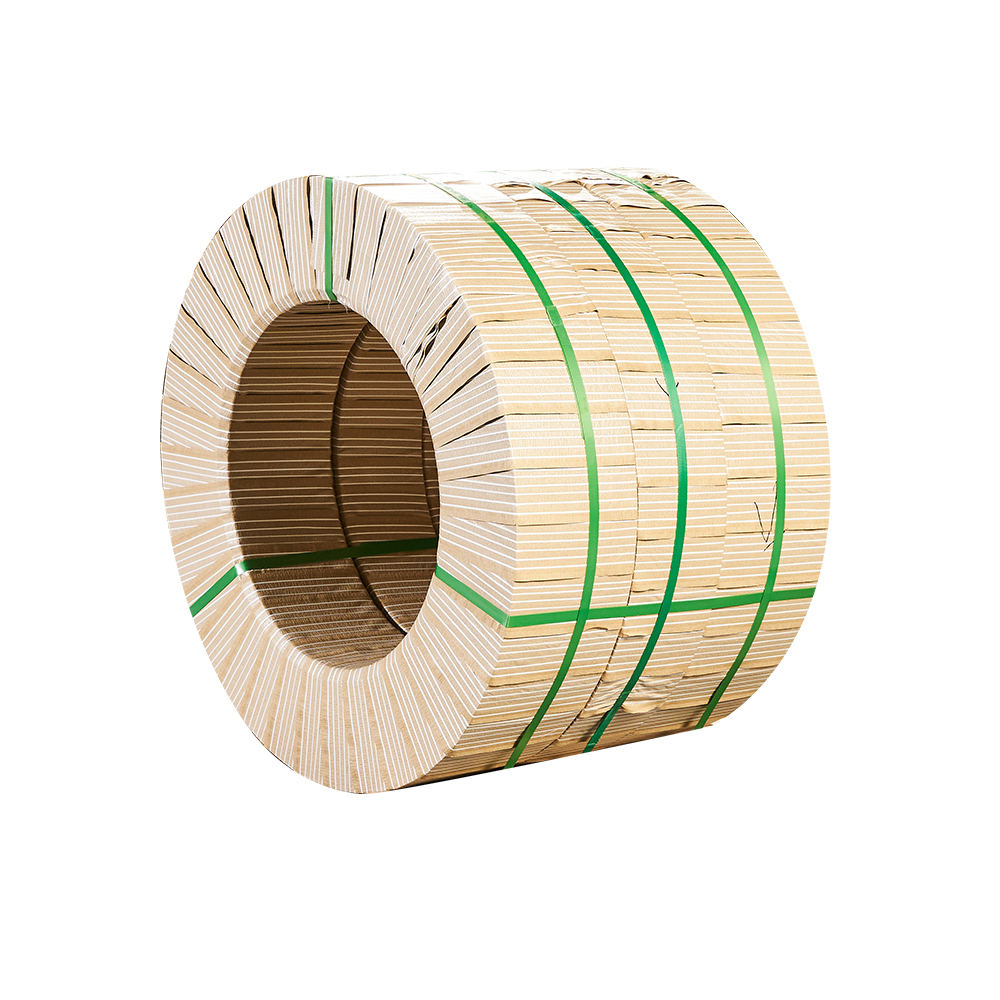
- Flatness and coil geometry. Coil inner diameter, outer diameter, weight per coil, and whether the coil is wound eye-to-saddle or eye-to-eye, because a line set for one orientation will fight the other.
- Mechanical acceptance. Tensile strength and hardness windows for that thickness and temper, with the test basis stated, so the acceptance test is a measurement rather than an opinion about the temper letter.
- Inspection document. An inspection certificate carrying the chemistry, the mechanical results and the heat number, so a batch can be traced back to its coil when a forming line starts misbehaving.
- Forming and post-form heat treatment plan. Whether the part is stamped in the delivered temper, and whether it is hardened or stress relieved after forming, which changes both the material you need and the operations on the line.
- Packaging and export conditions. Coil protection, interleaving and moisture protection for stainless, and the packing standard for the destination, so the strip arrives without edge damage or wet-pack staining.
Because the first two lines describe what the material is and the third describes how it will fail, and because the remaining lines describe what you will be held to, a specification that carries all nine turns a conversation about 1/2H into a repeatable order.
Why 1/2H Is the Default, and Where It Breaks
The choice of 1/2H is a compromise, and it is worth knowing which side of the compromise your part sits on.
- Strength against formability. Annealed 301 forms beautifully and springs weakly. Full hard and above spring hard are strong and are unforgiving on a progressive die. 1/2H is the point where a stamping shop can still form the part, bend radius and all, and get a spring part that holds load.
- Edge cracking. 301 in a cold-worked temper carries a known sensitivity to cracking at the cut edge, because the edge is where the chemistry has been depleted and the material has been most heavily worked. Two things reduce it: specifying an edge-conditioned, deburred edge, and relieving the forming stress after the part is made. A buyer who has never had this failure usually discovers it the expensive way, at the forming line, on a full order.
- Heat treatment after forming. If the part has to reach full spring strength, or if the forming stress has to come out, the plan is a solution anneal and temper cycle after stamping, and the material has to be able to take it. Deciding this after the first batch has been produced means a second process route and a second approval.
- Working temperature. Spring temper is established at room temperature, and a part that works in an appliance or a vehicle environment loses strength as it heats. If the spring runs warm, the working temperature range belongs in the specification as a number, not as an assumption.
Because every one of these is decided by the specification rather than by the form tool, the buyer who writes them down is not being fussy, is paying for the same material at the same price with fewer surprises on the line.
How 301 Compares with the Alternatives
The grade choice is short, and the wrong comparison is expensive, so it helps to know what each grade is actually for.
- 301. The spring and retention material of the austenitic family, chosen when strength and spring temper matter more than corrosion resistance. Widely used for clips, retainers, spring washers, brackets and stamping springs.
- 302. Similar spring strength with better corrosion resistance, and the better choice where the part also lives in a wet or aggressive environment.
- 304. The general-purpose austenitic grade with the best corrosion resistance of the three and the lowest strength, so it is the wrong choice for a spring and the right choice for a formed, non-spring part in a corrosive environment.
- 430. Ferritic, magnetic, and the economical option for a non-critical flat part; it is not a spring material, and we supply it as narrow strip and coil for general industrial work.
Because the distinguishing question is whether the part is a spring, and because 301 and 302 are often quoted interchangeably by traders who are sourcing to the letter rather than to the load case, the acceptance window on the order is what keeps the substitution from happening.
How to Order from Us
Seven details let us return a mill-backed specification and a firm delivery rather than a general offer.
- Grade and temper, with the standard you buy to, or tell us the part and let us recommend the temper from the load case.
- Thickness and width with the tolerances you need, and whether the strip is slit from coil or supplied as coil.
- Edge condition and deburring requirement.
- Surface condition, and whether the part will be coated, plated or left visible.
- Whether the part is heat treated after stamping, and the mechanical window you need on the finished part.
- Certification scope: chemistry and mechanical inspection documents, and any restricted-substance declaration for the destination market. Where the finished article is intended for prolonged contact with skin, the nickel release provisions in the REACH annexes, Regulation (EC) No 1907/2006, apply to the material choice, and where the part goes into electrical equipment the restricted-substances framework of Directive 2011/65/EU applies to the base material.
- Volume, coil configuration and the packing standard for your destination and handling method.
We do not publish strip prices here, because grade, temper, thickness, width, edge condition, surface, coil weight and documentation scope all move the number, so the useful answer is a quotation against a written specification. Because the specification is what protects the buyer’s own forming line from surprises, we would rather agree it before the first coil is slit. Technical and commercial questions go to the same desk through our contact page.
Frequently Asked Questions
1. What does 1/2H mean on a 301 spring strip?
It is a temper condition produced by cold rolling: the strip has been work hardened to roughly the middle of the precision hard range, which in our published ladder sits between 1/4H and 3/4H, before FH, EH and SH. In practice it is the point where a strip can still be formed into a spring part on a progressive die and still carry load, which is why it is the common default for stamping buyers.
2. Is “301 1/2H” enough to order with?
No. That identifies the material and the temper and leaves the thickness and width tolerances, the edge condition, the surface, the mechanical acceptance window, the certificate and the packaging open, and those are the lines that decide what happens on the forming line. Specify those and the order becomes repeatable; leave them out and they get decided on the shop floor.
3. Why do 301 springs sometimes crack at the bend?
Because 301 in a cold-worked temper is sensitive to cracking at a cut edge, where the chemistry has been depleted and the material has been hardest worked. It is managed by specifying an edge-conditioned, deburred edge, by keeping the bend radius realistic for the temper, and by relieving forming stress with a post-form heat treatment where the design allows it.
4. Can the part be hardened after stamping?
Yes, and it is a normal route for a spring part, because 301 responds to heat treatment and can reach higher strength than the delivered temper. The point is to decide it before the part is designed, because the material grade, the temper you buy and the operations on the line all depend on whether the heat treatment happens before or after forming.
5. What documentation should come with the coil?
An inspection document carrying the chemical composition, the mechanical results for the delivered temper and thickness, and the heat number so the coil can be traced. For the EU market, also confirm the restricted-substance position: the nickel release provisions in the REACH annexes apply where the finished article is intended for prolonged skin contact, and Directive 2011/65/EU applies to base material going into electrical equipment.
6. How do I compare two suppliers quoting the same 1/2H strip?
Compare the mechanical acceptance window rather than the temper letter: the tensile and hardness limits for that thickness, the tolerance on width and thickness, the edge condition, the certificate scope and the coil specification. Two quotations with the same grade and temper can sit at different points of the permitted band, and the acceptance window is what tells you whether they are the same material.
Mr. Chen
Technical Director, WOW Stainless
Mr. Chen is Technical Director at WOW Stainless, specialising in stainless steel material selection, cold rolling applications and industrial supply solutions. His work covers the conversion of grade and temper requirements into purchase specifications that a stamping line can run without surprises, from precision strip and narrow coil to banding straps and cable ties.
Post time: Nov-03-2026


