
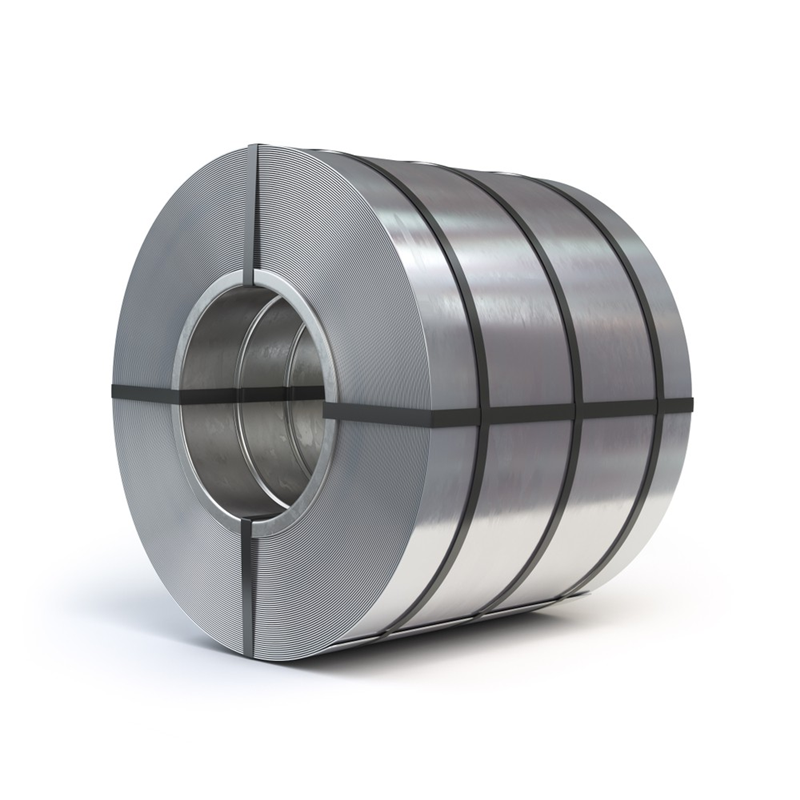
1. 4-Dimension Grade Evaluation Framework for 430 Stainless Steel
The 4-dimension grade evaluation framework for the 430 stainless steel in the home appliance manufacturing application covers the composition chemistry, the formability, the corrosion resistance, and the supply price stability. The 4-dimension framework is the standard procurement grade evaluation specification for the home appliance manufacturer, the kitchenware supplier, and the white goods contract manufacturer that requires the consistent material performance and the cost-effective supply. The WowStainless engineering team provides the 4-dimension framework documentation with the per-grade specification verification.
The 430 stainless steel grade is the standard ferritic stainless steel with the body-centered cubic (BCC) crystal structure. The 430 grade is the chromium-only stainless steel without the nickel addition. The 430 grade is the cost-effective alternative to the 304 austenitic grade for the indoor home appliance application. The procurement team should request the 430 grade specification from the supplier with the documented ASTM A240 / EN 10088 grade compliance. For reference on the WowStainless cold rolled grade portfolio and the per-thickness selection, see the cold rolled product page.
2. Composition Chemistry and Mechanical Property
The composition chemistry and the mechanical property is the first verification spec the procurement team should evaluate. The typical composition of the 430 stainless steel grade includes 16 to 18% chromium, less than 0.12% carbon, less than 1% manganese, less than 1% silicon, less than 0.04% phosphorus, less than 0.03% sulfur, and the balance iron. The 430 grade supports the yield strength of 205 to 275 MPa and the tensile strength of 450 to 620 MPa per the ASTM A240 standard. The procurement team should request the per-heat chemistry certification from the supplier with the documented mechanical property report.
| Element | 430 Min | 430 Max | 304 Min | 316L Min |
|---|---|---|---|---|
| Chromium (Cr) | 16.0% | 18.0% | 18.0% | 16.0% |
| Nickel (Ni) | — | 0.75% | 8.0% | 10.0% |
| Carbon (C) | — | 0.12% | 0.08% | 0.03% |
| Manganese (Mn) | — | 1.0% | 2.0% | 2.0% |
| PREN (Pitting Resistance) | 16 to 18 | — | 18 to 20 | 25 to 28 |
The composition comparison between the 430, the 304, and the 316L grades is the second verification spec the procurement team should evaluate. The 304 grade has the 18% chromium and the 8% nickel composition with the austenitic structure. The 316L grade has the 16% chromium, the 10% nickel, and the 2% molybdenum composition with the austenitic structure. The 430 grade has the 16 to 18% chromium composition without the nickel addition with the ferritic structure. The procurement team should specify the grade selection per the home appliance application requirement.
3. Formability for the Home Appliance Application
The formability for the home appliance application is the third verification spec the procurement team should evaluate. The 430 grade supports the moderate deep drawing, the bending, and the stamping for the home appliance application. The 430 grade supports the Erichsen cup test value of 8 to 10 mm for the 0.5 to 1.0 mm thickness range. The 430 grade supports the Lankford coefficient (r value) of 1.0 to 1.4 in the transverse direction and 1.4 to 1.8 in the rolling direction.
The formability comparison between the 430 grade and the 304 grade is the fourth verification spec the procurement team should evaluate. The 304 grade supports the higher Erichsen cup test value of 10 to 13 mm for the same thickness range. The 304 grade supports the higher Lankford coefficient of 1.0 to 1.5 in both the transverse and the rolling directions. The 304 grade is the preferred material for the complex deep drawing application. The 430 grade is the preferred material for the simple deep drawing and the moderate forming application.
| Formability Parameter | 430 Grade | 304 Grade | 316L Grade |
|---|---|---|---|
| Erichsen Cup Test (0.5 to 1.0 mm) | 8 to 10 mm | 10 to 13 mm | 11 to 14 mm |
| Lankford Coefficient (rolling) | 1.4 to 1.8 | 1.0 to 1.3 | 1.0 to 1.3 |
| Lankford Coefficient (transverse) | 1.0 to 1.4 | 1.0 to 1.5 | 1.0 to 1.5 |
| Total Elongation | 20% to 28% | 40% to 55% | 40% to 55% |
The formability limit for the 430 grade is the fifth verification spec the procurement team should evaluate. The 430 grade tends to crack at the deep drawing depth beyond 30 mm for the 1.0 mm thickness. The 430 grade requires the intermediate annealing for the multi-stage deep drawing application. The 430 grade supports the bending radius of 1t to 2t for the thin gauge and the bending radius of 2t to 3t for the standard gauge. The procurement team should request the per-thickness formability limit documentation from the supplier with the documented intermediate annealing recommendation.
4. Corrosion Resistance and Salt Spray Test
The corrosion resistance and the salt spray test is the sixth verification spec the procurement team should evaluate. The 430 grade has the salt spray test (ASTM B117) resistance of 200 to 500 hours before the first rust appearance. The 304 grade has the salt spray test resistance of 500 to 1000 hours before the first rust appearance. The 316L grade has the salt spray test resistance of 1500 to 3000 hours before the first rust appearance. The 430 grade is the recommended material for the indoor home appliance with the moderate humidity exposure.
The pitting resistance equivalent number (PREN) comparison is the seventh verification spec the procurement team should evaluate. The PREN is calculated as Cr% + 3.3 x Mo% + 16 x N%. The 430 grade has the PREN of 16 to 18 (chromium only, no molybdenum). The 304 grade has the PREN of 18 to 20 (chromium only, no molybdenum). The 316L grade has the PREN of 25 to 28 (chromium + 2% molybdenum). The procurement team should specify the grade selection per the pitting resistance requirement and the outdoor exposure condition.
5. Weldability and Post-Weld Annealing
The weldability and the post-weld annealing is the eighth verification spec the procurement team should evaluate. The 430 grade weldability is limited compared to the 304 grade. The 430 grade tends to form the coarse grain in the heat-affected zone (HAZ) with the standard welding process. The 430 grade typically requires the post-weld annealing at 650 to 800 degrees Celsius for the restoration of the corrosion resistance. The procurement team should request the per-welding procedure documentation from the supplier.
The welding method comparison is the ninth verification spec the procurement team should evaluate. The TIG (tungsten inert gas) welding supports the 430 grade with the lower heat input and the lower HAZ grain coarsening. The MIG (metal inert gas) welding supports the 430 grade with the higher heat input and the slightly higher HAZ grain coarsening. The resistance welding supports the 430 grade for the spot welding and the seam welding application. The procurement team should request the per-welding method documentation from the supplier with the post-weld annealing recommendation.
6. Supply Price Stability vs the 304 and 316 Grades
The supply price stability vs the 304 and 316 grades is the tenth verification spec the procurement team should evaluate. The 430 grade does not have the nickel price exposure, which provides the better supply price stability vs the 304 and the 316 grades. The 430 grade typically supports the 15% to 25% lower per-kg cost vs the 304 grade and the 25% to 35% lower per-kg cost vs the 316 grade. The 430 grade supports the home appliance manufacturer with the predictable cost projection over the 12 month production cycle.
The price volatility comparison is the eleventh verification spec the procurement team should evaluate. The 430 grade has the 5% to 8% annual price volatility vs the LME (London Metal Exchange) chromium price. The 304 grade has the 10% to 15% annual price volatility vs the LME nickel and the chromium price. The 316 grade has the 15% to 20% annual price volatility vs the LME nickel, the chromium, and the molybdenum price. The procurement team should specify the 430 grade for the cost-sensitive home appliance application with the predictable cost projection.
The LME nickel price exposure analysis is the twelfth verification spec the procurement team should evaluate. The 430 grade has the 0% LME nickel price exposure per the chromium-only composition. The 304 grade has the 8% LME nickel price exposure per the 8% nickel composition. The 316L grade has the 10% LME nickel price exposure per the 10% nickel composition. The 430 grade supports the home appliance manufacturer with the predictable LME exposure and the 12 month cost projection. The procurement team should request the per-grade LME exposure analysis from the supplier with the documented cost projection model.
7. Home Appliance Application Selection Matrix
The home appliance application selection matrix is the twelfth verification spec the procurement team should evaluate. The typical home appliance application for the 430 stainless steel grade includes the dishwasher inner panel, the washing machine inner drum, the microwave oven inner wall, the refrigerator inner panel, the range hood filter, the kitchen sink drainboard, the refrigerator door handle, the dishwasher door inner, and the oven outer panel. The 430 grade is the preferred material for the indoor home appliance with the moderate corrosion requirement and the magnetic-sensitive compatibility.
The dishwasher inner panel application is the thirteenth verification spec the procurement team should evaluate. The dishwasher inner panel typically requires the 0.4 to 0.6 mm 430 grade with the 2B surface finish. The dishwasher inner panel typically supports the 200 to 350 hour ASTM B117 salt spray resistance. The dishwasher inner panel typically requires the per-coil dimensional tolerance of ±0.02 mm. The procurement team should request the per-dishwasher specification from the supplier with the documented per-coil tolerance verification.
The washing machine inner drum application is the fourteenth verification spec the procurement team should evaluate. The washing machine inner drum typically requires the 0.6 to 1.0 mm 430 grade with the 2B or the bright annealed surface finish. The washing machine inner drum typically supports the 300 to 500 hour ASTM B117 salt spray resistance. The procurement team should request the per-drum specification from the supplier with the documented per-drum dimensional tolerance.
| Home Appliance Application | 430 Grade | 304 Grade | 316L Grade |
|---|---|---|---|
| Dishwasher inner panel | Preferred | Alternative | Over-spec |
| Washing machine inner drum | Preferred | Alternative | Over-spec |
| Microwave oven inner wall | Preferred | Alternative | Over-spec |
| Refrigerator inner panel | Preferred | Alternative | Over-spec |
| Range hood filter | Preferred | Alternative | Over-spec |
| Kitchen sink drainboard | Preferred | Alternative | Over-spec |
| Outdoor kitchen appliance | Over-spec | Alternative | Preferred |
| High corrosion home appliance | Over-spec | Alternative | Preferred |
The magnetic-sensitive compatibility is the thirteenth verification spec the procurement team should evaluate. The 430 grade is the magnetic stainless steel with the strong magnetic attraction. The 304 grade is the non-magnetic stainless steel with the weak or no magnetic attraction. The 316L grade is the non-magnetic stainless steel with the weak or no magnetic attraction. The 430 grade is the preferred material for the magnetic-sensitive application such as the refrigerator door gasket and the induction cooktop surface. The procurement team should specify the grade selection per the magnetic-sensitive compatibility requirement.
8. Thickness Range and Surface Finish
The thickness range and the surface finish is the fourteenth verification spec the procurement team should evaluate. The typical thickness range for the 430 stainless steel grade in the home appliance application falls between 0.3 mm and 2.0 mm. The thin gauge (0.3 to 0.5 mm) is used for the dishwasher inner panel and the range hood filter. The medium gauge (0.5 to 1.0 mm) is used for the washing machine inner drum and the refrigerator inner panel. The standard gauge (1.0 to 2.0 mm) is used for the kitchen sink and the oven outer panel.
The surface finish specification is the fifteenth verification spec the procurement team should evaluate. The typical surface finish for the 430 stainless steel grade in the home appliance application includes the 2B (cold rolled + skin pass + acid pickling) for the inner panel, the BA (bright annealed) for the outer panel, the No.4 (brushed finish) for the kitchen sink and the door handle, and the No.8 (mirror finish) for the high-end home appliance exterior. The procurement team should request the per-surface finish documentation from the supplier with the documented surface roughness measurement.
9. 5-Step BOFU 430 Stainless Steel Grade Procurement Checklist
For home appliance manufacturers, kitchenware suppliers, and white goods contract manufacturers ready to specify the 430 stainless steel grade with the 4-dimension evaluation framework, the following 5-step checklist consolidates the verification specs from the previous sections into a single procurement specification document.
- Verify the 430 grade composition (16 to 18% Cr / less than 0.12% C) with the per-heat chemistry certification from the supplier.
- Specify the formability requirement (Erichsen 8 to 10 mm / Lankford 1.0 to 1.8) per the home appliance deep drawing operation.
- Confirm the corrosion resistance (200 to 500 hours ASTM B117 salt spray) per the indoor home appliance humidity exposure condition.
- Document the weldability procedure (TIG / MIG / resistance) with the post-weld annealing recommendation (650 to 800 degrees Celsius).
- Request the per-thickness / per-surface finish / MOQ / lead time documentation from the supplier with the per-specification production schedule.
For home appliance manufacturers and kitchenware procurement teams sourcing the 430 stainless steel grade, the following industry resources provide cross-reference data on the ferritic stainless steel standard and the home appliance material compliance framework. The ASTM International publishes the ASTM A240 standard for the chromium and the chromium-nickel stainless steel plate, sheet, and strip specification. The International Organization for Standardization (ISO) publishes the ISO 9445 standard for the stainless steel flat rolled dimensional tolerance. The European Committee for Standardization (CEN) publishes the EN 10088 standard for the European stainless steel grade designation. The International Stainless Steel Forum (ISSF) publishes the ferritic stainless steel market data and the per-application guidance. The UL (Underwriters Laboratories) publishes the UL 858 standard for the household electric cooking appliance safety and the UL 749 standard for the household dishwasher safety.
For home appliance manufacturers, kitchenware suppliers, and white goods contract manufacturers ready to specify the 430 stainless steel grade with the 4-dimension evaluation framework, the WowStainless engineering team can provide the per-grade chemistry certification, the per-formability test report, the per-corrosion resistance documentation, and the per-welding procedure documentation. The WowStainless engineering team has supported home appliance manufacturers with documented deployments across the EU, the North America, the Japan, the Korea, and the Southeast Asia markets. Review the WowStainless products catalog page 4 for the 430 grade product line and the per-thickness specification, or visit the WowStainless home page for the full product portfolio.
Frequently Asked Questions
What is the typical composition of the 430 stainless steel grade?
The typical composition includes 16 to 18% chromium, less than 0.12% carbon, less than 1% manganese, less than 1% silicon, less than 0.04% phosphorus, less than 0.03% sulfur, and the balance iron. The 430 grade is the standard ferritic stainless steel with the BCC crystal structure.
What is the formability characteristic of the 430 stainless steel grade for the home appliance application?
The formability supports the moderate deep drawing, bending, and stamping with the Erichsen cup test value of 8 to 10 mm for the 0.5 to 1.0 mm thickness range. The Lankford coefficient is 1.0 to 1.4 in the transverse direction and 1.4 to 1.8 in the rolling direction.
What is the corrosion resistance characteristic of the 430 stainless steel grade for the home appliance application?
The corrosion resistance supports the indoor home appliance with the moderate humidity exposure. The salt spray test (ASTM B117) is 200 to 500 hours before the first rust appearance. The PREN is 16 to 18 vs the 304 grade at 18 to 20 and the 316 grade at 25 to 28.
What is the weldability characteristic of the 430 stainless steel grade for the home appliance application?
The weldability is limited. The 430 grade tends to form the coarse grain in the HAZ with the standard welding process. The 430 grade typically requires the post-weld annealing at 650 to 800 degrees Celsius.
What is the typical home appliance application for the 430 stainless steel grade?
The applications include the dishwasher inner panel, the washing machine inner drum, the microwave oven inner wall, the refrigerator inner panel, the range hood filter, the kitchen sink drainboard, the refrigerator door handle, the dishwasher door inner, and the oven outer panel.
What is the supply price stability of the 430 stainless steel grade vs the 304 and 316 grades?
The 430 grade is more stable due to the lower nickel content and the chromium-only composition. The 430 grade supports the 15% to 25% lower per-kg cost vs the 304 grade and the 25% to 35% lower per-kg cost vs the 316 grade.
What is the typical thickness range for the 430 stainless steel grade in the home appliance application?
The thin gauge (0.3 to 0.5 mm) is for the dishwasher inner panel and the range hood filter. The medium gauge (0.5 to 1.0 mm) is for the washing machine inner drum. The standard gauge (1.0 to 2.0 mm) is for the kitchen sink and the oven outer panel.
What is the typical surface finish for the 430 stainless steel grade in the home appliance application?
The 2B is for the inner panel. The BA is for the outer panel. The No.4 is for the kitchen sink and the door handle. The No.8 is for the high-end home appliance exterior.
What is the LME nickel price exposure for the 430 grade vs the 304 and 316L grades?
The 430 grade has the 0% LME nickel price exposure. The 304 grade has the 8% LME nickel price exposure. The 316L grade has the 10% LME nickel price exposure. The 430 grade supports the predictable cost projection over the 12 month production cycle.
What is the typical TCO reduction from the 430 grade vs the 304 grade for the home appliance application?
The 430 grade typically supports the 18% to 25% lower total TCO over the 12 month production cycle per the lower per-kg unit cost and the lower scrap cost vs the 304 grade.
About the Author
Mr. Chen — Technical Director, who specializes in stainless steel material selection, cold rolling applications, and industrial supply solutions.
Post time: Jul-31-2026


