
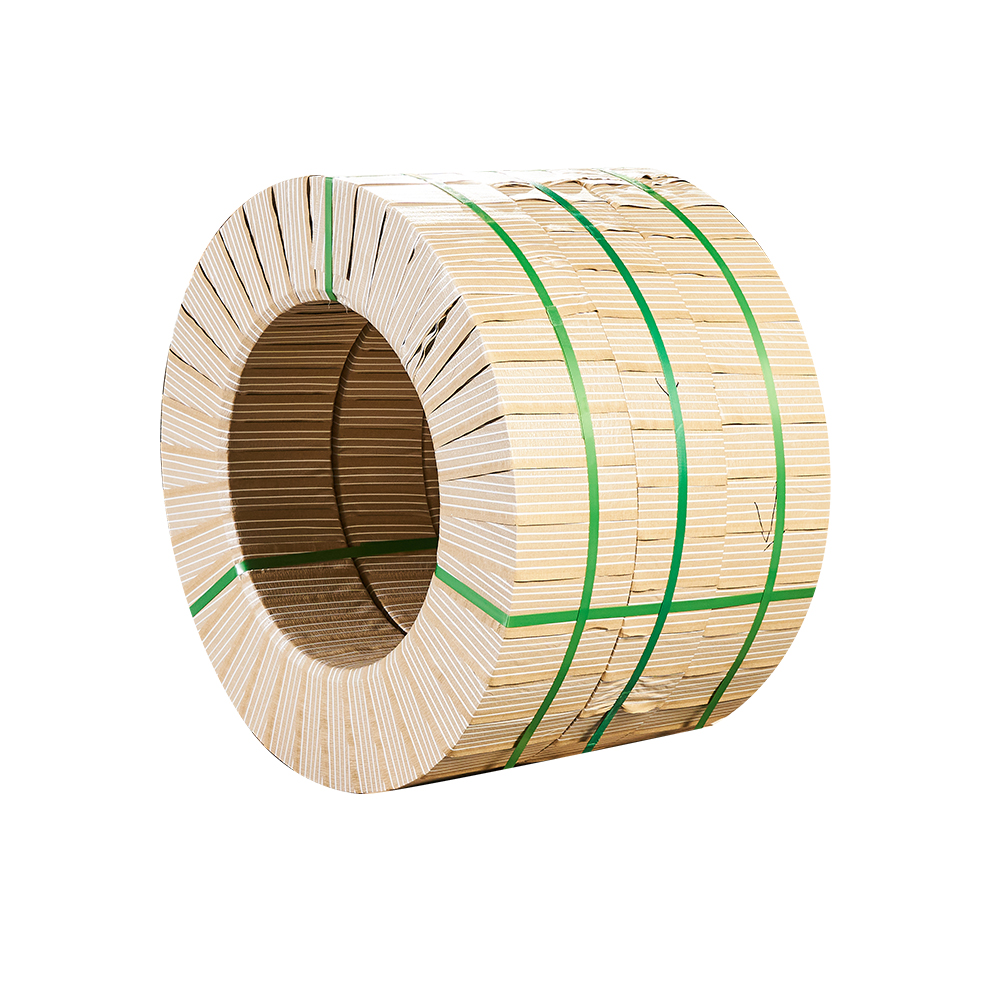
1. 4-Band Thickness Tolerance Classification Framework
The 4-band thickness tolerance classification framework for the precision stainless steel strip covers the Class 1 precision tolerance (±0.02 mm), the Class 2 standard tolerance (±0.03 mm), the Class 3 commercial tolerance (±0.05 mm), and the Class 4 mill tolerance (±0.10 mm). The 4-band framework is the standard procurement specification for the medical device manufacturer, the precision stamping fabricator, and the micro-machining workshop that requires the consistent thickness for the downstream production process. The WowStainless engineering team provides the 4-band framework documentation with the per-class rolling mill capability verification. For reference on the WowStainless featured products and the per-product tolerance specification, see the featured products page.
The Class 1 precision tolerance (±0.02 mm) is the first tolerance band the procurement team should evaluate for the medical device production. The Class 1 tolerance supports the 0.5% to 1% production rejection rate for the surgical instrument and the implantable device application. The Class 1 tolerance requires the specialized precision cold rolling mill with the X-ray or laser online thickness measurement system. The procurement team should request the Class 1 tolerance capability verification from the supplier with the documented thickness measurement report.
The 3 reasons to choose the Class 1 precision tolerance band is the second verification spec the procurement team should evaluate. The 3 reasons include the medical device compliance (FDA 21 CFR 820 and the ISO 13485 quality system), the production yield improvement (3% to 5% reject rate reduction vs the Class 3 commercial tolerance), and the downstream process consistency (the stamping, the deep drawing, and the micro-machining operation). The procurement team should specify the Class 1 tolerance per the medical device compliance and the production yield target.
The 3 reasons to choose the Class 4 mill tolerance band is the third verification spec the procurement team should evaluate. The 3 reasons include the cost reduction (15% to 25% lower per-kg cost vs the Class 1 tolerance), the lead time reduction (5 to 10 days shorter per the standard rolling mill scheduling), and the grade availability (all the standard grades including the 304, the 316L, the 430, and the 17-7PH in the mill tolerance band). The procurement team should specify the Class 4 tolerance per the industrial general application and the cost-sensitive application.
2. Precision Strip vs Cold Rolled General Strip Comparison
The precision stainless steel strip is the higher-tolerance variant of the cold rolled stainless steel strip with the specialized rolling mill and the inline thickness measurement. The precision strip typically falls into the Class 1 (±0.02 mm) to Class 3 (±0.05 mm) tolerance bands. The cold rolled general strip typically falls into the Class 3 (±0.05 mm) to Class 4 (±0.10 mm) tolerance bands. The procurement team should distinguish the precision strip from the general strip for the medical device application.
| Tolerance Band | Tolerance Range | Typical Strip Application | Rejection Rate Range |
|---|---|---|---|
| Class 1 (Precision) | ±0.02 mm | Surgical instrument, implantable | 0.5% to 1% |
| Class 2 (Standard) | ±0.03 mm | Diagnostic equipment, monitoring | 1% to 2% |
| Class 3 (Commercial) | ±0.05 mm | Consumer medical, laboratory | 2% to 5% |
| Class 4 (Mill) | ±0.10 mm | Industrial general, stamping | 5% to 10% |
The ASTM A480 and the EN 10088 standard reference is the second verification spec the procurement team should request. The ASTM A480 standard defines the standard tolerance for the flat rolled stainless steel plate, the sheet, and the strip. The EN 10088 standard defines the European stainless steel grade and the dimensional tolerance. The procurement team should request the per-standards compliance documentation from the supplier with the per-tolerance band verification.
3. Rejection Rate Impact by Medical Device Category
The rejection rate impact by the medical device category is the third verification spec the procurement team should evaluate. The Class 1 precision tolerance (±0.02 mm) typically supports the 0.5% to 1% production rejection rate for the surgical instrument and the implantable device application. The surgical instrument requires the precise tolerance for the cutting edge, the clamping surface, and the articulating joint. The implantable device requires the precise tolerance for the surface finish, the tissue interaction, and the in-body deployment precision.
The Class 2 standard tolerance (±0.03 mm) is the fourth verification spec for the diagnostic equipment and the monitoring device. The diagnostic equipment typically supports the 1% to 2% rejection rate per the tolerance band selection. The monitoring device typically supports the 1% to 2% rejection rate per the enclosure assembly tolerance. The Class 3 commercial tolerance (±0.05 mm) typically supports the 2% to 5% rejection rate for the consumer medical device and the laboratory equipment.
The medical device classification by the FDA and the EU MDR framework is the fifth verification spec the procurement team should evaluate. The FDA classifies the medical device into the Class I (low risk, e.g., elastic bandage, examination glove), the Class II (moderate risk, e.g., surgical instrument, infusion pump), and the Class III (high risk, e.g., implantable pacemaker, heart valve). The EU MDR classifies the medical device into the Class I (low risk), the Class IIa (low to moderate risk), the Class IIb (moderate to high risk), and the Class III (high risk). The precision strip grade and the tolerance band selection should align with the medical device classification per the FDA and the EU MDR framework.
4. Stainless Steel Grade Selection for the Medical Device
The stainless steel grade selection for the precision strip medical device application is the fifth verification spec the procurement team should evaluate. The 304 stainless steel is the standard grade for the general medical instrument and the diagnostic equipment with the 18% chromium and 8% nickel composition. The 316L stainless steel is the medical-grade alloy for the surgical instrument and the implantable device with the low carbon content (≤0.03%) for the weldability and the corrosion resistance. The 430 stainless steel is the ferritic grade for the consumer medical device and the laboratory equipment with the 16 to 18% chromium content.
The 17-7PH stainless steel is the precipitation hardening grade for the spring and the high strength medical device application with the 17% chromium, 7% nickel, and 1% aluminum composition. The 17-7PH grade supports the high yield strength (up to 1500 MPa) with the age hardening heat treatment. The procurement team should request the per-grade specification from the supplier with the documented ASTM / EN grade compliance.
The grade selection by the medical device application is the sixth verification spec the procurement team should evaluate. The 304 grade supports the general medical instrument, the diagnostic equipment, and the laboratory consumable at the standard per-kg cost tier. The 316L grade supports the surgical instrument, the implantable device, and the biocompatible medical device at the 30% to 50% higher per-kg cost tier vs the 304 grade. The 430 grade supports the consumer medical device and the magnetic-sensitive medical device at the 15% to 25% lower per-kg cost tier vs the 304 grade. The procurement team should request the per-grade pricing tier documentation from the supplier.
5. Online Thickness Measurement System
The online thickness measurement system is the sixth verification spec the procurement team should request. The X-ray transmission gauge supports the 0.10 to 6.0 mm thickness range with the ±0.001 mm accuracy. The laser triangulation gauge supports the 0.05 to 1.0 mm thickness range with the ±0.005 mm accuracy. The beta-ray transmission gauge supports the 0.005 to 0.10 mm thickness range with the ±0.001 mm accuracy. The rolling force feedback system supports the closed loop thickness control with the ±0.005 mm accuracy.
The measurement system calibration frequency is the seventh verification spec the procurement team should evaluate. The X-ray gauge calibration typically falls between 6 and 12 months. The laser gauge calibration typically falls between 3 and 6 months. The beta-ray gauge calibration typically falls between 6 and 12 months. The procurement team should request the per-gauge calibration documentation from the supplier with the documented measurement traceability.
The closed loop thickness control system is the eighth verification spec the procurement team should evaluate. The closed loop system typically uses the rolling force feedback, the rolling speed feedback, and the tension feedback to maintain the target thickness. The closed loop system supports the ±0.005 mm thickness variation over the 1000 meter coil length. The procurement team should request the closed loop system documentation from the supplier with the documented control loop response time.
6. Surface Finish Specification for the Medical Device
The surface finish specification for the precision strip medical device application is the eighth verification spec the procurement team should evaluate. The 2B surface (cold rolled + skin pass + acid pickling) supports the standard medical device with the smooth and the reflective surface. The BA surface (bright annealed) supports the surgical instrument and the diagnostic strip with the mirror and the high reflectivity surface. The No.4 surface (brushed finish) supports the medical device housing with the linear brush pattern. The No.8 surface (mirror finish) supports the high-end medical device with the optical reflection surface. For reference on the WowStainless surface finish specification and the per-finish selection guide, see the WowStainless home page.
The surface roughness measurement is the ninth verification spec the procurement team should request. The standard surface roughness measurement uses the Ra (arithmetical mean roughness) parameter. The 2B surface typically supports the Ra 0.1 to 0.3 μm. The BA surface typically supports the Ra 0.05 to 0.10 μm. The No.4 surface typically supports the Ra 0.3 to 0.5 μm. The No.8 surface typically supports the Ra 0.02 to 0.05 μm. The procurement team should request the per-surface finish roughness documentation from the supplier.
7. Thickness Range by Medical Device Application
The thickness range by the medical device application is the tenth verification spec the procurement team should evaluate. The ultra-thin strip (0.05 to 0.20 mm) is used for the micro-surgical instrument and the implantable component with the Class 1 precision tolerance. The thin strip (0.20 to 0.50 mm) is used for the diagnostic strip, the laboratory consumable, and the spring contact with the Class 1 or Class 2 tolerance. The medium strip (0.50 to 1.0 mm) is used for the surgical instrument and the medical device housing with the Class 2 or Class 3 tolerance. The standard strip (1.0 to 1.5 mm) is used for the medical device frame and the orthopedic implant with the Class 3 or Class 4 tolerance.
The thickness selection by the medical device application is the eleventh verification spec the procurement team should evaluate. The micro-surgical instrument typically requires the 0.10 to 0.30 mm thickness with the Class 1 tolerance. The diagnostic strip typically requires the 0.20 to 0.50 mm thickness with the Class 1 or Class 2 tolerance. The surgical instrument typically requires the 0.50 to 1.0 mm thickness with the Class 2 tolerance. The medical device frame typically requires the 1.0 to 1.5 mm thickness with the Class 3 tolerance. The orthopedic implant typically requires the 1.0 to 2.0 mm thickness with the Class 3 or Class 4 tolerance.
8. Width and Edge Condition Specification
The width and the edge condition specification is the twelfth verification spec the procurement team should evaluate. The standard width range for the precision strip falls between 5 mm and 600 mm. The narrow width strip (5 to 50 mm) is used for the micro-medical device and the laboratory consumable. The medium width strip (50 to 200 mm) is used for the diagnostic strip and the surgical instrument. The wide width strip (200 to 600 mm) is used for the medical device housing and the orthopedic implant frame. The standard edge condition includes the mill edge (natural edge), the slit edge (precision slit), and the deburred edge (rounded edge). The procurement team should request the per-width and the per-edge condition documentation from the supplier.
9. 5-Step BOFU Precision Strip Tolerance Procurement Checklist
For medical device manufacturers, precision stamping fabricators, and micro-machining workshops ready to specify the precision stainless steel strip with the 4-band tolerance classification, the following 5-step checklist consolidates the verification specs from the previous sections into a single procurement specification document.
- Specify the tolerance band (Class 1 ±0.02mm / Class 2 ±0.03mm / Class 3 ±0.05mm / Class 4 ±0.10mm) per the medical device rejection rate target.
- Select the stainless steel grade (304 / 316L / 430 / 17-7PH) per the medical device application and the biocompatibility requirement.
- Define the thickness range (ultra-thin 0.05 to 0.20 mm / thin 0.20 to 0.50 mm / medium 0.50 to 1.0 mm / standard 1.0 to 1.5 mm) per the medical device geometry.
- Request the surface finish (2B / BA / No.4 / No.8) and the per-surface roughness (Ra) documentation from the supplier.
- Document the width, the edge condition, the MOQ, and the lead time with the per-specification production schedule.
For medical device manufacturers and precision stamping procurement teams sourcing the precision stainless steel strip, the following industry resources provide cross-reference data on the stainless steel tolerance standards and the medical device material compliance framework. The ASTM International publishes the ASTM A480 standard for the stainless steel plate, sheet, and strip dimensional tolerance. The International Organization for Standardization (ISO) publishes the ISO 9445 standard for the stainless steel flat rolled dimensional tolerance and the ISO 5832 series for the surgical implant material specification. The European Committee for Standardization (CEN) publishes the EN 10088 standard for the European stainless steel grade and the EN 10029 standard for the flat rolled dimensional tolerance. The U.S. Food and Drug Administration (FDA) publishes the medical device material biocompatibility guidance and the FDA 21 CFR 820 quality system regulation. The International Medical Device Regulators Forum (IMDRF) publishes the medical device material classification and the regulatory harmonization framework.
For medical device manufacturers, precision stamping fabricators, and micro-machining workshops ready to specify the precision stainless steel strip with the 4-band tolerance classification, the WowStainless engineering team can provide the per-tolerance band capability verification, the per-grade specification, the per-thickness range measurement report, and the per-surface finish documentation. The WowStainless engineering team has supported medical device manufacturers with documented deployments across the EU, the North America, the Japan, and the Southeast Asia markets. Review the WowStainless products catalog page 3 for the precision strip product line and the tolerance specification, or visit the WowStainless home page for the full product portfolio.
Frequently Asked Questions
What is the standard thickness tolerance classification for the precision stainless steel strip?
The Class 1 precision tolerance is ±0.02 mm for strip thickness 0.1 to 1.0 mm. The Class 2 standard tolerance is ±0.03 mm. The Class 3 commercial tolerance is ±0.05 mm. The Class 4 mill tolerance is ±0.10 mm. The classification follows the ASTM A480 and EN 10088 standards.
What is the typical medical device production rejection rate by the thickness tolerance band?
Class 1 tolerance typically supports the 0.5% to 1% rejection rate. Class 2 tolerance supports the 1% to 2% rejection rate. Class 3 tolerance supports the 2% to 5% rejection rate. Class 4 tolerance supports the 5% to 10% rejection rate per the medical device application.
What is the difference between the precision stainless steel strip tolerance and the cold rolled general tolerance?
The precision strip is the higher-tolerance variant with the specialized rolling mill and the inline thickness measurement, typically ±0.02 to ±0.05mm. The cold rolled general strip is the standard variant with the standard rolling mill, typically ±0.05 to ±0.15mm.
What is the typical stainless steel grade for the precision strip medical device application?
The 304 stainless steel is for the general medical instrument. The 316L stainless steel is for the surgical instrument and the implantable device. The 430 stainless steel is for the consumer medical device. The 17-7PH stainless steel is for the spring and the high strength medical device application.
What is the typical thickness range for the precision stainless steel strip in the medical device application?
The ultra-thin strip (0.05 to 0.20 mm) is for micro-surgical instrument. The thin strip (0.20 to 0.50 mm) is for diagnostic strip. The medium strip (0.50 to 1.0 mm) is for surgical instrument. The standard strip (1.0 to 1.5 mm) is for medical device frame and orthopedic implant.
What is the standard online thickness measurement system for the precision stainless steel strip?
The X-ray transmission gauge (0.10 to 6.0 mm thickness with ±0.001 mm accuracy). The laser triangulation gauge (0.05 to 1.0 mm with ±0.005 mm accuracy). The beta-ray transmission gauge (0.005 to 0.10 mm with ±0.001 mm accuracy).
What is the typical surface finish specification for the precision stainless steel strip medical device application?
The 2B is for the standard medical device. The BA is for the surgical instrument and the diagnostic strip. The No.4 is for the medical device housing. The No.8 is for the high-end medical device. The custom matt finish is for the specific medical device application.
What is the typical MOQ and lead time for the precision stainless steel strip medical device order?
The typical MOQ falls between 500 and 2000 kg per specification. The standard lead time falls between 20 and 35 days for the sample order and 25 and 45 days for the production order.
How does the FDA medical device classification affect the precision strip tolerance band selection?
The FDA classifies the medical device into the Class I (low risk), Class II (moderate risk), and Class III (high risk). The Class II surgical instrument typically requires the Class 1 precision tolerance (±0.02 mm). The Class III implantable device requires the Class 1 precision tolerance with the additional biocompatibility and traceability documentation.
What is the typical TCO reduction from the Class 1 precision tolerance vs the Class 3 commercial tolerance?
The Class 1 precision tolerance typically supports the 8% to 12% lower total TCO over the 12 month production cycle per the reduced rejection rate and the reduced rework cost vs the Class 3 commercial tolerance.
About the Author
Mr. Chen — Technical Director, who specializes in stainless steel material selection, cold rolling applications, and industrial supply solutions.
Post time: Jul-29-2026


